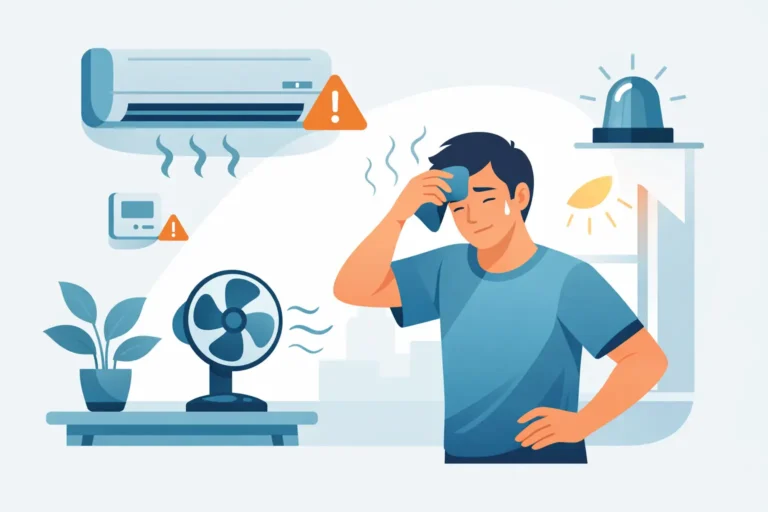

When the AC quits on a 95-degree afternoon, this stops feeling like a minor inconvenience very quickly. For many property owners and tenants, the real question is not just comfort – it is whether is no air conditioning a maintenance emergency, and how fast someone needs to respond.
The honest answer is: sometimes. No air conditioning is not automatically an emergency in every building, every season, or every lease situation. But in extreme heat, in homes with vulnerable occupants, or in commercial spaces where indoor temperatures can create health or equipment risks, a loss of cooling can absolutely become urgent.
Is no air conditioning a maintenance emergency in every case?
Not always. In many parts of the country, heating failures are more clearly defined as emergencies because cold weather can make a home unsafe fast. Air conditioning is more situational. If outdoor temperatures are mild and the indoor space is still reasonably safe, a broken AC unit may be treated as a standard repair rather than an after-hours emergency.
That said, the phrase “not always” should not be confused with “not serious.” A cooling failure can escalate quickly when heat and humidity rise. A second-floor apartment, an older home with poor insulation, or a building with sealed windows can become uncomfortable and potentially unsafe within hours.
This is why a good HVAC provider does not look at the equipment problem alone. They look at the conditions inside the building, who is in the space, and whether there is a real health or operational risk.
When no AC should be treated as urgent
A no-cooling call is much more likely to qualify as urgent when indoor temperatures are climbing into dangerous territory. That is especially true during heat advisories, multi-day heat waves, or periods of high humidity that make the air feel even hotter.
Health concerns matter just as much as the thermostat reading. If the home includes infants, elderly family members, someone with asthma, heart conditions, or other medical vulnerabilities, losing air conditioning deserves faster attention. The same goes for households with pets, especially if no one can move them to a cooler location.
Commercial properties can have their own urgency factors. A restaurant, medical office, server room, retail store, or workplace with high internal heat loads may need immediate service even when a typical residence could wait until the next business day. In those cases, comfort is only part of the issue. Operations, customer safety, inventory, and equipment protection are also on the line.
What makes it an emergency for tenants versus homeowners?
For homeowners, the decision often comes down to safety, budget, and how quickly conditions are getting worse. If the house is getting hotter by the hour and there is no practical backup option, calling for emergency service is usually the right move.
For tenants, the situation can be more complicated because lease terms, local codes, and landlord responsibilities all come into play. Air conditioning is not legally classified the same way everywhere. Some municipalities require landlords to maintain cooling if it is part of the rental agreement or if local housing standards say it must be provided. Others focus more heavily on heat, plumbing, and electricity as essential services.
That means tenants should report the issue right away, document the problem clearly, and check the lease language. If the AC was advertised, included in the unit, or required by local code, the landlord generally needs to address it within a reasonable time frame. What counts as “reasonable” may depend on the weather and the risk to occupants.
If the indoor environment is becoming unsafe, this goes beyond a routine inconvenience. At that point, the priority is getting people cool and protected while the repair is arranged.
Signs the issue can wait until regular service hours
There are cases where no air conditioning feels urgent but does not necessarily require after-hours dispatch. If it is early in the season, outdoor temperatures are moderate, fans are helping, and the indoor space is staying within a livable range, next-day service may be the more practical and affordable option.
The same applies when the system is still partially cooling but struggling to keep up. That may point to a maintenance issue such as a dirty filter, low airflow, or a condenser problem that should be fixed soon, but not necessarily at emergency rates.
This is where honest communication matters. A trustworthy HVAC company should explain whether your situation sounds dangerous, time-sensitive, or simply uncomfortable. Not every repair needs to be treated like a crisis, and not every homeowner wants to pay for after-hours service if it can safely wait.
What to check before calling for emergency AC service
A few simple checks can save time and, in some cases, avoid an unnecessary service call. Start with the thermostat. Make sure it is set to cool, the temperature is set lower than the room temperature, and the batteries are good if your model uses them.
Next, check the air filter. A clogged filter can choke airflow and cause cooling problems that look worse than they are. Then look at the electrical panel to see if a breaker has tripped. If your outdoor unit is silent, that is one possible reason.
You should also inspect the area around the outdoor condenser. If it is blocked by debris, overgrown landscaping, or loose material, airflow may be restricted. And if you see ice on the refrigerant line or indoor coil, turn the system off and call for service. Running it longer can make the problem worse.
These steps are useful, but they are not a substitute for professional diagnosis. Electrical issues, refrigerant leaks, failed capacitors, blower motor problems, and compressor faults all require trained service.
Why fast response still matters, even when it is not a true emergency
There is a difference between an emergency and a problem that should not be ignored. AC systems rarely fix themselves. A unit that starts short-cycling, blowing warm air, or shutting down intermittently is often warning you before a full breakdown happens.
Quick action can limit damage, reduce repair costs, and restore comfort before the house becomes unbearable. It can also help protect indoor air quality. In hot, humid weather, poor cooling often means excess indoor moisture, and that can make the space feel sticky and promote other comfort problems.
For many families, the best approach is not to debate whether the issue qualifies as a textbook emergency. It is to ask a simpler question: is this safe to wait on until tomorrow? If the answer is no, or even maybe not, it is worth calling.
The maintenance piece people often overlook
The wording of this topic matters because people often ask whether no air conditioning is a maintenance emergency after the system has already stopped working. By then, your options are narrower.
Routine maintenance helps catch the issues that commonly lead to no-cooling calls in the first place. Dirty coils, weak capacitors, worn contactors, low refrigerant from small leaks, clogged drains, and airflow restrictions usually show warning signs before total failure. Seasonal service gives a technician the chance to spot those problems early.
That does not guarantee you will never have a summer breakdown. HVAC equipment works hard, especially during Midwest heat and humidity. But maintenance lowers the odds of being stuck without cooling during the worst possible week of the year.
For property managers and business owners, regular service is even more valuable because downtime affects multiple people at once. A maintenance plan can reduce emergencies, extend system life, and make budgeting more predictable.
What to expect when you call
If you do need urgent help, be ready to describe what the system is doing, how hot it is indoors, whether there are vulnerable occupants in the building, and whether the unit is completely down or still running without cooling. That information helps the dispatcher prioritize the call appropriately.
A professional HVAC team should also be clear about timing, pricing, and next steps. If a repair can be made immediately, great. If a part needs to be ordered or the system is beyond repair, you should get a straightforward explanation and options that match your budget and situation.
At Brian & Sons, that customer-first mindset matters because people calling with no AC are usually already stressed. They do not need a sales pitch. They need clear answers, responsive service, and honest guidance on whether the situation is urgent or can safely wait.
If your air conditioning has stopped working, trust what the conditions in your home or building are telling you. Comfort can wait a little. Safety should not.