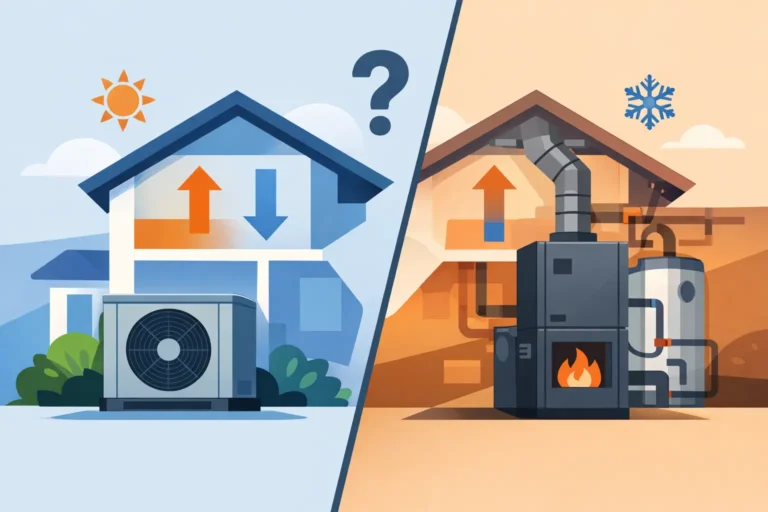

When a heating system starts failing in the middle of an Illinois winter, the question gets real fast: heat pump versus furnace. Homeowners usually are not looking for a textbook answer. They want to know what will keep the house comfortable, what it will cost to run, and whether the recommendation makes sense for their home instead of someone else’s.
That is where this comparison matters. A heat pump and a furnace can both heat your home well, but they do it in very different ways. The better choice depends on your utility rates, your existing equipment, your insulation, your comfort expectations, and how long you plan to stay in the home.
Heat pump versus furnace: the core difference
A furnace creates heat. Most homes in this area use a gas furnace, which burns natural gas and sends warm air through the ductwork. Electric furnaces exist too, but they are less common where winters are cold and heating demand is high.
A heat pump does not create heat in the same way. It moves heat from outside to inside. In cooling season, it works like an air conditioner by moving heat out of the house. In heating season, it reverses that process and pulls outdoor heat indoors.
That difference affects operating cost, performance, and system design. A furnace is usually the stronger pure-heating machine in very cold weather. A heat pump is the more versatile option because it handles both heating and cooling.
How each system feels day to day
Home comfort is not just about whether the thermostat reaches the set point. It is also about how the house feels while the system is running.
A furnace typically delivers hotter supply air. When it turns on, you feel a stronger blast of warm air from the vents. Many homeowners like that because it feels fast and familiar, especially on freezing mornings.
A heat pump usually delivers air that is warm, but not as hot as furnace air. The system often runs longer at a steadier pace. That can create more even temperatures from room to room, but some people interpret it as the system not heating as aggressively. In reality, it may be doing exactly what it should.
If your priority is that quick, strong burst of heat, a furnace often wins on feel alone. If you prefer quieter, more even operation and year-round efficiency, a heat pump can be very appealing.
Energy efficiency and monthly utility bills
This is often the first reason homeowners consider a heat pump. Because it transfers heat instead of generating it through combustion, a heat pump can be very efficient. In moderate weather, that efficiency can translate into lower energy use.
But monthly savings are not identical in every home. The real comparison depends on local gas prices versus electric rates, the efficiency level of the equipment, and winter temperatures. In areas with long stretches of deep cold, a gas furnace may still be more economical to run during the harshest part of the season.
That is why broad claims can be misleading. Saying a heat pump is always cheaper is too simple. Saying a furnace is always better in Illinois is also too simple. The right answer depends on the house and the utility math.
Cold-weather performance in Illinois
This is where the conversation gets more specific for homeowners in places like Aurora, Oswego, and nearby western suburbs. Winters here are not mild. Your heating system has to handle real cold, not just chilly fall mornings.
A gas furnace is built for that challenge. It can maintain strong heating output even when outdoor temperatures drop hard. If your main concern is dependable performance in subfreezing weather, a furnace is a very solid choice.
A modern cold-climate heat pump performs much better in low temperatures than older models did. That matters, because heat pump technology has improved a lot. Still, output and efficiency can decline as the outdoor temperature falls. Some homes need backup heat to keep up during the coldest weather.
That backup may be electric resistance heat or a dual-fuel setup that pairs a heat pump with a gas furnace. Dual fuel can be an excellent middle ground because the heat pump handles milder conditions efficiently, while the furnace takes over when the temperature drops low enough that gas heat makes more sense.
Upfront cost and replacement planning
Budget matters, especially when replacing equipment unexpectedly.
If your home already has central air and a gas furnace, replacing the furnace with another furnace is often straightforward. If the air conditioner also needs replacement, then comparing a furnace plus AC against a heat pump system becomes more relevant.
A heat pump can cost more upfront depending on the equipment type, efficiency rating, and whether electrical upgrades or thermostat changes are needed. On the other hand, because it provides both heating and cooling, it may simplify your system design if you are replacing both pieces of equipment anyway.
Installation details matter as much as equipment price. Duct condition, home size, insulation levels, airflow balancing, and proper sizing all affect performance. A lower quote is not automatically the better value if the system is oversized, undersized, or poorly matched to the home.
Heat pump versus furnace for long-term value
Long-term value is not just purchase price plus utility bills. It also includes maintenance, repair risk, lifespan, and how well the system fits your plans.
A furnace is a strong fit for homeowners who want proven cold-weather heating, especially if the existing home already has natural gas service and conventional ductwork. In many cases, it remains the most practical and cost-effective heating solution.
A heat pump makes sense for homeowners who want one system for heating and cooling, are focused on efficiency, or are replacing both their AC and heating equipment at the same time. It can also be attractive if the home does not have gas service or if you want to reduce gas usage.
If you are planning to stay in the home for years, it is worth looking beyond the first invoice. A carefully selected system can pay off through comfort, lower operating costs, and fewer surprises.
Maintenance needs and service expectations
Both systems need regular maintenance if you want them to run safely and efficiently.
A furnace should be checked for burner performance, heat exchanger condition, airflow, ignition components, venting, and filter issues. Safety is a major part of furnace service because combustion systems must be inspected carefully.
A heat pump also needs seasonal maintenance, and because it works year-round, that maintenance can be even more important. Refrigerant charge, outdoor coil condition, defrost controls, electrical components, and airflow all affect how well it performs in both heating and cooling modes.
Neither system benefits from being ignored until it breaks. Preventive maintenance is usually the difference between a system that gets through the season reliably and one that picks the coldest night of the year to stop working.
Which homeowners usually choose a furnace
A furnace is often the better fit when winter performance is the top priority, the home already has gas service, and the homeowner wants that stronger heat output at the vents. It is also a logical option when the air conditioner is still in good shape and only the heating side needs replacement.
For many families, the appeal is simple. Furnaces are familiar, dependable, and effective in cold climates. If the current setup has worked well and energy costs are reasonable, sticking with a furnace can be the clearest path.
Which homeowners usually choose a heat pump
A heat pump often makes more sense when both heating and cooling equipment are due for replacement, when efficiency is a major goal, or when the homeowner wants an all-electric option. It can also be a smart fit in homes where steady operation and lower energy use during milder weather are important priorities.
Some homeowners also choose a heat pump as part of a dual-fuel system. That setup avoids the all-or-nothing decision. You get efficient electric heating for part of the year and gas heating when winter gets serious.
The best choice is the one that fits the house
The most honest answer to heat pump versus furnace is that neither system is automatically better. A furnace may be the right call for one house on your block, while a heat pump or dual-fuel setup may be the smarter investment next door.
The best recommendation should come from looking at the full picture: your existing equipment, energy costs, comfort preferences, ductwork, insulation, and budget. For homeowners who want a clear answer without pressure, that kind of whole-home evaluation matters more than any sales pitch.
If your current system is struggling, the next step is not guessing. It is getting a recommendation that matches how your home actually performs in winter, so the system you buy now still feels like the right decision when the temperature drops.