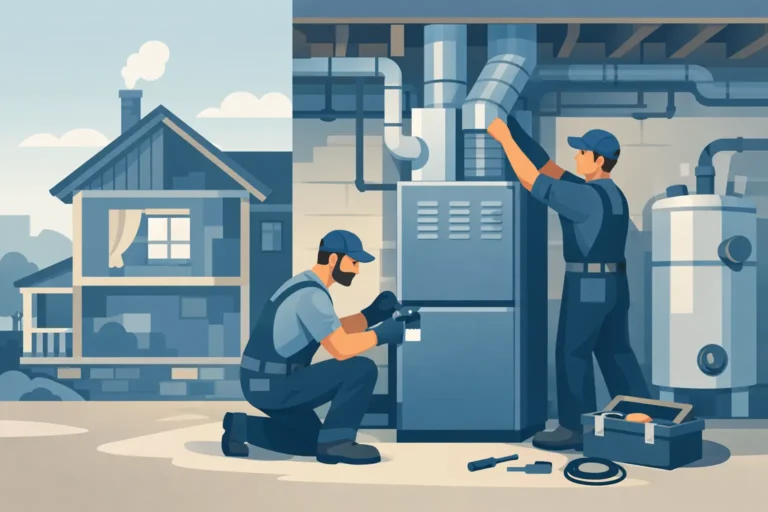

An older home can be one of the most comfortable places to live – until winter shows you every weakness behind the walls. Rooms heat unevenly, the furnace runs longer than it should, and a simple replacement suddenly turns into a bigger conversation about airflow, wiring, venting, and safety. That is why furnace installation for older homes needs more than a quick equipment swap.
If your house was built decades ago, the heating system may have been designed around different fuel standards, looser construction methods, or ductwork that no longer matches how the home performs today. A new furnace can absolutely improve comfort and efficiency, but only when the installation is planned around the home itself.
Why furnace installation for older homes is different
Older homes have character, but they also come with surprises. Mechanical rooms may be tight. Basements may have low clearances. Existing ducts may be undersized, uninsulated, or leaking badly. Some homes were built before central forced air was common, which means ductwork was added later and not always in the best layout.
That matters because a furnace does not work in isolation. Even a high-quality unit will struggle if the return air is poor, the supply ducts are too small, or the thermostat is in a bad location. In older homes, comfort complaints are often tied to the system around the furnace, not just the furnace itself.
There is also the safety side. Older venting materials, aging gas lines, outdated electrical components, and limited combustion air all need attention before installation starts. A proper assessment helps avoid the common mistake of replacing the equipment while leaving behind conditions that shorten its lifespan or create performance issues from day one.
Start with the house, not the box
One of the biggest mistakes in furnace replacement is choosing a new unit based on the old unit’s size. In older homes, that shortcut often leads to an oversized furnace. Years ago, contractors commonly installed larger systems to compensate for drafty windows, weak insulation, and air leakage. If the home has had improvements since then, the original sizing may no longer make sense.
A load calculation gives a much better answer. It looks at square footage, insulation levels, window quality, ceiling height, air leakage, and other real conditions in the home. The goal is not simply more heat. The goal is steady, controlled heat that keeps the house comfortable without short cycling.
Short cycling is especially common with oversized furnaces. The unit heats the house too quickly, shuts off, then starts again a short time later. That can create hot and cold spots, increase wear on components, and raise utility costs. In older homes where temperature balance is already a challenge, the wrong size can make comfort worse instead of better.
Ductwork often decides the outcome
If there is one issue that changes the success of furnace installation for older homes, it is ductwork. Many older duct systems were never designed for modern high-efficiency equipment. Some are too restrictive. Some leak heavily at joints hidden behind walls or above finished ceilings. Others have too few return vents, which starves the furnace for airflow.
A new furnace needs the right amount of air moving across the heat exchanger. Too little airflow can reduce efficiency, create noisy operation, and put strain on the system. Too much imbalance between floors can leave one part of the home warm while another stays chilly.
This does not always mean full duct replacement. Sometimes the best solution is more targeted – sealing leaks, adding return air, resizing key trunk lines, or improving delivery to problem rooms. The right recommendation depends on the home’s layout, access, and budget.
Venting and combustion need a close look
Older furnaces often vent differently than newer high-efficiency systems. If you are replacing a standard-efficiency furnace with a condensing model, the venting method may change completely. That can affect where the furnace sits, how pipes are routed, and whether nearby materials or utility connections need to be updated.
In some older homes, chimney venting is part of the existing setup. Once a new furnace is installed, the chimney may no longer vent the same way it used to. That can create problems if a water heater still relies on it. These are not details to figure out after installation day. They should be reviewed during planning so the finished system is both safe and code-compliant.
Combustion air is another issue that gets overlooked. Tight spaces, enclosed utility closets, and basement mechanical areas can all affect how the furnace operates. A professional installation should account for proper air supply, especially in homes where remodeling has changed the original layout.
Electrical and control upgrades may be part of the job
Many older homes still have electrical limitations that affect furnace replacement. The wiring may be outdated, grounding may be inadequate, or the existing service setup may not support modern controls cleanly. Even if the furnace itself runs on gas, it still depends on safe electrical connections for ignition, blower operation, and system controls.
You may also need thermostat upgrades. Newer furnaces can offer better staging, more precise temperature control, and higher efficiency, but they need compatible controls to do it properly. If your current thermostat is basic or aging, replacing it during installation can improve how the whole system performs.
This is one of those areas where honesty matters. Some homes need only minor electrical updates. Others need more work to support a safe, reliable installation. The right contractor should explain what is required, what is optional, and why.
Choosing the right furnace for an older home
There is no one-size-fits-all answer here. A high-efficiency furnace is often a smart choice, especially with Midwest winters, but installation conditions matter. In some older homes, vent routing or condensate drainage adds complexity. In others, the long-term energy savings make the extra work worthwhile.
Single-stage, two-stage, and variable-speed systems each have their place. If your biggest complaint is uneven heating, a two-stage or variable-speed setup may provide better comfort than a basic single-stage unit. These systems can run longer at lower output, which often helps with temperature consistency.
That said, the best equipment choice still depends on the house and the homeowner’s priorities. Budget matters. So does how long you plan to stay in the home. A family planning to remain in place for years may benefit from investing more in comfort and efficiency. Someone focused on a straightforward, affordable replacement may choose a simpler system with fewer upgrades.
What to expect during installation
A well-planned installation should feel organized, not chaotic. Before work begins, the installer should confirm sizing, inspect the duct system, review venting and drainage, and check gas and electrical connections. If hidden issues are likely because of the home’s age, that should be discussed upfront.
On installation day, some adjustment is normal. Older homes do not always reveal everything until the existing equipment is removed. A rusted flue connection, damaged plenum, or inaccessible shutoff may need correction before the new furnace can be installed properly. That does not mean the project was planned poorly. It means older homes often require field judgment and clear communication.
After installation, testing matters just as much as the equipment itself. Airflow should be verified. Temperature rise should be checked. Gas pressure, combustion, safety controls, and thermostat operation should all be confirmed. A furnace that is merely installed is not the same as a furnace that is commissioned correctly.
Cost depends on more than the furnace
Homeowners often ask for a quick furnace replacement price, but older homes make that difficult. The furnace is only one part of the cost. Duct repairs, vent changes, code upgrades, drain lines, electrical corrections, and access challenges can all affect the final number.
That is not bad news. It is better to know the real scope before the work begins than to get a low estimate that leaves out essential items. A trustworthy contractor should walk you through the variables in plain language and help you weigh immediate cost against long-term reliability.
In communities like Aurora, Geneva, and Batavia, where many homes have a mix of older construction and updated additions, that kind of planning can make the difference between a smooth replacement and years of avoidable comfort problems.
How to know you are getting the right recommendation
A good furnace proposal for an older home should feel specific. It should reflect the home’s age, layout, duct condition, and installation constraints. If someone gives you a quote without looking closely at airflow, venting, or sizing, that is a red flag.
You should also expect clear answers to practical questions. Will the new furnace work with existing ducts? Are any safety upgrades needed? Will comfort improve in the cold rooms, or does that require additional ductwork? What warranty support and maintenance will help protect the investment?
At Brian & Sons, this kind of work starts with careful evaluation because older homes rarely benefit from rushed decisions. The right installation respects the house, the budget, and the people living in it.
A new furnace should not feel like a gamble. In an older home, the best result comes from slowing down just enough to solve the right problems before the first cold night puts the system to the test.