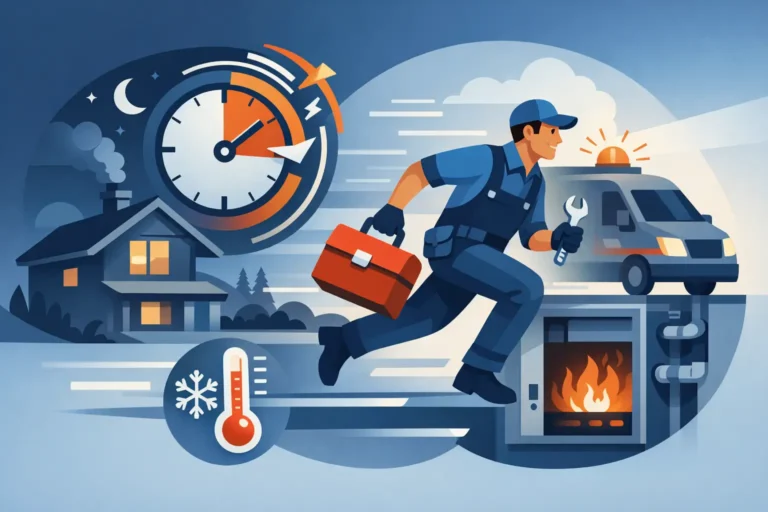
When the furnace quits at 2 a.m. and the temperature in the house keeps falling, you are not thinking about maintenance plans or equipment specs. You are thinking about keeping your family warm, preventing pipe damage, and getting help from someone who actually answers the phone. That is exactly when 24 hour emergency furnace service matters.
A true heating emergency is more than an inconvenience. In the middle of an Illinois cold snap, a failed furnace can quickly turn into a safety issue, especially for homes with infants, older adults, or anyone with health concerns. For some businesses, heat loss can also disrupt operations, affect employees, and put parts of the building at risk. Fast response is not about panic. It is about limiting damage and restoring safe, steady heat as soon as possible.
When 24 hour emergency furnace service is the right call
Not every furnace issue needs a midnight visit, but some absolutely do. If your system is blowing cold air and the indoor temperature is dropping fast, that is a strong reason to call. The same goes for a furnace that will not turn on at all when outdoor temperatures are near or below freezing.
You should also treat unusual smells, loud banging, repeated shutdowns, or a carbon monoxide alarm as urgent. If you smell gas, leave the building immediately and contact the gas utility or emergency services first. A heating company can repair the furnace, but immediate gas safety comes first.
There are also gray areas where it depends. If the furnace is still running but not heating evenly, and the home is staying at a safe temperature, that may be a next-day repair rather than an emergency call. If a rooftop unit or commercial furnace is serving a business with sensitive equipment, inventory, or overnight occupancy, the urgency may be much higher. The right response depends on conditions inside the building, outside weather, and who is affected.
What happens during an emergency furnace call
Good emergency service should feel organized, not chaotic. When you call, the first step is usually a few basic questions about what the furnace is doing, what the thermostat shows, and whether there are any unusual odors or sounds. This helps narrow down the likely issue before the technician arrives.
Once on site, the technician should check the system methodically. That often includes thermostat operation, power supply, filter condition, ignition components, safety switches, airflow, flame sensor performance, and blower operation. If the issue is straightforward, such as a failed ignitor, dirty flame sensor, tripped safety, or bad capacitor, the repair may be completed during the same visit.
If the furnace has a major heat exchanger issue, control board failure, or parts problem that cannot be solved immediately, a good technician should still help stabilize the situation. That may mean making the system safe, discussing temporary options, and giving you a clear explanation of what comes next. In an emergency, clear communication matters almost as much as the repair itself.
Common reasons furnaces fail after hours
Furnaces have a way of breaking down when you need them most because cold weather pushes every part of the system harder. A weak ignitor that seemed fine in mild weather can finally fail on the coldest night of the season. Dirty filters can restrict airflow enough to trigger overheating and shutdown. Aging blower motors and worn electrical parts often show their age under heavy demand.
Lack of maintenance is a common factor, but not the only one. Even a well-maintained system can have an unexpected part failure. That is why emergency availability still matters, even for careful homeowners and facility managers.
In older homes, thermostat wiring issues, drainage problems from high-efficiency furnaces, or venting concerns can also contribute to no-heat calls. In commercial buildings, control problems, zoning issues, and larger equipment wear can make diagnosis more involved. The point is simple: the cause is not always obvious from the symptoms, and guessing can waste valuable time.
What you can check before calling for emergency furnace repair
There are a few things worth checking because they are quick, safe, and sometimes solve the problem. Make sure the thermostat is set to heat and the temperature setting is above room temperature. Check the furnace switch and the breaker. Look at the air filter if you can access it easily. If your furnace has shut off due to a clogged filter, replacing it may help, although the system may still need service if overheating has already caused damage.
If you have a condensing furnace, check whether the intake or exhaust pipes outside are blocked by snow or ice. Also make sure vents and registers inside the house are open and not covered.
Beyond that, it is better not to push your luck. Resetting the system repeatedly, ignoring unusual smells, or opening furnace panels without training can make the problem worse. Emergency service exists for a reason.
Why fast response matters more than convenience
People often think of emergency HVAC as a convenience upgrade. In reality, it protects both comfort and property. In freezing weather, indoor temperatures can fall quickly enough to put plumbing at risk. The longer the home stays cold, the higher the chance of frozen or burst pipes, especially near exterior walls, crawl spaces, or poorly insulated areas.
For families, fast repair also reduces stress at the worst possible moment. No one wants to wake children in the middle of the night, start hunting for space heaters, or decide whether the house is still safe to stay in. For commercial properties, after-hours response can help avoid downtime, tenant complaints, or damage to temperature-sensitive spaces.
That is why local service matters. A company serving communities like Aurora, Oswego, Geneva, and Batavia can often respond more efficiently than a provider stretched too far across the region. In an emergency, close-by support is a real advantage.
Choosing a 24 hour emergency furnace service company
Not all emergency service is equal. Some companies advertise 24/7 support but route calls to a general answering line with little urgency or no technician availability. Others may respond quickly but offer vague pricing or push replacement before a proper diagnosis.
A better approach is to look for a company that is licensed, insured, and clear about what emergency service includes. You want technicians who can diagnose all major furnace brands, explain the issue in plain language, and make practical recommendations based on the condition of the system, not pressure.
It also helps to choose a provider with both residential and commercial experience. That kind of technical range usually means stronger troubleshooting skills and better judgment under pressure. Brian & Sons has built its reputation around that kind of responsive, honest service, which is exactly what people need when the heat goes out after hours.
Repair or replace during an emergency?
This is where honesty matters most. In some cases, the right move is a repair that gets you through the night and buys time to plan. In other cases, replacement is the smarter financial decision, especially if the furnace is older, repair costs are climbing, and reliability has been slipping for a while.
There is no one-size-fits-all answer. A simple ignition repair on a 10-year-old furnace is very different from a major repair on a system near the end of its life. The best emergency technicians do not force that decision in a high-stress moment. They give you the facts, explain the trade-offs, and help you choose based on safety, budget, and long-term value.
If replacement is needed, temporary heat strategies and a fast installation plan can make the situation much more manageable. That is another reason to work with a full-service HVAC company rather than a provider focused only on quick fixes.
How to reduce the chances of another after-hours breakdown
No maintenance plan can promise zero emergencies, but regular service improves your odds. Seasonal furnace tune-ups help catch worn ignitors, dirty flame sensors, airflow restrictions, drainage issues, and electrical problems before they turn into no-heat calls. Replacing filters on schedule and paying attention to new noises or short cycling also helps.
If your furnace is aging and repairs are becoming more frequent, it is worth talking through your options before winter gets severe. Planning ahead is almost always less expensive and less stressful than making a major decision during a freezing night.
When your heat goes out unexpectedly, you do not need a sales pitch. You need a calm diagnosis, a fast response, and a technician who treats your home or building like it matters. That is what good emergency furnace service should feel like – prompt, clear, and focused on getting you safely warm again.