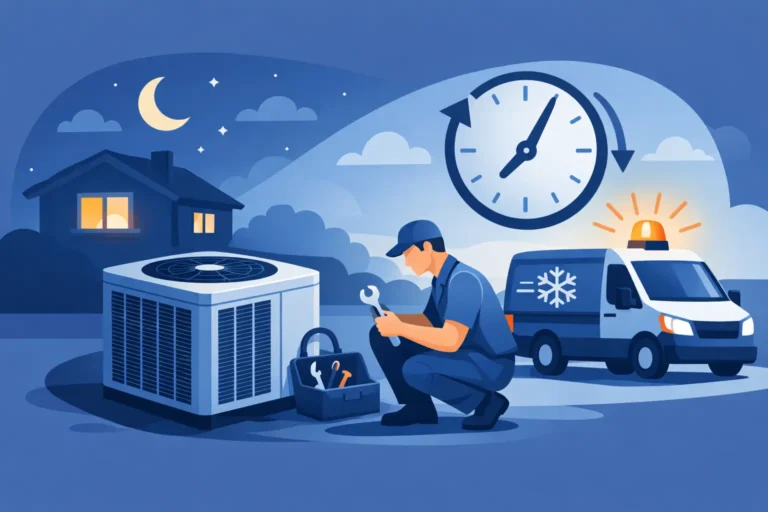

When your air conditioner quits at 10 p.m. on a hot Illinois night, the problem stops feeling like a routine repair and starts feeling urgent. That is exactly when 24 hour emergency ac service matters most – not as a luxury, but as a practical way to protect your home, your family, and in some cases your business.
Not every AC problem needs a middle-of-the-night visit. But some do. If your system stops cooling during extreme heat, starts tripping breakers, gives off a burning smell, leaks heavily, or leaves a home with young children, older adults, or medical needs without safe cooling, waiting until morning may not be the smart move. The value of emergency service is not just speed. It is getting a trained technician on site to sort out whether the issue is minor, serious, or unsafe.
When 24 Hour Emergency AC Service Is the Right Call
A true emergency usually comes down to safety, health, or the risk of bigger damage. A complete cooling failure during a heat wave is the obvious example, especially when indoor temperatures are rising fast. In a commercial setting, it can also mean protecting equipment, inventory, tenants, or employees from uncomfortable or unsafe conditions.
Electrical warning signs deserve immediate attention. If your AC smells like something is burning, repeatedly trips the breaker, buzzes loudly without starting, or suddenly shuts down after unusual noises, the safest choice is to stop running it and call for help. These symptoms can point to failing electrical parts, compressor problems, or overheating components that need professional diagnosis.
Water is another reason not to guess. Some condensation is normal, but pooling water around the indoor unit, ceiling stains near ducted equipment, or signs that a clogged drain may affect drywall or flooring can quickly turn a cooling problem into a property damage problem. Emergency service may save more than your comfort.
There are also situations where the problem is not catastrophic, but still time-sensitive. If your AC is blowing warm air late in the evening before a string of 90-degree days, a fast response can keep the issue from becoming a multi-day disruption. That matters to families, and it matters to property managers trying to keep residents comfortable.
What Happens During an Emergency AC Visit
Good emergency service should feel organized, not rushed. The first step is usually a phone conversation to understand what the system is doing, how long the problem has been happening, and whether there are any immediate safety concerns. You may be asked to check the thermostat, filter, breaker, or drain area before a technician is dispatched. That is not about delaying service. It is about ruling out simple issues and sending the technician prepared.
Once on site, the technician should inspect the system methodically. That often includes checking power supply, thermostat communication, capacitors, contactors, motors, refrigerant pressures, drain components, and overall system operation. If the issue is straightforward, such as a failed capacitor, clogged drain, or worn contactor, the repair may be completed the same visit.
Sometimes the answer is less convenient. If a compressor has failed, a blower motor is damaged, or a specialty part is needed, the emergency visit may focus on diagnosis, stabilization, and a clear repair plan. Honest service matters here. A reliable company should tell you what can be fixed now, what needs follow-up, and whether repair or replacement makes more financial sense.
That last point is worth slowing down for. Emergency service should not automatically mean pressure. If your older AC can be safely repaired at a reasonable cost, that may be the right move. If the repair is expensive and the system is near the end of its life, you deserve a straightforward explanation instead of a sales pitch.
Why Fast AC Response Matters More Than Comfort
People often think emergency cooling service is only about convenience. In reality, delayed AC repair can create a chain reaction. A struggling system may keep running while overheating parts wear down further. A frozen evaporator coil can lead to airflow problems and water issues once it thaws. Electrical faults can stress other components. What starts as one failed part can turn into several.
There is also the human side. High indoor heat is not just uncomfortable. It can be risky for infants, seniors, pets, and anyone with respiratory or medical concerns. Sleep becomes harder. Work becomes harder. For businesses, poor cooling can affect staff productivity, customer experience, and in some settings the condition of temperature-sensitive spaces.
That is why homeowners and property decision-makers often want 24/7 availability even if they hope never to use it. Knowing someone will answer the phone and show up when the system fails removes a lot of stress from an already bad situation.
How to Prepare Before the Technician Arrives
A few simple steps can make an emergency appointment go more smoothly. Start by turning the system off if you notice burning smells, strong electrical symptoms, or severe icing. Continuing to run it may cause more damage. If the issue is water near the indoor unit, protect the surrounding area if you can do so safely.
Clear a path to the thermostat, furnace or air handler, outdoor condenser, and electrical panel. If you have pets, secure them before the technician arrives. It also helps to have basic information ready, such as the age of the system, any recent repairs, and a quick description of what changed. Did the AC stop all at once? Was it making noise first? Did airflow weaken before cooling stopped? Those details can speed up diagnosis.
If you manage a commercial property, try to note which zones are affected and whether the issue is isolated to one area or building-wide. That can help narrow the problem much faster than a general report that the air is not working.
Choosing the Right 24 Hour Emergency AC Service
Not all emergency service is equal. Some companies advertise late-night availability but route calls to voicemail or offer limited after-hours support. What you want is a team that can actually respond, communicate clearly, and send trained professionals who know how to diagnose residential and commercial equipment properly.
Look for practical trust signals. Licensed and insured technicians matter. EPA certification matters. Local experience matters too, because emergency service works better when the company understands the demands of summers in communities like Aurora, Oswego, Geneva, and nearby areas. Fast response is valuable, but only if the diagnosis is accurate and the recommendation is honest.
Affordability matters as well. Emergency service may involve after-hours rates, and that is normal. What should still be consistent is transparency. You should know what the visit covers, what the immediate repair costs, and what your next options are if a major part is involved. The best service experience is one where you feel informed instead of cornered.
Brian & Sons has built its reputation around that kind of response – quick help, clear communication, and service that puts people first when comfort systems fail unexpectedly.
Can Emergency AC Problems Be Prevented?
Some can. Some cannot. Even well-maintained systems can fail without much warning, especially during periods of heavy use. But regular maintenance does reduce the odds of the most common breakdowns. Capacitors weaken over time, drains clog, coils get dirty, electrical connections loosen, and refrigerant issues become easier to catch early when the system is inspected before peak season.
Filter changes also matter more than many people think. A neglected filter restricts airflow, increases strain, and can contribute to frozen coils or poor cooling performance. It will not prevent every emergency, but it can keep a preventable issue from snowballing.
Age is another factor. If your AC is older and has needed multiple repairs in recent seasons, the most cost-effective choice may be to stop thinking only in terms of emergency fixes. Planning a replacement on your schedule is usually less stressful than making that decision during a heat emergency at night.
The goal is not to eliminate every surprise. HVAC systems are mechanical, and mechanical systems fail. The real goal is to lower the chances of a crisis and know exactly who to call if one happens.
When your home or building is heating up and the AC has given out, what you need most is not hype. You need someone who answers, shows up, explains the problem clearly, and helps you make the next right decision with confidence.