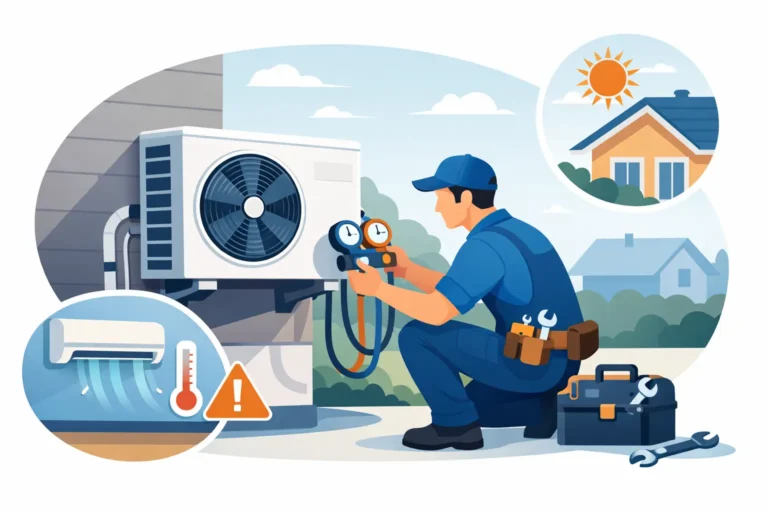
A cooling problem rarely begins with a complete breakdown. More often, your AC starts running longer than usual, certain rooms feel sticky, or the thermostat setting no longer matches how the house feels. The need for air conditioning repair in Geneva, IL can show up on the first hot afternoon of the season or during a humid stretch when your system is working its hardest.
The right response is not always an emergency replacement. Some problems have a simple cause, while others need prompt attention to prevent damage to expensive equipment. Knowing what to look for can help you protect your comfort, avoid unnecessary stress, and make a clear decision when it is time to call a licensed HVAC technician.
Signs You May Need Air Conditioning Repair in Geneva, IL
Warm air coming from supply vents is one of the most obvious warning signs, especially if the thermostat is set below the indoor temperature. Before assuming the system has failed, check that the thermostat is set to cool and that the temperature setting is lower than the current room temperature. If the blower runs but the air never cools, the issue may involve the outdoor unit, refrigerant levels, electrical components, or a failing compressor.
Weak airflow deserves attention, too. A clogged filter can restrict airflow and make an air conditioner work harder than it should. If replacing a dirty filter does not improve the problem, there may be an issue with the blower motor, ductwork, evaporator coil, or other system components. Rooms that cool unevenly can also point to airflow concerns, though the answer depends on your home’s layout, insulation, sun exposure, and duct design.
Unusual sounds are another reason to schedule service. Rattling may be as minor as a loose panel, but buzzing, grinding, screeching, or repeated clicking should not be ignored. Mechanical and electrical problems can get worse when the system continues to run. Turn the system off and arrange professional service if you hear a loud or persistent sound.
Water around the indoor unit is also a concern. Your air conditioner removes humidity as it cools, and that moisture needs to drain properly. A blocked condensate drain, damaged drain pan, or frozen coil can lead to water where it does not belong. Catching that issue early can help prevent damage to flooring, walls, or nearby equipment.
A Few Safe Checks Before You Call
A quick check can sometimes restore comfort, but homeowners should avoid opening equipment panels or attempting electrical and refrigerant repairs. Start with the thermostat, then inspect the air filter. If the filter is visibly packed with dust, replace it with the correct size and type. A filter that is too restrictive can create its own airflow issues, so choose one appropriate for your system and household needs.
Next, check the circuit breaker. If the AC breaker has tripped once, you can reset it one time. If it trips again, leave it off and call for service. Repeated tripping can signal an electrical problem, a motor issue, or an overloaded component. Continuing to reset the breaker is not a solution and can create a safety concern.
Outside, make sure the condenser has clear space around it. Grass clippings, leaves, and stored items can block airflow. Keep plants trimmed back and never cover the unit while it is operating. You can gently clear loose debris from the outside of the unit, but coil cleaning and any work inside the cabinet should be handled by a trained technician.
If you see ice on refrigerant lines or the indoor coil, turn the cooling system off. Set the fan to “on” if your thermostat allows it, which can help the ice thaw. Then schedule a service visit. Ice often means restricted airflow or a refrigerant-related issue, and running the system while frozen can cause further damage.
Why Fast Repairs Can Save Money
An air conditioner is designed to cycle on, cool your space, and cycle off. When a component begins to fail, the system may run longer to achieve the same result. That extra runtime increases energy use and puts more strain on parts that are still working.
For example, a dirty coil can interfere with heat transfer, while a worn capacitor may make it difficult for the outdoor unit to start. Neither situation improves by waiting through the summer. A timely repair may be less costly than allowing a manageable issue to contribute to compressor damage or a complete system failure during a heat wave.
Fast service also matters for indoor humidity. A properly operating central air conditioner does more than lower the temperature. It helps remove moisture from the air. When cooling performance drops, your home can feel uncomfortable even if the thermostat says the temperature is acceptable. Excess humidity may make bedrooms feel warmer, contribute to musty odors, and leave your family feeling less comfortable overall.
For commercial spaces, inconsistent cooling can affect employees, customers, equipment, and daily operations. Property managers and business owners should pay attention to rising utility costs, hot zones, frequent cycling, and tenant complaints before a small concern becomes an urgent interruption.
Repair or Replacement: What Is the Better Choice?
Repair is often the right choice when the system is relatively young, has been maintained, and needs a straightforward component replacement. A professional diagnosis should identify the cause of the failure, explain the repair clearly, and provide an honest recommendation based on the equipment’s condition.
Replacement may be worth considering when an older system experiences frequent breakdowns, uses outdated refrigerant, has major compressor issues, or cannot cool the home efficiently. The decision is not based on age alone. A well-maintained unit may have useful life remaining, while a neglected unit can require significant work sooner than expected.
It also depends on your comfort goals and budget. If certain areas of your home have always been difficult to cool, a standard replacement may not be the only option. Duct improvements, zoning, a heat pump, or a ductless system could provide a better long-term fit. A trustworthy HVAC professional will discuss the trade-offs instead of pushing a one-size-fits-all answer.
What to Expect From a Professional AC Repair Visit
A thorough repair visit starts with listening. Your technician should ask what you have noticed, when the issue started, whether the system runs constantly, and whether you have seen leaks, ice, odors, or breaker problems. Those details help narrow down the diagnosis.
The inspection may include checking electrical connections, thermostat operation, airflow, drain components, indoor and outdoor equipment, refrigerant performance, and safety controls. After identifying the problem, the technician should explain what failed, why it matters, and what the recommended repair involves. You deserve clear pricing and straightforward answers before work begins.
At Brian & Sons, our licensed, insured, EPA-certified technicians provide dependable cooling service with the same honest guidance we would want for our own homes. When an AC problem cannot wait, 24/7 service availability helps local homeowners and businesses get timely support when comfort matters most.
Keep Your AC From Failing at the Worst Time
Preventive maintenance cannot eliminate every repair, but it can reduce the chance of an avoidable surprise. Regular service gives a technician the opportunity to inspect wear items, clean critical components, verify safe operation, and spot concerns before peak summer demand puts the system under pressure.
Between visits, change filters as needed, keep the outdoor unit clear, and pay attention to changes in performance. Do not wait for a system to stop completely if it begins short cycling, making unusual noises, leaking water, or struggling to cool. Calling while the problem is still manageable can often give you more repair options and less disruption.
If your AC is not keeping up, trust what your home is telling you. A prompt, professional diagnosis can bring back the comfort you depend on and help you move forward with confidence.