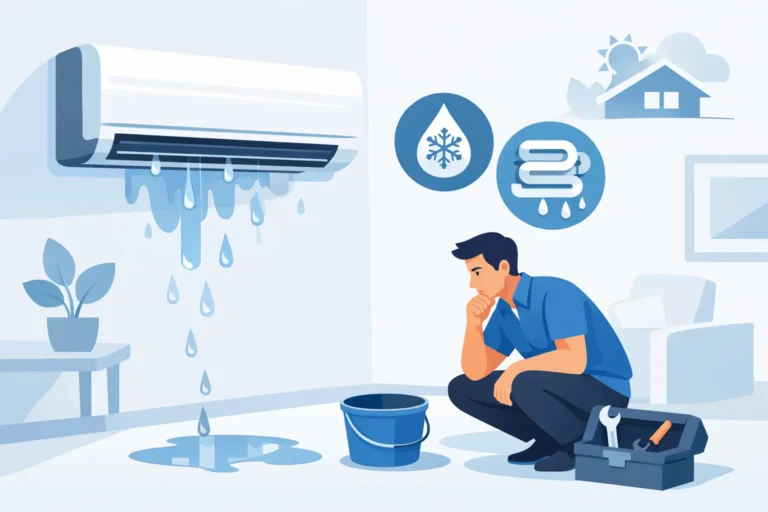
A puddle near your indoor AC equipment can turn a hot summer afternoon into a stressful home repair fast. If you are asking, “why is my AC leaking?” the good news is that most leaks involve water from the cooling process, not a failed air conditioner. The less reassuring news is that water can damage ceilings, flooring, drywall, insulation, and electrical components if it is ignored.
Your air conditioner removes heat from indoor air, but it also removes humidity. That moisture collects on the indoor evaporator coil and should flow safely through a condensate drain line. When the water cannot drain properly, it has to go somewhere else. Finding the source early can often prevent a small maintenance issue from becoming water damage or a system breakdown.
Why Is My AC Leaking Water Inside?
An AC may appear to be leaking when condensation builds up faster than the system can drain it. In the western Chicago suburbs, warm, humid stretches can make this especially noticeable. Still, humidity alone should not cause water to spill from the unit. A properly operating system is designed to manage normal condensation.
A clogged condensate drain line
A blocked drain line is one of the most common causes of indoor AC leaks. Algae, dirt, mold-like buildup, dust, or debris can collect in the narrow drain pipe over time. Water then backs up into the drain pan and eventually overflows.
You may notice a wet area around the furnace or air handler, water staining beneath equipment in an attic, or a musty smell near the indoor unit. Some systems have a safety float switch that shuts off the AC when the drain backs up. That can be frustrating during a heat wave, but it is protecting your home from a larger overflow.
A technician can clear the line, confirm it drains properly, and inspect the trap and fittings. Pouring chemicals or repeated amounts of bleach into an unknown drain setup is not always the right fix. It can damage components, create fumes, or fail to remove a stubborn blockage farther down the line.
A cracked, rusted, or misaligned drain pan
The evaporator coil sits above a primary drain pan. Older equipment can develop corrosion or cracks in that pan, while a pan that was disturbed during previous work may sit out of position. Water may drip steadily even though the drain line itself is open.
This issue is easy to miss because the leak may only appear while the AC has been running for a while. A technician will need to inspect the pan and coil area directly. Depending on the equipment design, replacing the pan may be straightforward, or access may require more involved service.
A frozen evaporator coil
Ice on the indoor coil can also lead to water around the system. When the ice melts, the drain pan may be overwhelmed, causing overflow. A frozen coil is not a problem to ignore or simply reset.
Restricted airflow is a frequent reason coils freeze. A severely dirty filter, blocked return vents, a dirty coil, or a failing blower can reduce the warm airflow the coil needs. Low refrigerant from a leak can also cause freezing. Refrigerant does not create a water puddle itself, but low refrigerant can trigger the chain of events that does.
If you suspect a frozen coil, turn the cooling system off at the thermostat and set the fan to ON if it is operating normally. Let the coil thaw completely before restarting it. Do not chip at the ice or use sharp objects near the coil. Then schedule a professional inspection to identify why it froze in the first place.
A failed condensate pump
Not every home has a condensate pump, but many systems need one when gravity cannot carry water to a suitable drain. The pump collects condensate in a small reservoir and pumps it away. If it loses power, its float sticks, its discharge tube clogs, or the pump motor fails, water can overflow nearby.
A pump problem may come with a humming sound, a full reservoir, or water near a small plastic pump beside the furnace or air handler. Because pumps involve electricity and water in close proximity, professional service is the safer choice.
A disconnected or poorly installed drain line
Drain piping can loosen, crack, sag, or separate at a joint. Improper slope may allow water to sit in the line instead of draining. In some cases, a newly installed system starts leaking because the drain connection, trap, venting, or pipe support was not set up correctly.
This is why the location of the water matters. Water coming from a visible pipe connection points to a different repair than water appearing below the coil cabinet. A trained HVAC technician can trace the path of the condensate rather than treating the visible puddle as the whole problem.
What to Do When Your Air Conditioner Is Leaking
Start by protecting people and property. Turn the thermostat from COOL to OFF if water is actively dripping from the unit, pooling around electrical equipment, or coming through a ceiling. If water is close to electrical connections or the furnace cabinet, avoid touching the equipment and use the appropriate breaker only if it is safe to do so.
Move storage, rugs, and valuables away from the area. Place towels or a shallow container beneath a minor drip if you can do so safely, but do not rely on a bucket as a long-term solution. It can overflow quickly while the system runs.
Next, check the air filter. If it is visibly dirty, replace it with the correct size and type. Make sure return grilles and supply vents are open and unobstructed. These simple checks can restore airflow, but they will not repair a blocked drain, refrigerant leak, damaged pan, or failed pump.
Take note of what you see before service arrives: where the water appears, whether the system is cooling, whether ice is visible, and whether the leak happens only after long cooling cycles. Those details help speed up diagnosis. For a business, facility, or multi-unit property, document affected areas and keep occupants away from any wet electrical or ceiling areas.
When an AC Leak Needs Urgent Service
An indoor AC water leak deserves prompt attention, but certain signs call for same-day or emergency HVAC service. These include water coming through a ceiling, water near electrical panels or equipment, repeated shutdowns, a large or fast-growing puddle, or a system that is frozen and no longer cooling.
You should also call promptly if you hear hissing near refrigerant lines, see oily residue around the equipment, or notice that the AC runs constantly without lowering the indoor temperature. Those symptoms can point to a refrigerant issue or another mechanical concern that requires EPA-certified handling.
Outdoor water is different. It is normal for an air conditioner to produce some water outside as condensation drains away. However, standing water around the outdoor unit, poor drainage toward the foundation, or water entering a basement should still be addressed. The solution may involve the AC drain route, landscaping, a sump pump, or more than one home system.
How to Help Prevent Future AC Leaks
The most effective prevention is routine maintenance before heavy cooling season. During a professional tune-up, technicians can inspect and clear the condensate drain, check the drain pan and pump, evaluate airflow, inspect the evaporator coil, and look for early signs of refrigerant problems. This is particularly valuable for older systems and equipment installed in attics, closets, finished basements, or commercial mechanical rooms where an overflow can cause expensive damage.
Between visits, change filters on schedule and keep vents clear. Filter timing depends on your household, pets, allergies, renovation dust, and the filter type, but a quick monthly check is a practical habit. If you have had a drain-line clog before, ask your technician about appropriate preventive drain maintenance for your specific system.
A leaking AC does not always mean replacement is necessary. A clogged drain line or worn pump can often be repaired affordably, while a cracked coil pan, recurring freezing, or refrigerant leak may require a more detailed conversation about repair costs and system age. The right answer depends on the diagnosis, not the size of the puddle alone.
For homeowners and property managers in Oswego and nearby communities, Brian & Sons can identify the source of an AC leak, explain the repair clearly, and help protect your comfort and your property. Acting early gives you the best chance of keeping a manageable water issue from becoming a much larger one.