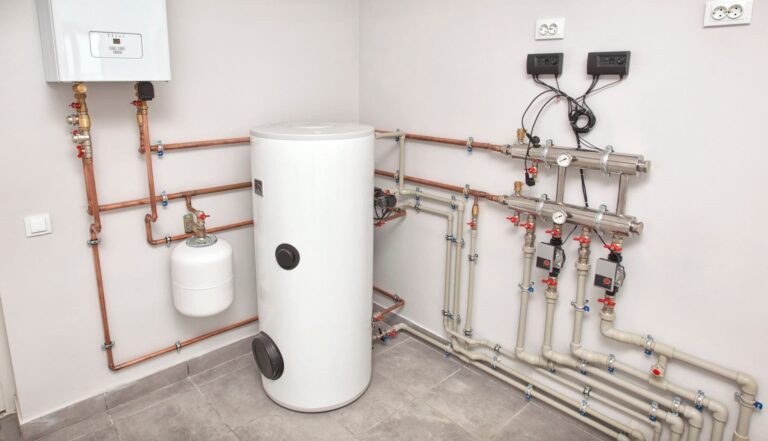

The Heart of Your Heating System
A boiler does something no other heating appliance can quite match: it moves heat through water, delivering an even, steady warmth that fills a room without the dry blast of forced air. When you rely on a boiler, you are trusting a closed system of pipes, valves, and pressurized water to run quietly in the background for years at a time. That reliability is exactly why we take boiler work so seriously at Brian and Sons. A system this dependable also demands a certain level of expertise to install, service, and repair correctly, and cutting corners tends to show up months later as an uneven heat, a mysterious knocking, or a spike on your energy bill.
For more than 20 years, we have serviced boilers across the Chicagoland area for homeowners, corporations, light industrial sites, churches, and small businesses. Every technician who arrives at your property is NATE-certified and holds a degree in HVAC, which means the person diagnosing your system understands the combustion, hydraulics, and controls behind it, not just the symptoms on the surface. That depth of knowledge matters when you are dealing with a heat source that runs on gas, holds pressure, and connects to nearly every room you occupy.
How a Boiler Actually Produces Heat
Understanding what happens inside your boiler helps explain why professional service is worth the investment. Fuel—typically natural gas—burns inside a combustion chamber, heating a metal heat exchanger. Water circulates across that exchanger, absorbing the thermal energy before a pump pushes it out through supply lines to radiators, baseboard convectors, or radiant floor loops. As the water gives up its heat to your rooms, it returns to the boiler slightly cooler to be reheated, and the cycle repeats. It is a beautifully efficient loop when every component is calibrated correctly.
The trouble is that a boiler has many small parts that all need to cooperate. The expansion tank absorbs pressure changes as water heats and expands. The circulator pump keeps water moving at the right rate. Aquastats and thermostats tell the burner when to fire, and safety controls shut everything down if pressure or temperature climbs too high. When one of these falls out of adjustment, the whole system suffers—short cycling, cold zones, or a pressure relief valve that keeps dripping. We approach each of these components methodically rather than swapping parts and hoping for the best.
Our Approach to Boiler Service and Repair
Honest, careful work is the foundation of everything we do, and there is never a high-pitched sales pitch waiting at the end of a service call. When you contact us about a boiler problem, we follow a consistent process designed to find the true cause and fix it once.
- Initial inspection and listening: We start by observing how the system behaves—firing patterns, noises, pressure readings, and the temperatures at both the supply and return lines.
- Combustion and safety verification: We check the burner, ignition, and every safety control to confirm the boiler is firing cleanly and shutting down properly when it should.
- Hydraulic evaluation: We test the circulator pump, expansion tank, and pressure levels to make sure water is moving through the loop at the correct rate and temperature.
- Clear explanation: Before any work proceeds, we walk you through exactly what we found and what we recommend, so the decision stays in your hands.
This same care extends to how we stand behind our work. We service the customers we work for and back the repairs we perform, because a boiler that fails again in a month helps no one. When you invite us into your home or building, our goal is to leave the system running better and safer than we found it, with an honest accounting of its condition.
Where Boilers Serve Best
Boilers show up in more settings than many people realize, and each application places different demands on the equipment. In older homes throughout Aurora, Naperville, Bristol, Montgomery, Oswego, Plainfield, Sugar Grove, Yorkville, and Plano, cast-iron radiators paired with a gas boiler still deliver some of the most comfortable heat available, radiating warmth long after the burner shuts off. In newer construction, radiant floor systems tucked beneath tile and concrete rely on precisely controlled boiler temperatures to keep floors comfortable without overheating rooms.
Commercial and institutional buildings lean on boilers for their steady, high-capacity output. Churches with tall ceilings and large volumes of air benefit from the gentle, drift-free heat a hydronic system provides. Light industrial sites often use boilers not only for space heating but for process needs, where consistent water temperature is critical to daily operations. Small businesses appreciate the quiet operation—no roaring blowers interrupting a conversation or a transaction. Because we serve all of these property types, we have learned to tune each boiler to the specific building it heats rather than applying a one-size-fits-all setup.
Technical Details That Separate a Good Job From a Rushed One
The specifications behind a properly working boiler are where experience truly earns its keep. Getting these right is the difference between a system that quietly performs and one that nags you all winter.
- Correct system pressure: Most residential boilers operate around 12 to 15 psi when cold, and maintaining that range prevents both air pockets and relief-valve discharge.
- Proper water temperature: Supply temperatures must match the emitters—radiant floors want lower temperatures than cast-iron radiators—so we set the aquastat to the system, not to a generic default.
- Clean combustion: We verify the burner is producing a clean flame with the right gas pressure, protecting both efficiency and safety.
- Balanced flow: Adjusting circulator speed and zone valves ensures every room receives its fair share of heated water without starving the far end of the loop.
When these details are dialed in, your boiler burns less fuel, heats more evenly, and lasts longer. As Chicagoland’s most affordable HVAC repair and replacement service, we believe quality work should be within reach, which is why we combine expert technical service with fair, straightforward pricing. And because heating emergencies rarely wait for business hours, we provide 24-hour service, 365 days a year—so a boiler that quits on the coldest night of the year never leaves you waiting. Whether you need a seasonal tune-up, a stubborn repair diagnosed, or a full replacement evaluated, Brian and Sons is ready to help you stay warm.