A central air conditioner that cannot keep up on a 90-degree July afternoon sends a clear message: it may be time to look beyond another repair. This guide to central air replacement helps homeowners make that decision with less guesswork, from recognizing the warning signs to choosing equipment that fits the home, budget, and local climate.
Replacing an air conditioner is a significant purchase, but it should not feel like a gamble. The right system can improve comfort room to room, control humidity more effectively, reduce surprise breakdowns, and lower energy use compared with an outdated unit. The key is evaluating the full system instead of selecting equipment based on a single number or the lowest initial quote.
When Central Air Replacement Makes More Sense Than Repair
Most air conditioner problems can be repaired. A failed capacitor, contactor, fan motor, or thermostat does not automatically mean the system is finished. But repeated repairs can become expensive and frustrating when the equipment is already near the end of its expected service life.
For many systems, that point arrives around 12 to 15 years, though maintenance history, installation quality, usage, and exposure to weather all matter. A well-maintained unit may last longer. On the other hand, a neglected system can lose efficiency and reliability well before then.
Replacement deserves serious consideration when repairs are frequent, the unit uses an older refrigerant, or repair costs are a large percentage of a new installation. Comfort symptoms matter, too. Uneven temperatures, poor humidity control, loud operation, rising utility bills, and long cooling cycles can indicate a system that is no longer performing as it should.
If the issue is isolated and the equipment is relatively new, repair is often the sensible choice. An honest HVAC assessment should explain both options, including what repair will solve now and what may still need attention later.
Start a Guide to Central Air Replacement With Your Home
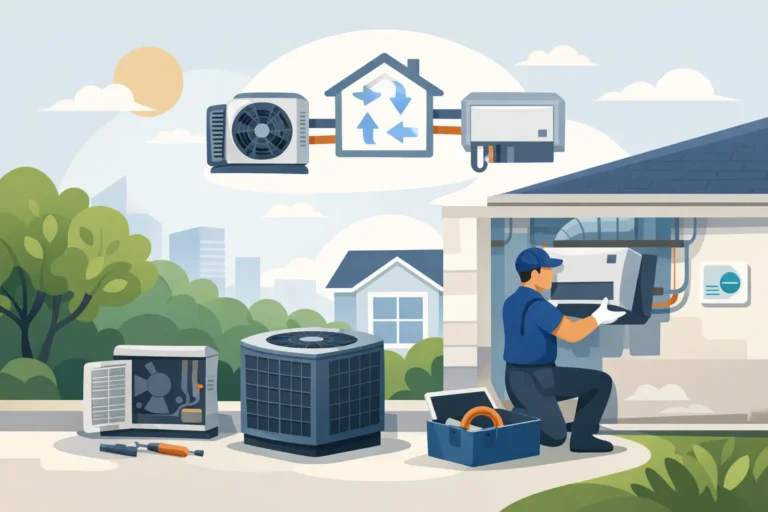
The air conditioner outside is only one part of the cooling system. Central air performance depends on the indoor coil, furnace or air handler, thermostat, refrigerant lines, electrical components, condensate drainage, and ductwork. Replacing only the outdoor unit may be appropriate in limited situations, but it is not always the best long-term value.
A professional should inspect the condition and compatibility of those connected components before recommending a system. For example, an older indoor coil may not match a new condenser correctly. That mismatch can affect efficiency, dependability, and manufacturer warranty coverage.
Just as important, the system must be sized for the home. Bigger is not automatically better. An oversized air conditioner may cool the house quickly but shut off before it removes enough humidity. That can leave rooms cool yet clammy, especially during a humid Illinois summer. A system that is too small may run constantly on the hottest days and struggle to maintain the temperature you want.
Proper sizing considers more than square footage. A quality load calculation accounts for insulation, window area and direction, ceiling heights, air leakage, the number of occupants, heat-producing appliances, and additions or renovations. If you have finished a basement, added a sunroom, replaced windows, or improved insulation since the current system was installed, the old unit’s size may no longer be the right reference point.
Understand Efficiency Ratings Without Overpaying
Central air conditioners are rated for seasonal efficiency. Higher-efficiency equipment generally uses less electricity over a cooling season, but it also costs more upfront. The best choice depends on how long you expect to stay in the home, how much you use cooling, local utility costs, and your comfort priorities.
A standard-efficiency system can be a practical fit for a budget-focused replacement, particularly when the existing ductwork and home layout are straightforward. Higher-efficiency equipment may make more sense for homeowners who plan to stay for many years, have high summer electric bills, or want quieter operation and better temperature consistency.
The compressor type also changes how a system feels in day-to-day use. Single-stage units run at full capacity whenever they are on. Two-stage systems can operate at a lower level during milder weather, which can improve comfort and humidity control. Variable-capacity systems make smaller adjustments over a wider range, often providing the most even temperatures and quietest performance, but they carry a higher initial cost.
There is no universal best option. A high-efficiency system cannot overcome severely undersized ducts, major air leaks, or a poorly designed installation. In many homes, addressing airflow issues delivers more comfort than simply choosing the highest available efficiency rating.
Do Not Overlook Ductwork and Airflow
When a home has hot upstairs bedrooms, weak airflow at certain vents, excess dust, or a noisy return grille, the duct system should be part of the replacement conversation. Central air equipment needs the correct amount of air moving across its coil. Too little airflow can reduce capacity, increase wear, and contribute to frozen coils. Too much airflow can create noise and reduce moisture removal.
Duct leaks are another common source of wasted energy. In attics, crawl spaces, and unfinished areas, conditioned air can escape before it reaches the rooms where it is needed. Damaged or poorly routed ducts may also restrict airflow. These issues are not always visible from the living space, which is why an installation estimate should include an inspection rather than assumptions.
Sometimes a duct adjustment, added return, zoning solution, or ductless system for a difficult room is more effective than trying to force a larger central unit to solve every comfort problem.
What a Complete Replacement Estimate Should Cover
A clear estimate makes it easier to compare proposals fairly. It should identify the equipment being installed and explain the scope of work, not simply provide one total price. Homeowners should understand whether the project includes removal and responsible disposal of the old equipment, a new indoor coil, electrical updates, refrigerant line work, drainage improvements, thermostat installation, startup testing, and permit handling where required.
Ask how the contractor will verify proper operation after installation. Refrigerant charge, static pressure, airflow, electrical readings, and temperature performance all need to be checked. Installation quality has a major effect on the life and efficiency of new equipment, even when the equipment itself is excellent.
It is also reasonable to ask about labor warranties, manufacturer warranty registration, maintenance requirements, and available financing. The lowest estimate can leave out important work. A more complete proposal may cost more initially while avoiding changes, add-ons, or performance problems after installation.
Plan the Timing and Budget Carefully
If an aging unit is still operating, replacing it before it fails can give you more control over the decision. You can compare options, consider efficiency levels, and schedule installation at a convenient time. Waiting until the system fails during peak summer heat may limit choices and add stress, especially for households with young children, older adults, pets, or anyone sensitive to heat.
That said, not every older system needs immediate replacement. If it is cooling reliably, has been maintained, and only needs a minor repair, keeping it in service may be reasonable. The goal is not to replace equipment prematurely. It is to avoid putting more money into a system that is becoming unreliable or inefficient.
When comparing cost, think beyond the equipment price. Consider expected repair expenses, utility savings, comfort improvements, warranty protection, and how long you expect to own the home. Financing can help spread out a planned replacement, but homeowners should still review the terms and select a monthly payment that fits comfortably within their budget.
Choose an Installer You Can Reach After the Job
A central air replacement is not complete when the crew leaves. You should have a local company that answers questions, stands behind its work, and is available if something needs adjustment. Look for licensed, insured, EPA-certified technicians and a clear track record of service in the community.
For homeowners in Oswego, Aurora, Montgomery, and nearby western Chicago suburbs, Brian & Sons provides straightforward replacement recommendations based on the home’s actual comfort needs. A qualified technician can help you compare practical options without pushing features that do not make sense for your space or budget.
Before the installation date, clear a path to the indoor and outdoor equipment, secure pets, and make sure the team can access the electrical panel and thermostat. After installation, ask for a walkthrough. You should know how to use the thermostat, replace or check filters, recognize normal operation, and schedule maintenance.
A new central air system should make summer feel less like something to manage. With the right sizing, careful installation, and ongoing maintenance, it can provide quiet, dependable comfort when your home needs it most.