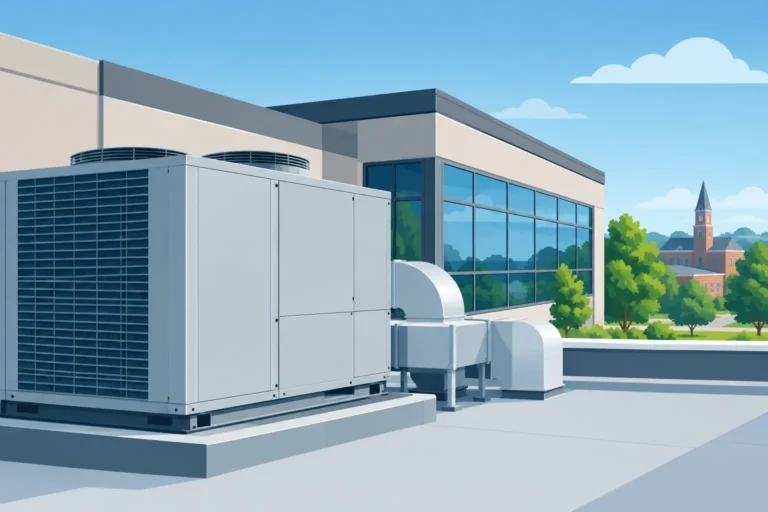
A failed rooftop unit on a humid July afternoon can empty a waiting room quickly. A furnace problem during a January cold snap can halt work, create safety concerns, and leave tenants calling for answers. Commercial HVAC Batavia IL service is not just about restoring a thermostat setting. It is about protecting the daily operation of your building, the people inside it, and the budget behind it.
For local businesses, property managers, and facility decision-makers, dependable heating and cooling requires more than a contractor who arrives when something breaks. It requires a plan for repairs, maintenance, equipment decisions, and fast support when conditions cannot wait.
What Commercial HVAC Needs to Cover
Commercial buildings place different demands on HVAC equipment than a typical home. A restaurant kitchen, medical office, retail store, warehouse, professional office, or multi-tenant property may all need different capacities, ventilation strategies, zoning, and operating schedules. One-size-fits-all recommendations can lead to comfort complaints, higher utility costs, and equipment that wears out before its time.
A reliable commercial HVAC provider starts by looking at the full system. That includes heating and cooling equipment, ductwork, thermostats or building controls, ventilation, exhaust, filtration, humidity, and the condition of electrical and condensate components. The goal is not simply to make the system run. The goal is to make it perform safely and consistently for the way your building is actually used.
A small office with uneven temperatures may need airflow adjustments or zoning rather than a new unit. A retail location with recurring summer failures may have an aging condenser, poor maintenance history, or a load issue that needs to be diagnosed before replacement is considered. Honest recommendations should explain the cause, the available options, and the likely cost of waiting.
Comfort Problems Often Point to Larger Issues
Hot and cold spots, rooms that never reach the set temperature, noisy equipment, rising utility bills, excess humidity, and frequent cycling are all reasons to schedule service. None automatically means the system needs to be replaced. In many cases, the issue comes down to a dirty coil, failing capacitor, refrigerant concern, clogged drain, worn blower component, control issue, or neglected filter.
However, repeated repairs deserve a closer look. If an older unit is breaking down several times a season, parts are becoming difficult to source, or the equipment can no longer maintain comfort during peak weather, replacement may be the more practical financial choice. The right decision depends on repair history, system age, energy use, the condition of related components, and how critical the space is to your operation.
Commercial HVAC Batavia IL Maintenance Protects Uptime
Preventive maintenance is one of the clearest ways to reduce surprise breakdowns. Commercial systems work hard through northern Illinois temperature swings, and small problems tend to grow when they are left through an entire heating or cooling season.
A professional maintenance visit should be more than a quick filter change. Technicians should inspect equipment operation, test critical safety controls, check electrical connections, evaluate moving parts, inspect belts where applicable, clear drains, assess coils, verify thermostat response, and look for warning signs that could interrupt service. Heating equipment also needs careful attention to combustion safety and venting.
Maintenance can help improve efficiency, but its biggest value is often operational. Finding a weak component during a planned visit is far less disruptive than finding it when the system quits during business hours. It also gives property owners and managers time to budget for a repair or replacement instead of making a rushed decision under pressure.
The proper maintenance schedule depends on the equipment and the environment. A lightly used office may have different needs than a busy storefront with frequent door traffic, a facility with specialized ventilation needs, or a business that runs long hours. Systems serving dusty areas, kitchens, workshops, or high-occupancy spaces may need more frequent filter checks and inspections.
When Repair Makes Sense and When Replacement Does Not Wait
A repair is often the sensible path when equipment is relatively young, the issue is isolated, and the system has otherwise performed reliably. Replacing a motor, contactor, thermostat, or other serviceable component can restore dependable operation without taking on the cost of a full system project.
Replacement becomes a stronger consideration when repair costs keep stacking up, efficiency has declined, or the equipment no longer meets the building’s needs. An undersized system may run constantly and still struggle with comfort. An oversized system may short-cycle, waste energy, and create humidity problems. Both situations call for proper evaluation, not guesswork.
For larger or more complex properties, equipment options may include rooftop units, split systems, boilers, heat pumps, ductless systems, or VRF systems. Each has benefits and trade-offs. A heat pump can provide efficient heating and cooling in the right application, while a boiler may remain the best fit for a building designed around hydronic heat. VRF systems can offer individual zone control, but they require knowledgeable design, installation, and service support.
Before approving replacement, ask for a clear explanation of what is being proposed and why. A sound recommendation should account for capacity, ventilation needs, existing infrastructure, operating hours, indoor comfort goals, and future plans for the space. It should also address whether ductwork, controls, electrical service, or drainage need attention as part of the project.
Ventilation and Indoor Air Quality Matter to Business Operations
Temperature is only part of indoor comfort. Stuffy rooms, lingering odors, high humidity, dry winter air, and excess dust can affect staff, customers, inventory, and the overall impression your business makes.
Ventilation needs vary by building use and occupancy. Offices may need help balancing fresh air and temperature control. Restaurants and commercial kitchens must manage heat, grease, and exhaust. Medical, educational, and customer-facing settings may place a greater emphasis on filtration and air quality. A qualified HVAC team can assess practical improvements such as filtration upgrades, humidification, dehumidification, duct repairs, or ventilation adjustments.
These improvements should be based on the space, not sold as a generic add-on. Higher-grade filtration can be helpful, but it must be compatible with the system’s airflow capabilities. Adding equipment without considering static pressure, maintenance requirements, and operating costs can create new problems instead of solving old ones.
What to Expect From a Commercial Service Partner
When your HVAC system needs attention, communication matters nearly as much as technical skill. Facility managers and business owners should not have to translate vague explanations into a decision for their team or tenants.
Look for licensed, insured, EPA-certified technicians who can explain the problem in plain language, provide practical options, and respect the urgency of an occupied commercial space. A provider should arrive prepared to diagnose the issue, communicate what is needed before moving ahead, and keep the work area professional and orderly.
Response time is especially important for no-heat and no-cooling calls. A 24/7 service option can make a meaningful difference when a failure occurs after hours, over a weekend, or before the next business day. It does not eliminate every repair delay, particularly if specialized parts are required, but it gives you a clear path to assessment and stabilization when time matters.
Brian & Sons provides commercial heating, cooling, ventilation, maintenance, repair, replacement, and emergency support with the straightforward service local property decision-makers expect. As a woman-owned company serving the western Chicago suburbs since 1997, our team focuses on clear recommendations, responsive scheduling, and comfort solutions that fit the needs of the building.
Build a Plan Before the Next Breakdown
The best time to review your commercial HVAC system is when it is operating normally. Keep records of repairs, note recurring comfort complaints, track equipment age, and schedule seasonal maintenance before severe weather arrives. That information makes service calls more productive and gives you a clearer picture of where your budget should go.
If your business is dealing with inconsistent comfort, unexpected shutdowns, or equipment nearing the end of its service life, a professional evaluation can replace uncertainty with a practical next step. A comfortable, well-maintained building lets your team focus on the work that keeps your business moving.