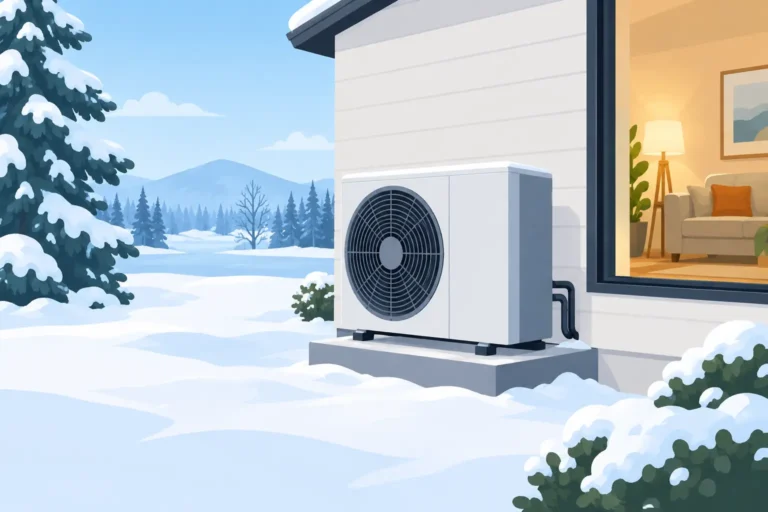
A January cold snap in the western Chicago suburbs is a serious test for any heating system. If you are considering replacing a furnace or adding a heat pump, the practical question is simple: can heat pumps work in winter? Yes. Properly selected and installed modern heat pumps can heat homes through Illinois winters, including well below freezing. The key is choosing equipment with the right cold-weather performance, sizing it correctly, and planning for backup heat when conditions call for it.
Heat pumps are not a one-size-fits-all replacement for every heating setup. A home’s insulation, ductwork, fuel costs, electrical capacity, and comfort expectations all matter. An honest system recommendation should account for those details, not just the outdoor temperature on the day of installation.
How Heat Pumps Produce Heat When It Is Cold
A furnace creates heat by burning fuel or using electric resistance elements. A heat pump works differently. It moves available heat from outdoor air into your home using refrigerant, a compressor, and a reversing valve. Even cold winter air contains heat energy that the system can collect.
That can sound counterintuitive when it is 10 degrees outside, but it is established heating technology. As the outdoor temperature falls, a heat pump must work harder to gather heat, and its efficiency and heating capacity decline. Cold-climate heat pumps are designed to keep operating effectively at much lower temperatures than older models could handle.
In summer, the process reverses. The same system removes heat from your home to provide air conditioning. For many homeowners, that year-round capability is a major reason to consider a heat pump.
Can Heat Pumps Work in Winter Below Freezing?
Yes, but performance depends on the model and the installation. Many current cold-climate systems provide useful, efficient heat at 0 degrees Fahrenheit and below. Some are designed to maintain significant heating capacity in temperatures well below zero.
That does not mean every heat pump should be expected to carry a home alone through every extreme-weather event. During a prolonged stretch of very low temperatures, supplemental heat may be the more practical and economical choice. In the Aurora, Oswego, and surrounding areas, that often means pairing a heat pump with an existing or new gas furnace.
This setup is called a dual-fuel system. The heat pump handles heating during milder cold weather, when it can operate very efficiently. When temperatures reach a preset balance point, the furnace takes over. Your thermostat manages the transition automatically, so you do not have to decide which system should run.
A dual-fuel approach can be a strong fit for homeowners who want high-efficiency cooling and lower heating use during much of the season but also want the confidence of a gas furnace during severe cold. An all-electric heat pump system can also work, usually with electric backup heat, but operating costs and electrical requirements deserve careful review.
What Happens During Defrost Mode?
In winter, moisture in the outdoor air can freeze on a heat pump’s outdoor coil. This is normal. The system periodically enters defrost mode to melt the frost and keep airflow moving across the coil.
During defrost, the unit briefly reverses operation and may use supplemental heat indoors to prevent a blast of cool air from coming through the vents. You may see steam rising from the outdoor unit or hear a change in its sound. Those signs are typically normal, not a reason for alarm.
What is not normal is a unit that stays buried in ice, runs constantly without warming the home, makes loud mechanical noises, or repeatedly trips breakers. Those symptoms warrant professional service before a minor issue turns into a no-heat call.
The Details That Determine Winter Performance
The equipment label alone cannot tell you whether a heat pump will keep your home comfortable. Correct design and installation make the difference between a dependable system and one that struggles on cold nights.
Proper sizing matters more than bigger equipment
An oversized heat pump may cycle on and off too often, creating uneven temperatures and unnecessary wear. An undersized system may rely too heavily on backup heat. A qualified HVAC contractor should perform a load calculation that considers your home’s square footage, insulation levels, windows, air leakage, orientation, and duct system.
Ductwork has to deliver the heat
Heat pumps typically supply air at a lower temperature than a gas furnace, even when they are heating well. The air is still warm, but it may not feel as hot at the register as furnace heat. Leaky, undersized, or poorly balanced ducts can make that difference more noticeable, especially in rooms far from the equipment.
Addressing duct leaks, airflow restrictions, and poorly insulated runs can improve comfort and help the system operate as intended. In some homes, ductless heat pumps are a practical option for additions, converted garages, upstairs rooms, or areas without suitable ductwork.
Insulation and air sealing protect your investment
No heating system can efficiently overcome major heat loss. Drafty windows, attic air leaks, inadequate insulation, and unsealed rim joists allow expensive conditioned air to escape. Improving the home’s thermal envelope can reduce the size of system needed and improve comfort with either a furnace or a heat pump.
The thermostat and controls must be set up correctly
A heat pump thermostat is not simply a standard furnace thermostat with a different label. It needs the correct staging, auxiliary-heat settings, and changeover temperatures. Poor programming can cause backup heat to run more often than necessary or delay it when it is needed.
Heat Pump, Furnace, or Dual Fuel: Which Is Right?
There is no single answer for every household. A heat pump may be a good standalone choice if your home is well insulated, your electrical service can support the system, and you want to move toward all-electric heating. It may also make sense where natural gas is unavailable.
A high-efficiency gas furnace remains a reliable option for homeowners who prefer powerful heat delivery and want predictable performance during the coldest Illinois weather. Gas furnaces can also be the simplest replacement when an existing system and ductwork are in good condition.
Dual fuel gives many local homeowners a useful middle path. It combines a heat pump’s efficient cooling and moderate-weather heating with a furnace’s capacity in deep cold. The initial installation cost can be higher because it involves two heating sources, but it can offer flexibility, comfort, and long-term operating advantages.
The best choice depends on your utility rates, existing equipment, home condition, and goals. It should be based on an on-site evaluation, not a generic promise that one type of system is always better.
Ways to Help a Heat Pump Through Winter
A heat pump needs the same attention as any other central HVAC system, with a few winter-specific considerations. Keep the outdoor unit clear of snow, leaves, ice buildup, and stacked items. Maintain open airflow around it, but do not cover it with a tight winter cover that can trap moisture or interfere with operation.
Replace or clean your indoor air filter on schedule. A restricted filter reduces airflow and can make the system work harder. Keep supply registers and return grilles open and unobstructed, especially in rooms that tend to feel cooler.
Annual professional maintenance is equally important. A technician can inspect refrigerant levels, electrical components, airflow, drainage, defrost operation, and backup heat controls. Maintenance also gives you a chance to catch worn parts before they cause a midwinter breakdown.
If you notice weak airflow, ice that does not clear, unusual odors, frequent system cycling, or a sharp increase in your electric bill, schedule service promptly. Waiting for a system to fail on the coldest night of the year rarely saves money or stress.
A Practical Answer for Chicagoland Homes
Heat pumps can absolutely work in winter, but the right question is whether a specific heat pump system will work well for your specific home. Cold-climate equipment, accurate load calculations, sound ductwork, and a realistic backup-heating plan are what create dependable results.
Brian & Sons helps homeowners evaluate those details clearly, whether the answer is a heat pump, a high-efficiency furnace, a ductless system, or a dual-fuel combination. A thoughtful evaluation before installation gives you a better chance of enjoying efficient comfort when winter is mild and reliable heat when Illinois weather is anything but.