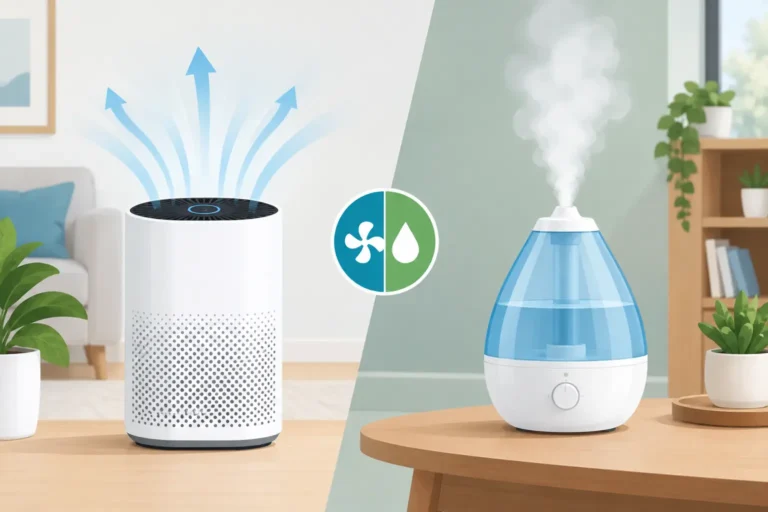
A dry, scratchy throat after the furnace starts running is not the same problem as a dusty room, lingering odors, or allergy symptoms. When comparing an air purifier versus humidifier, the right choice comes down to what is actually affecting your indoor air. One cleans airborne particles. The other adds moisture. In many Chicagoland homes, especially during a long heating season, both can play a useful role.
Choosing the wrong solution can leave you spending money without solving the issue. A humidifier will not remove pet dander or smoke particles, and an air purifier will not stop static shocks or dry nasal passages. Here is how to tell the difference and decide what makes sense for your home.
Air Purifier Versus Humidifier: The Main Difference
An air purifier is designed to reduce airborne contaminants. Depending on its filter and technology, it may capture dust, pollen, pet dander, mold spores, and some smoke particles. Certain systems can also help address odors and volatile organic compounds when they include activated carbon filtration.
A humidifier adds water vapor to dry indoor air. During winter, heated air can become uncomfortably dry, particularly in homes with forced-air furnaces. Proper humidity can make rooms feel more comfortable, help protect wood floors and furnishings, and ease dry skin, irritated sinuses, and static electricity.
The simplest way to remember the difference is this: an air purifier improves air cleanliness, while a humidifier improves moisture balance. They address separate conditions, although those conditions can happen at the same time.
When an Air Purifier Is the Better Choice
An air purifier may be worth considering if someone in your household deals with seasonal allergies, asthma triggers, pet dander, or sensitivity to dust. It can also be useful after wildfire smoke drifts into the area, during remodeling projects, or when a home seems to collect dust quickly despite regular cleaning.
Portable air purifiers are often a practical option for a bedroom, nursery, home office, or another frequently used room. For whole-home coverage, an HVAC-integrated air purifier can treat air as it circulates through your heating and cooling system. This approach is typically more effective for households that want support throughout the home rather than in one room.
Still, an air purifier has limits. It does not replace housekeeping, source control, or proper ventilation. If there is active mold growth, a plumbing leak, a pest issue, or excessive dust entering through damaged ductwork, those underlying problems need attention. A purifier can help manage particles, but it cannot repair the source.
What to look for in an air purifier
Filter quality and correct sizing matter more than flashy features. A unit that is too small for the room will not move enough air to make a meaningful difference. For particle concerns, look for high-efficiency filtration suited to the application. For odors, smoke, or cooking smells, activated carbon can be helpful.
For a central HVAC system, filter selection must be balanced with airflow. Installing an overly restrictive filter in a system not designed for it can strain equipment and reduce comfort. An experienced HVAC technician can recommend filtration that supports better indoor air without creating unnecessary pressure on your furnace or air conditioner.
When a Humidifier Is the Better Choice
A humidifier is usually the better fit when the problem is dry air. Common signs include frequent static shocks, dry or itchy skin, cracked lips, irritated eyes, a dry nose or throat, and wood floors or furniture that seem to shrink or separate during winter.
For most homes, indoor relative humidity is generally most comfortable in the 30% to 50% range. The right setting changes with outdoor temperatures. When it is very cold outside, humidity that is too high can cause condensation on windows, which may lead to moisture damage or mold growth around frames and walls.
A portable humidifier can help in a single bedroom, but it requires frequent cleaning and refilling. If the unit is not maintained, mineral buildup and microbial growth can become concerns. Distilled water may reduce white dust from minerals, depending on the type of unit.
A whole-home humidifier connects to the HVAC system and distributes moisture through the ductwork. It is often a convenient choice for homeowners who want more consistent comfort throughout the house. These systems also need seasonal service, including replacing water panels when needed and checking the drain line, water feed, and humidistat.
More humidity is not always better
Adding too much moisture can create a new indoor air quality problem. Excess humidity can encourage mold, mildew, dust mites, and condensation. If windows are wet inside, rooms feel clammy, or there is a musty smell, lower the humidifier setting and investigate the cause.
This is why a humidistat is valuable. It gives you a clearer picture than guessing based on dry skin or how the house feels on a particular day. Good humidity control is about maintaining a healthy range, not running a humidifier at full output all winter.
Can You Use an Air Purifier and Humidifier Together?
Yes. Many homes benefit from both, particularly during Illinois winters. A whole-home humidifier can address dry air caused by constant furnace operation, while an air purifier or upgraded filtration system can reduce circulating dust, dander, and other particles.
Using both makes sense when you have dry-air symptoms and particle-related concerns. For example, a family may notice static electricity and dry throats in January while also managing pet hair, allergies, or dust from a busy household. The humidifier and purifier are not competing solutions in that situation. They are serving different purposes.
Placement matters with portable equipment. Do not aim a humidifier directly at an air purifier, furniture, walls, or electronics. Give each unit enough room for proper airflow, and clean both according to the manufacturer’s instructions. A dirty humidifier or neglected purifier filter can reduce the benefits you expect.
Start With the Problem, Not the Product
Before buying equipment, identify what is happening in your home. A simple indoor humidity monitor can help confirm dry-air concerns. If you see excessive dust, allergy symptoms, uneven airflow, or persistent odors, look beyond a single appliance. Your HVAC filter, duct condition, return-air placement, ventilation, and equipment maintenance may all affect the air you breathe.
For example, a furnace filter that is overdue for replacement can allow more particles to circulate and may restrict airflow as it becomes loaded. Leaky or poorly insulated ductwork can pull dusty air from attics, crawlspaces, or wall cavities. A humidifier will not correct those issues, and even the best purifier may only partly mask them.
A professional indoor air quality evaluation can be especially helpful if symptoms continue, if you see recurring condensation, or if a household member has significant respiratory sensitivities. The goal should be an honest recommendation based on your home, equipment, and budget – not adding products you do not need.
A Practical Choice for Your Home
Choose an air purifier when your priority is reducing airborne particles, allergens, dust, or odors. Choose a humidifier when your priority is relieving dry indoor air and maintaining comfortable moisture levels. Consider both when winter dryness and air cleanliness are equally important concerns.
For homeowners in Oswego and surrounding western suburbs, Brian & Sons can help evaluate whether a portable solution, whole-home humidifier, upgraded filtration, or HVAC-integrated air purifier is the right fit. A comfortable home should feel easier to live in, not harder to manage – and the best indoor air solution starts with finding the real cause of the discomfort.