A purifier can make a noticeable difference when spring pollen is coating every surface, a pet is shedding year-round, or someone in the household wakes up congested. But the best home air purifier systems are not always the biggest or most expensive units. The right choice depends on what is in your air, how your home is laid out, and whether you need room-by-room help or a solution that works with your HVAC system.
For homeowners in the western Chicago suburbs, that distinction matters. Homes stay closed up through long heating seasons, then face high pollen counts, humidity, and outdoor pollutants in warmer months. A good air-cleaning plan should improve comfort without creating unnecessary noise, maintenance, or cost.
Start With the Problem You Want to Solve
Air purifiers do not all remove the same contaminants equally well. Before comparing products or system types, identify the concern that is affecting your household most often.
For allergies, dust, pet dander, and many airborne particles, filtration is the priority. For cooking smells, smoke odors, volatile organic compounds, and other gases, you need an odor- and gas-focused solution as well. If mold growth, excess humidity, or ventilation problems are the root issue, an air purifier may help with particles and odors but will not correct the underlying moisture or airflow problem.
That is why a purifier should not be treated as a replacement for regular HVAC maintenance, duct repairs, proper ventilation, or moisture control. It is one part of healthier indoor air.
The Best Home Air Purifier Systems by Type
There is no single system that fits every home. These are the main options homeowners should compare.
Portable Room Air Purifiers
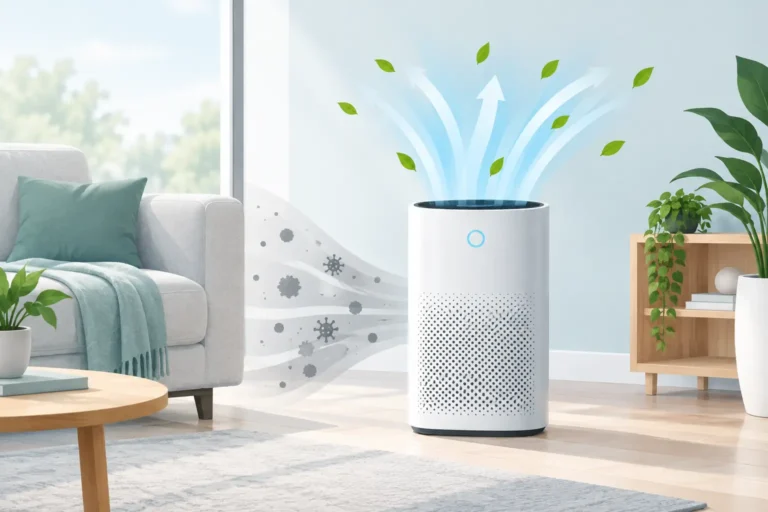
A portable purifier is a self-contained unit designed for a bedroom, office, nursery, or main living area. It pulls room air through one or more filters and returns cleaner air to the space.
For many households, this is the most practical starting point. A properly sized portable unit can be especially useful in the room where an allergy sufferer sleeps or where pets spend most of their time. It also lets you address a specific concern without changing your HVAC equipment.
The trade-off is coverage. One portable unit in the living room cannot effectively clean the air in upstairs bedrooms behind closed doors. Larger homes may need several units, and each one needs its own filter changes, outlet, and floor space. Fan noise can also become a factor if the unit must run at a high speed to keep up.
Whole-Home HVAC Air Purifiers
Whole-home air purifiers are installed as part of a forced-air heating and cooling system. As the system circulates air, the purifier treats air moving through the return ductwork before it is delivered throughout the house.
This approach is often the better fit for homeowners who want consistent air treatment across multiple rooms without placing portable units around the home. Depending on the equipment selected, a whole-home solution may use enhanced media filtration, electronic air cleaning, ultraviolet treatment, or a combination of technologies.
Coverage is the biggest advantage, but installation has to match the home. The purifier must be compatible with the furnace or air handler, ductwork, available space, and airflow requirements. A filter that is too restrictive can reduce airflow if the system was not designed for it. That can affect comfort, efficiency, and equipment performance, which is why professional sizing matters.
High-Efficiency Media Filters
A media air cleaner is an upgraded filter cabinet installed at the HVAC system. It uses a deep pleated filter with much more surface area than a standard one-inch filter. This allows it to capture more fine particles while often maintaining better airflow than a very dense basic filter.
For dust, pollen, pet dander, and general household particle control, this is one of the most dependable and straightforward whole-home options. It has no complicated electronics, and maintenance is usually as simple as replacing the media on the recommended schedule.
Media filtration does not do much for odors or chemical gases on its own. It also does not address biological concerns the same way a germicidal treatment may. Still, for many homes, it offers the best balance of air quality improvement, reliability, and ongoing cost.
Electronic and UV Air Treatment
Electronic air cleaners use electrically charged components to capture particles. Some models can be effective, but performance depends heavily on correct installation and regular cleaning. If the collection components are neglected, efficiency can drop quickly.
UV lights are installed near HVAC coils or inside ductwork to target biological growth in areas that can become damp. They are most useful when they help keep the indoor coil cleaner, supporting airflow and reducing the conditions where mold and mildew may develop. UV treatment is not a catch-all answer for dust, dander, or odors, so it is commonly paired with high-quality filtration.
When considering electronic or UV equipment, ask how it will be maintained, what it is designed to address, and whether the product produces any byproducts. A clear explanation is more valuable than a broad promise that one device will solve every indoor air concern.
How to Size an Air Purifier Correctly
A purifier that is too small will run constantly with limited results. One that is oversized may cost more than necessary and create avoidable noise. With portable units, focus on the manufacturer’s recommended room size and the clean air delivery rate, often called CADR.
Room dimensions matter, but ceiling height, open floor plans, pets, carpeting, and the severity of allergy symptoms matter too. A purifier rated for a 300-square-foot room may be adequate for light dust control, while a household dealing with heavy pet dander or smoke may benefit from a unit sized for a larger space.
For whole-home systems, sizing is about more than square footage. A qualified HVAC technician should consider the system’s airflow, filter cabinet size, duct condition, blower capacity, and how often the fan operates. If the HVAC fan only runs during heating or cooling calls, whole-home purification will not be continuous unless the system is set up to circulate air independently.
Filters Matter More Than Marketing Terms
Marketing labels can be confusing. Terms such as “HEPA-type,” “hospital-grade,” or “allergen defense” are not interchangeable. Look for specific information about what the unit captures and at what airflow rate.
True HEPA filtration is highly effective at collecting very small particles, but it is more common in portable units than in standard residential HVAC systems. A high-MERV filter can also capture a significant amount of fine particulate matter, but higher is not automatically better. Some furnaces and air handlers cannot handle a high-resistance filter without losing needed airflow.
For odors and gases, activated carbon is the key filter material. The amount of carbon matters. A thin carbon-coated filter may provide modest odor reduction, while a substantial carbon bed generally has greater capacity. No carbon filter lasts forever, especially in homes with frequent cooking odors, smoke exposure, or strong cleaning products.
Maintenance Is Part of the Purchase Decision
Any air purifier becomes less effective when filters are overdue or components are dirty. Before buying, ask about replacement filter cost, availability, maintenance intervals, and whether the system alerts you when service is due.
Portable units commonly need prefilter cleaning every few weeks and main filter replacement every six to 12 months, though conditions vary. Whole-home media filters may last longer, but households with pets, construction dust, or frequent fan operation may need more frequent replacement.
Keep supply and return vents clear, change filters on schedule, and have the heating and cooling system maintained regularly. A clean filter cannot make up for a dirty coil, poorly sealed ductwork, or a system that is not moving enough air.
When a Whole-Home System Is Worth It
A whole-home air purifier is often worth considering when several members of the household deal with allergies, dust accumulates quickly throughout the house, or you want cleaner air without managing multiple portable devices. It is also a sensible addition when replacing a furnace, air handler, or ductwork because installation can be more efficient during a larger project.
A portable purifier may be the better value if the issue is limited to one bedroom, you rent your home, or your HVAC system does not run often enough to provide consistent circulation. Many homes benefit from both: whole-home filtration for everyday particle control and a portable HEPA unit in a bedroom for targeted support.
If you are unsure which approach fits your home, Brian & Sons can assess your existing HVAC system, explain compatible indoor air quality options, and provide an honest recommendation based on your goals and budget. Cleaner air should feel like a practical improvement to your home comfort, not another complicated system to manage.