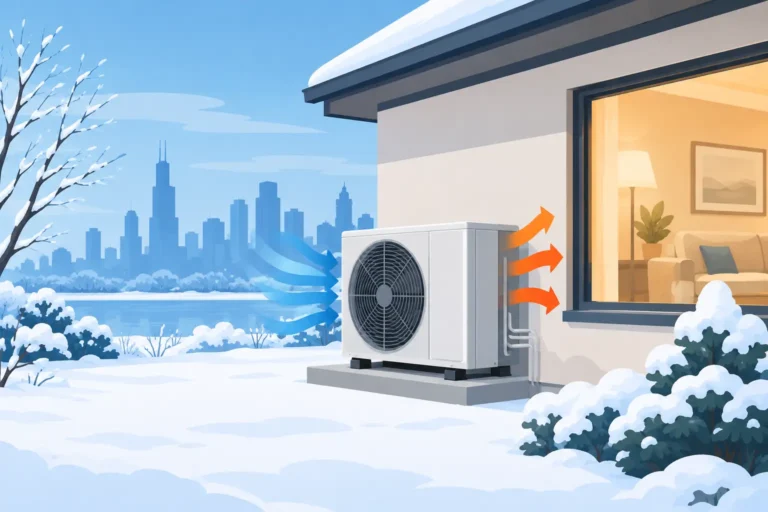
A heat pump may look like a standard outdoor air-conditioning unit, which is why many homeowners ask a fair question before replacing a furnace: do heat pumps work when an Illinois winter turns bitterly cold? The answer is yes – when the system is properly selected, sized, installed, and maintained for the home. But the right setup is not identical for every household.
Modern heat pumps can provide dependable heating through much of a Chicagoland winter while also handling summer cooling. For some homes, an all-electric heat pump is a practical replacement for a traditional furnace and air conditioner. For others, a dual-fuel system that pairs a heat pump with a gas furnace offers the best balance of comfort, operating cost, and cold-weather confidence.
Do Heat Pumps Work in Illinois Winters?
Yes. Today’s cold-climate heat pumps are designed to pull usable heat from outdoor air even when temperatures are well below freezing. That can sound counterintuitive, but cold air still contains heat energy. A heat pump uses refrigerant and a compressor to collect that energy outdoors and move it inside.
As outdoor temperatures fall, a heat pump has to work harder and its heating output gradually decreases. Older equipment often struggled in severe cold, which is one reason some homeowners remain skeptical. Newer cold-climate models perform far better at low temperatures and can continue heating efficiently in conditions common across Oswego, Aurora, and surrounding communities.
There is still an important distinction between “works” and “is the best fit.” On the coldest days of the year, a heat pump may need help from a backup heat source. That is not necessarily a problem or a sign that the equipment has failed. It is part of a system design that keeps your home comfortable when outdoor conditions demand more heat than the heat pump can supply on its own.
How a Heat Pump Heats and Cools Your Home
A furnace creates heat by burning fuel or using electric resistance elements. A heat pump moves heat. In heating mode, it pulls heat from outside air and transfers it indoors. In cooling mode, it reverses that process, moving heat out of your house just like a central air conditioner.
Because it moves existing heat rather than creating all of it from scratch, a heat pump can deliver more heating energy than the electricity it consumes during moderate weather. That efficiency can make it an appealing option for homeowners looking to reduce gas use or replace both an aging air conditioner and furnace at the same time.
During winter, the outdoor coil may collect frost. The system periodically enters a short defrost cycle to melt that frost and protect performance. You may notice steam rising from the outdoor unit or hear a temporary change in sound during defrost. Both are usually normal. The system may briefly use auxiliary heat indoors so the air coming from the vents stays comfortable.
Auxiliary Heat Is Not Always an Emergency
Many all-electric heat pump systems use electric heat strips for auxiliary or backup heat. These strips can take over during defrost cycles or when the outdoor temperature drops below the point where the heat pump can meet the home’s demand alone.
Electric backup heat is effective, but it generally costs more to operate than the heat pump itself. A dual-fuel system handles this differently. It uses the heat pump during milder cold weather, then automatically switches to a high-efficiency gas furnace when it becomes more economical or necessary for comfort. For many homes with existing natural gas service, this approach is worth considering.
What Determines Whether a Heat Pump Will Perform Well?
The brand name on the cabinet matters less than the planning behind the installation. A high-quality unit installed without proper calculations can leave a home unevenly heated, noisy, or unnecessarily expensive to operate.
First, the equipment must be correctly sized. Bigger is not automatically better. An oversized heat pump can cycle on and off too frequently, reduce humidity control in summer, and wear components faster. An undersized system may rely too heavily on backup heat. A professional load calculation considers the home’s square footage, insulation, windows, air leakage, ceiling height, orientation, and local design temperatures.
Your ductwork also plays a major role. Heat pumps often run longer, gentler heating cycles than furnaces. That steady operation is good for consistent comfort, but leaky, restricted, or poorly balanced ducts can prevent heated air from reaching rooms evenly. Before installing new equipment, it is smart to have the duct system evaluated, especially in older homes or homes with hot and cold spots.
Insulation and air sealing affect the decision, too. If a house loses heat rapidly through an attic, drafty windows, rim joists, or unsealed penetrations, any heating system will have to work harder. Addressing major building-envelope issues can improve comfort and may allow for a smaller, more efficient HVAC system.
Finally, thermostat settings and controls matter. A dual-fuel heat pump must be programmed to change over to furnace heat at the right temperature or cost point. A properly configured thermostat prevents the system from switching too early or relying on expensive electric backup heat more often than needed.
Which Heat Pump Setup Makes Sense for Your Home?
Central ducted heat pumps are a natural choice for homes that already have usable forced-air ductwork. They can replace a conventional air conditioner and work with either electric backup heat or an existing gas furnace, depending on the system design.
Ductless mini-split heat pumps are useful when ducts are not available or do not serve certain areas well. They are commonly used for additions, finished basements, garages, sunrooms, and older homes with difficult layouts. Because each indoor unit has its own control, ductless systems can also help solve room-by-room comfort problems.
For a home with a newer, reliable gas furnace, a heat pump can sometimes be added as the primary cooling system and a first-stage heating source. The furnace remains available for severe weather. This can extend the value of existing equipment rather than requiring an immediate full replacement.
An all-electric heat pump may be a strong option for homeowners who want to move away from fossil fuel heating, have access to favorable electric rates, or are making broader efficiency upgrades. The best choice depends on your comfort expectations, utility costs, equipment condition, and budget – not a one-size-fits-all recommendation.
Will a Heat Pump Lower Your Energy Bills?
It can, particularly during spring, fall, and moderately cold winter days. A heat pump is usually far more efficient than electric baseboard heat or electric resistance heating. Compared with a high-efficiency gas furnace, however, the savings depend on local electricity and natural gas prices, the system’s cold-weather performance, and how often backup heat runs.
That is why an honest estimate should look beyond the advertised efficiency rating. Your existing energy usage, insulation level, thermostat habits, and whether your current furnace is nearing replacement all belong in the conversation. Homeowners should also factor in available financing, manufacturer offers, and potential utility or tax incentives, when applicable.
A heat pump should not be sold as a guarantee of lower bills in every circumstance. It should be presented as a comfort and efficiency option with measurable trade-offs. The right contractor will explain those trade-offs clearly before recommending equipment.
Maintenance Helps Protect Cold-Weather Performance
Like any heating and cooling system, a heat pump needs regular service. A technician should inspect refrigerant levels, electrical components, airflow, coils, drainage, defrost operation, and the thermostat controls. Keeping the outdoor unit clear of leaves, snow buildup, and drifting snow also helps it operate as intended.
Avoid covering the outdoor unit tightly for winter. Heat pumps need open airflow around the cabinet. If snow accumulates around it, carefully clear the area without striking the coil or refrigerant lines. Indoors, replace filters on schedule and keep supply and return vents open and unobstructed.
If your system blows cool air for an extended period, runs constantly without warming the home, makes unusual noises, or shows an error message, schedule service promptly. Small performance issues can become expensive comfort problems during a cold snap.
A heat pump is not the right answer for every property, but it is a proven option for many Illinois homes when the design is based on real conditions rather than assumptions. For a clear recommendation, ask a qualified HVAC professional to evaluate your home, your existing equipment, and how you want your comfort system to perform on the coldest night of the year.