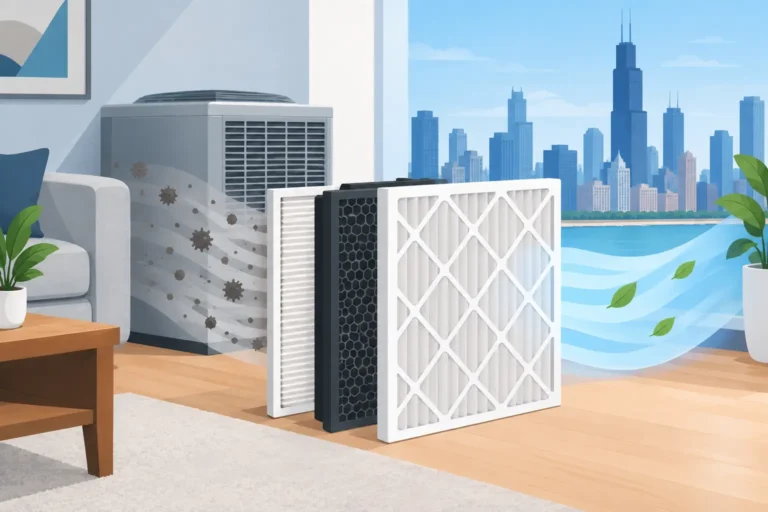

A dusty home can make even a clean room feel unfinished. If you are wiping furniture constantly, seeing dust collect near vents, or noticing more sneezing when the air conditioner runs, choosing the best AC filters for dust can make a real difference. The right filter helps your HVAC system capture airborne particles before they circulate through your home again – but the highest-rated filter is not automatically the right one.
For homeowners in the western Chicago suburbs, filter selection also has to account for long cooling seasons, pollen, open windows during mild weather, pets, and older equipment that may not be designed for very restrictive filtration. Here is how to make a smart choice without putting unnecessary strain on your air conditioner.
What Makes an AC Filter Good for Dust?
Dust is not one single thing. It is a mix of skin cells, fabric fibers, soil, pet dander, pollen, and tiny particles that enter from outdoors. A filter that only catches larger debris protects HVAC equipment, but it may not noticeably reduce the fine dust settling on tables and floors.
The key measurement is the filter’s MERV rating, short for Minimum Efficiency Reporting Value. In most homes, a MERV 8 filter is a solid baseline. It captures many common household particles, including larger dust, pollen, lint, and mold spores, while allowing good airflow through a properly maintained system.
For more meaningful dust control, MERV 11 is often the best balance. It catches finer dust and pet dander more effectively than a basic filter, yet it is usually compatible with modern residential HVAC equipment when the filter is sized correctly and changed on schedule. This is why MERV 11 filters are frequently among the best AC filters for dust in homes with pets, busy families, or allergy concerns.
MERV 13 can provide even finer filtration, including some smaller particles that MERV 8 and MERV 11 filters may miss. However, it creates more resistance to airflow. Some systems can handle it well, while others cannot. Installing a MERV 13 filter in a system not designed for it can contribute to weak airflow, frozen evaporator coils, reduced comfort, higher energy use, and avoidable repairs.
The Best Filter Choice Depends on Your Home
There is no one-size-fits-all filter recommendation. The best choice depends on the health needs in your household, how dusty your home gets, your filter cabinet size, and your HVAC system’s available airflow.
For most homes: MERV 8
Choose a quality pleated MERV 8 filter if your main goal is basic dust reduction and HVAC protection. It is a dependable, budget-friendly option for homes without significant allergy symptoms, shedding pets, or unusual indoor air quality concerns.
Avoid the inexpensive flat fiberglass filters if reducing dust is your priority. They are designed primarily to keep large debris out of the equipment. They allow much of the smaller airborne dust that affects your indoor comfort to continue circulating.
For pets, allergies, and visible dust: MERV 11
A pleated MERV 11 filter is often the practical sweet spot. It can capture smaller dust particles, pet dander, pollen, and many mold spores without the higher resistance of a MERV 13 filter. For many households, that means cleaner air and less frequent dusting without sacrificing system performance.
If you have one or more pets, a MERV 11 filter is especially worth considering. Pet hair may be easy to see, but the dander attached to it is far smaller and can stay airborne. A properly fitted MERV 11 filter helps reduce what keeps moving through the return air system.
For stronger filtration needs: MERV 13, with professional guidance
MERV 13 may be appropriate for households with serious allergy sensitivities, respiratory concerns, or a strong need for higher particle capture. It is also a good option in equipment specifically designed for higher-efficiency filtration.
Before moving to MERV 13, have an HVAC professional confirm that your blower, ductwork, return-air setup, and filter cabinet can support it. Filtration is only helpful when air can move through the system as intended. A filter that is too restrictive can create a bigger comfort problem than the dust it is meant to solve.
Filter Thickness Matters as Much as MERV
A 1-inch filter and a 4-inch media filter can have the same MERV rating, but they do not perform the same way over time. Thicker filters have more surface area, which lets them hold more dust while maintaining airflow longer. They are often a better solution for homes that deal with heavy dust, pets, or frequent allergy irritation.
A 4-inch or 5-inch media filter may last six to 12 months, depending on the home and system. A 1-inch filter often needs replacement every one to three months. Do not rely on the calendar alone. A filter can load up quickly during a renovation, wildfire smoke event, high-pollen stretch, or period when the system runs nearly nonstop.
Always use the exact filter dimensions required by your cabinet. Nominal sizes, such as 16 x 25 x 1, can differ slightly from actual filter dimensions. A filter that is too small can leave gaps that allow unfiltered air and dust to bypass it. One that is forced into place can bend, restrict airflow, or be difficult to remove.
How Often Should You Change an AC Filter for Dust?
For a standard 1-inch pleated filter, check it monthly and plan to replace it every 30 to 90 days. Homes with pets, smokers, construction dust, or frequent AC use should generally change filters more often. If the filter looks gray, packed with debris, or visibly bowed inward, replace it.
Thicker media filters have a longer service life, but they still need inspection. Waiting until a filter is completely clogged is hard on your equipment. Restricted airflow can cause the air conditioner to run longer, cool unevenly, and work harder than necessary.
A simple habit helps: write the installation date on the filter frame. Set a reminder to inspect it before the next month of heavy heating or cooling use. This small maintenance step can protect comfort, efficiency, and equipment life.
Signs Your Filter Is Not Solving the Dust Problem
A better filter can reduce airborne dust, but it cannot correct every source of dust in a home. If you are changing filters regularly and still see excessive buildup, the issue may be elsewhere.
Leaky return ducts can pull dusty air from attics, basements, crawl spaces, or wall cavities. Gaps around the filter rack can allow air to bypass the filter. Dirty supply registers, poorly sealed windows, aging carpet, and an unbalanced HVAC system can also add to the problem. In some homes, a whole-home air purifier or upgraded filtration cabinet is a better answer than simply moving to a denser 1-inch filter.
Watch for warning signs that call for service: rooms that cool unevenly, noticeably weak airflow, ice on refrigerant lines, an air conditioner that runs constantly, or a filter that turns dirty far sooner than expected. These can point to airflow, ductwork, or equipment issues that deserve a professional inspection.
Avoid These Common Filter Mistakes
Do not stack two filters together to get “extra” filtration. It restricts airflow and does not produce a reliable result. Also avoid using a filter with a higher MERV rating simply because it sounds better. Your system needs the right level of filtration, not the maximum possible restriction.
Make sure the airflow arrow on the filter frame points toward the furnace or air handler. In most systems, that means the arrow points away from the return grille and toward the equipment. An incorrectly installed filter can reduce effectiveness and may flex or collapse over time.
Finally, do not forget the rest of your maintenance. A clean filter supports better air conditioning performance, but professional seasonal maintenance checks refrigerant operation, electrical components, condensate drainage, coils, and overall airflow. Those details matter when you want dependable cooling through a humid Illinois summer.
If dust remains a daily frustration after upgrading your filter and keeping up with replacements, Brian & Sons can assess your system, filter setup, and indoor air quality options. The right solution should make your home feel cleaner and more comfortable without asking your AC system to work harder than it should.