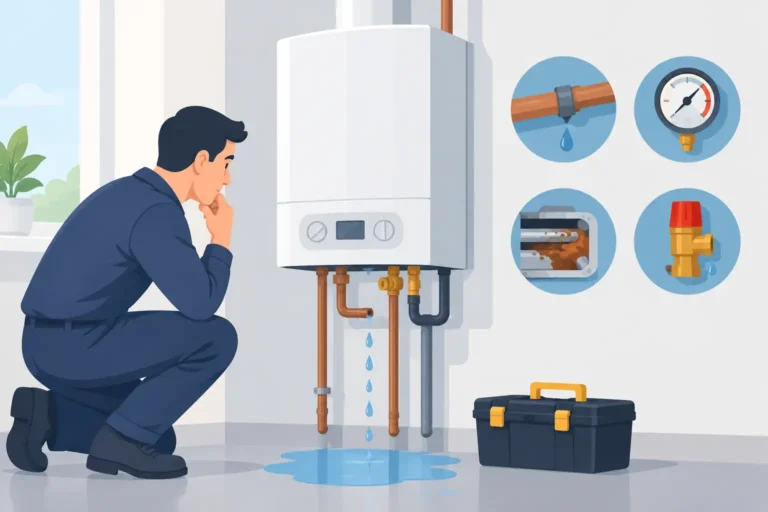

A puddle beneath a boiler is easy to dismiss as a small plumbing issue, especially if the system is still producing heat. But when homeowners ask, “why does a boiler leak?” the answer can range from a loose fitting to a safety-control problem or corrosion inside the unit. Addressing it early can help protect your equipment, floors, and heating reliability when Illinois temperatures drop.
Why Does a Boiler Leak?
A boiler heats water and circulates it through radiators, baseboards, or radiant-floor tubing. Because the system operates with water, pressure, heat, and numerous fittings working together, a leak can start in several places. The spot where water lands is not always the spot where the problem began. Water can run along piping, drip from a valve, or collect underneath the cabinet before it becomes visible.
The first useful clue is the condition of the water. Clear water may point to a valve, fitting, or pressure-related issue. Rust-colored water can suggest corrosion inside the boiler or connected piping. Water that appears only while the boiler is running may be tied to heat and pressure changes. A constant drip, even when the system is off, may come from the domestic water side of a combi boiler or a nearby plumbing connection.
A professional inspection identifies the source before recommending a repair. That matters because tightening a visible connection will not solve an internal leak, failed pressure-relief valve, or damaged heat exchanger.
Common Reasons a Boiler Starts Leaking
Excess system pressure
Most residential closed-loop boiler systems operate at a controlled pressure. When that pressure rises too high, the pressure-relief valve opens to protect the boiler from unsafe conditions. The valve often discharges water through a pipe near the unit, which can look like a mysterious leak.
High pressure can occur when the expansion tank has failed, the automatic water feeder is allowing too much water into the system, or a system was overfilled after service. A relief valve can also begin leaking because it is worn or has collected mineral debris. Replacing the valve without correcting the pressure issue may only provide a temporary fix.
If the pressure gauge is consistently high, fluctuates dramatically as the boiler heats, or reaches the relief-valve setting, schedule service rather than repeatedly adding or draining water yourself.
A failing expansion tank
An expansion tank gives heated water room to expand as it warms up. In many homes, it is a small tank mounted near the boiler. If its internal bladder loses its air charge or ruptures, system pressure can climb every time the boiler runs.
This is one of the most common reasons a pressure-relief valve starts dripping. The leak may seem minor at first, but continued pressure swings place unnecessary stress on valves, seals, and other boiler components.
Loose fittings, valves, or circulating-pump seals
A boiler system has threaded connections, shutoff valves, drain valves, air vents, zone valves, and pump connections. Age, vibration, heating and cooling cycles, and worn seals can eventually create a small leak at any of these points.
A circulating pump, for example, may leak from its flange connections or shaft seal. A drain valve might seep only after it has been opened. These issues are often repairable, but the right repair depends on the part, the system pressure, and the age of the boiler. Avoid overtightening fittings or applying sealants to a pressurized system. That can damage components or make a later repair more difficult.
Corrosion inside the boiler or piping
Rust and corrosion are more concerning causes of a boiler leak. Over time, oxygen entering the system, untreated water conditions, age, and dissimilar metals can deteriorate steel, cast iron, or pipe connections. Corrosion may cause pinhole leaks in piping or damage internal boiler sections.
A corroded heat exchanger is particularly significant. The heat exchanger separates combustion from boiler water, and it is not typically a simple homeowner repair. Depending on the boiler’s age, efficiency, repair cost, and overall condition, replacement may be the more sensible long-term option.
Corrosion is also a reason not to keep refilling a boiler that keeps losing water. Fresh water brings more oxygen and minerals into the system, which can accelerate internal deterioration.
Condensation mistaken for a leak
Not every puddle means the boiler itself is leaking. High-efficiency condensing boilers produce condensate as part of normal operation. That moisture should drain through a dedicated condensate line to a suitable drain or pump.
If the condensate trap, tubing, pump, or drain line is clogged, cracked, frozen, or disconnected, water can collect around the boiler. This is especially common during extended winter operation. Condensate is not the same as a hydronic-system leak, but it still needs attention because it can shut down equipment, damage nearby materials, or signal a drainage issue.
A cracked boiler section or heat exchanger
Freezing conditions, severe corrosion, manufacturing defects, or years of stress can lead to cracks in boiler sections or the heat exchanger. This cause is less common than a valve or fitting leak, but it is one of the more serious possibilities.
You may notice repeated pressure loss, visible dripping from inside the cabinet, rust trails, or water appearing only when the boiler is hot. A technician needs to inspect the system to confirm the failure. Repair options vary widely by boiler design, and older equipment may not justify a major internal repair.
What You Can Safely Check Before Calling
Start by protecting the area. Place a towel or shallow pan beneath a small drip if it is safe to do so, and move boxes, electronics, or stored items away from the water. Note whether the boiler is operating, whether the water is clear or rusty, and whether the pressure gauge is reading unusually high or low. A photo of the leak source and gauge can help a technician arrive prepared.
Look around the exterior of the boiler without removing panels. Check for moisture around visible pipes, the pressure-relief discharge pipe, the circulator pump, and the condensate line. Do not open sealed combustion components, remove the boiler jacket, or attempt to repair gas-related parts.
For an active leak, turn the thermostat down or off to stop a call for heat. If water is reaching electrical components, flowing steadily, or spreading across the floor, turn off the boiler at its service switch if you can do so safely and contact a heating professional promptly. If you know the water shutoff serving the boiler and can identify it with confidence, shutting it off may limit damage. When in doubt, wait for a technician rather than closing random valves.
A gas odor, hissing near a gas line, headache, dizziness, or a carbon monoxide alarm is a different kind of emergency. Leave the building, avoid switches and flames, and contact your gas utility or emergency services from a safe location. Do not remain inside to investigate the boiler.
When a Boiler Leak Needs Same-Day Service
A few drops from a condensate connection may not require an overnight emergency visit, but it should still be scheduled before it worsens. A same-day call is the right choice when the leak is active, boiler pressure is high, heat is unreliable, water is near electrical equipment, or the source is inside the unit.
Do not wait when you see repeated discharge from the pressure-relief valve, a growing puddle, stained ceiling material below a boiler, or rust-colored water coming from the cabinet. Even a slow leak can damage finished basements, framing, insulation, and flooring over time.
For property managers and commercial building decision-makers, prompt service also helps prevent a small mechanical-room issue from becoming tenant disruption, equipment downtime, or a slip hazard.
How Maintenance Helps Prevent Future Leaks
Annual boiler maintenance is not just about efficiency. A thorough service visit gives a technician the opportunity to inspect pressure readings, the expansion tank, relief valve, pump connections, venting, condensate drainage, corrosion, and combustion performance. Small issues are usually easier and less expensive to correct before they become a no-heat call.
During maintenance, mention any past dripping, pressure changes, or times you needed to add water. Intermittent symptoms often provide valuable clues, even if the boiler is dry on the day of service. Keeping the boiler area clear also makes it easier to spot a leak early and gives technicians safe access to the equipment.
A boiler leak does not always mean replacement, and it does not always mean a major repair. The right next step is a clear diagnosis from a qualified technician who can explain what failed, what the repair involves, and whether repair or replacement makes better financial sense. For homeowners in Oswego and nearby western suburbs, Brian & Sons can help restore safe, dependable heat with straightforward recommendations and responsive service.