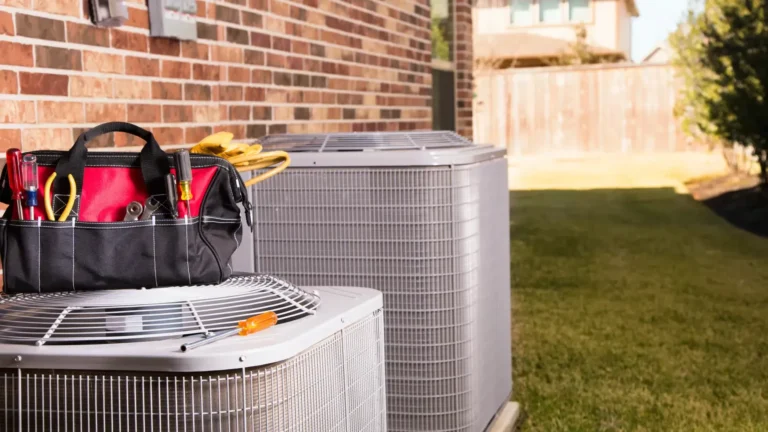
An air conditioner that has run reliably for twelve to fifteen years eventually reaches a point where continued repairs stop making sense. When the compressor fails on an aging R-22 system, or the coil corrodes past the point of a clean seal, the math shifts toward replacement. Knowing exactly when that line has been crossed is the first thing we help homeowners in Sugar Grove sort out, and it is a decision we approach without pressure. At Brian and Sons, honesty drives that conversation. We will tell you plainly when a repair still makes sense and when a new system is the smarter investment, because we would rather keep a customer for the next twenty years than push a sale you did not need.
Knowing When Replacement Beats Another Repair
There are a handful of clear signals that a cooling system has reached the end of its service life. The most obvious is age combined with refrigerant type. Systems built to use R-22 can no longer be economically recharged, since that refrigerant has been phased out and its cost has climbed steeply. If your unit predates the switch to R-410A, a major failure usually tips the scale toward a full replacement rather than sinking money into a design that is already obsolete.
Efficiency is the second factor. A unit from the early 2000s may carry a SEER rating in the range of 8 to 10, while modern equipment starts at 14 SEER and climbs well beyond that. The difference shows up directly on summer electric bills. When a Sugar Grove home runs its cooling hard through July and August, that efficiency gap adds up quickly. We walk through the numbers with you so the choice is grounded in fact rather than a sales pitch.
How We Approach the Replacement Process
Replacing an air conditioner is not a matter of swapping one box for another. The system has to be matched to the home, the ductwork, and the existing furnace or air handler. We begin with a full load calculation using the Manual J method, which accounts for square footage, insulation levels, window placement, ceiling height, and local design temperatures. Skipping this step is how homes end up with equipment that short-cycles, runs humid, or wears out early. We refuse to guess at sizing.
Once the correct capacity is established, we review the matching components. A properly paired condenser and evaporator coil are essential for the rated efficiency to hold true in practice. A mismatched coil drags down performance and voids many manufacturer warranties. Our technicians confirm that the metering device, line set diameter, and refrigerant charge all align with the specifications of the new equipment before the job is considered complete.
Here is the general sequence a replacement follows:
- Assessment and sizing: We measure the home, evaluate ductwork, and run the load calculation to determine the exact capacity required.
- Equipment selection: We present matched systems that fit the home and your budget, explaining efficiency ratings and warranty coverage.
- Old system removal: We recover any remaining refrigerant according to EPA rules and haul away the retired equipment.
- Installation and connection: We set the new condenser, install or verify the coil, run new line sets when needed, and wire the controls.
- Charging and testing: We pull a deep vacuum, weigh in the correct refrigerant charge, and verify superheat and subcooling before signing off.
The Technical Details That Determine Longevity
Much of what separates a lasting installation from a troubled one happens in the details that homeowners never see. Evacuating the line set with a micron gauge, rather than simply running a pump for a set number of minutes, ensures moisture and non-condensables are removed before charging. Moisture left in a system reacts with refrigerant and oil to form acids that corrode the compressor from the inside. We pull vacuum to a verified level and hold it to confirm there are no leaks.
Charge accuracy is equally important. An overcharged or undercharged system loses efficiency and stresses the compressor. Our NATE-certified technicians weigh in the charge and then confirm it against measured superheat and subcooling values under actual operating conditions. We also check static pressure across the air handler to make sure airflow matches the equipment’s design, since restricted ducts can undermine even a perfectly charged system. Every technician on our team holds NATE certification and a degree in HVAC, which means the person at your home understands the thermodynamics behind the readings, not just the steps in a checklist.
Replacements for Every Kind of Property
Our work is not limited to single-family homes. Over more than twenty years serving the Chicagoland area, we have replaced cooling systems in a wide range of settings, each with its own demands. A church sanctuary requires quiet operation and even distribution across a large open space, while a light industrial site may need equipment rated for continuous duty and heavier loads. Small businesses often need the work scheduled around operating hours to avoid closing their doors.
Some of the properties we regularly handle include:
- Residences: From older homes with existing ductwork to newer construction, sized precisely to the living space.
- Corporations and offices: Where comfort and reliability affect daily productivity and reputation.
- Light industrial sites: With systems chosen for durability under demanding, extended-run conditions.
- Churches and community buildings: Requiring quiet, balanced cooling across large gathering areas.
- Small businesses: Scheduled to minimize disruption to customers and staff.
Beyond Sugar Grove, we serve the surrounding communities of Aurora, Naperville, Bristol, Montgomery, Oswego, Plainfield, Sugar Grove, Yorkville, and Plano with the same standards and the same team. We provide 24-hour service 365 days a year, so a failure during a heat wave never leaves you waiting for the next business day. When you call Brian and Sons for an air conditioning replacement, you get quality work from people who care and stand behind what they install. No high-pressure tactics, no upselling equipment you do not need, just an honest assessment and a system built to last. That approach is why we have earned a reputation as one of Chicagoland’s most affordable and dependable HVAC replacement services, and it is the standard we hold on every job we take in Sugar Grove.