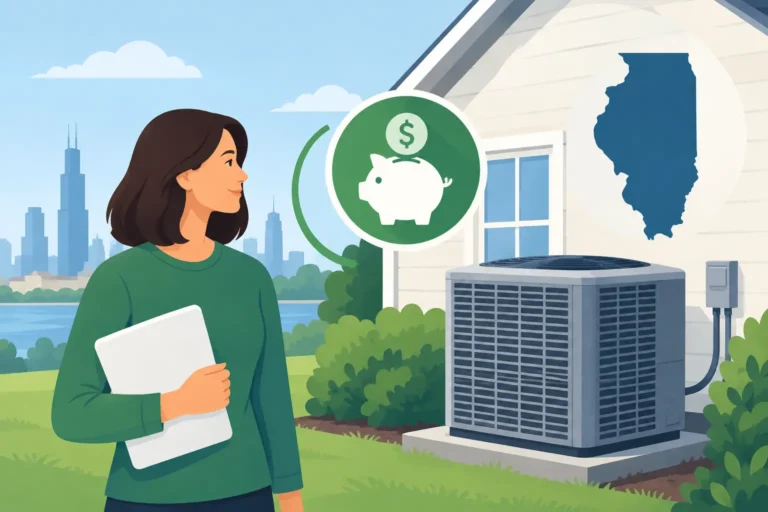
A furnace that quits during an Illinois cold snap or an air conditioner that cannot keep up in July leaves little room for guesswork. Before choosing replacement equipment, many homeowners ask one practical question: do I qualify for financial help? HVAC rebate eligibility can lower the cost of an upgrade, but the answer depends on more than buying a high-efficiency unit.
Rebates, utility incentives, manufacturer promotions, and federal tax credits all have different rules. The equipment must often meet a specific efficiency standard, be installed correctly, and be submitted within a firm deadline. A system that is an excellent fit for your home may not qualify for every offer, which is why checking the details before installation matters.
What Determines HVAC Rebate Eligibility?
Most HVAC incentives are designed to encourage homeowners to install equipment that uses less energy or reduces peak demand on the electrical grid. Eligibility usually comes down to the type of program, your home, the equipment selected, and the paperwork completed after installation.
A utility rebate, for example, may be available only to customers in that utility’s service territory. It may require an eligible central air conditioner, heat pump, smart thermostat, or furnace with a listed efficiency rating. A manufacturer promotion may apply only to certain product lines and installation dates. Federal incentives may follow separate rules entirely, including annual limits and, for some rebate programs, household-income requirements.
Do not assume that a product labeled “high efficiency” automatically qualifies. Programs frequently set minimum ratings for SEER2, EER2, HSPF2, AFUE, or ENERGY STAR certification. Those thresholds can change, and one qualifying model can have different eligibility depending on its matched indoor and outdoor components.
The equipment must meet the program standard
Heating and cooling equipment works as a system. With a split air conditioner or heat pump, the outdoor unit, indoor coil, furnace or air handler, and controls may need to be matched in an approved combination. Replacing only one part of an existing system can be the right repair decision, but it may not meet a rebate program’s requirements.
Ask for the exact model numbers and the certified efficiency rating for the complete system before approving an estimate. This gives you a clear record of what is being installed and helps prevent surprises when it is time to submit a claim.
Installation requirements are just as important
Many programs require installation by a licensed, participating, or approved contractor. They may also require permits, a paid invoice, proof of payment, an efficiency certificate, or a completed rebate application. Some require pre-approval before work begins.
Proper installation is not paperwork for paperwork’s sake. Incorrect refrigerant charge, poor airflow, undersized ductwork, or an improperly sized system can limit comfort and efficiency even when the equipment itself is top-rated. A rebate should support a sound HVAC decision, not replace one.
Your home and utility account may affect qualification
Utility programs commonly require the home to be an existing residence with an active account in good standing. Rental properties can be eligible in some cases, but the account holder, property owner, and applicant may need to be the same person. New construction, multifamily buildings, and commercial properties often follow separate program rules.
For homeowners in Oswego, Aurora, Montgomery, and nearby communities, service territory can matter more than the town listed on your mailing address. Confirm which utility serves the property and review the current program requirements for that account before relying on an advertised rebate amount.
Rebates and Tax Credits Are Not the Same Thing
The terms are often used interchangeably, but they affect your budget differently. A rebate is generally a payment or bill credit issued after you meet a program’s requirements. It may arrive weeks after installation, and it may require an application.
A tax credit reduces eligible federal income tax liability when you file your tax return. It is not typically a check applied to the installation invoice. Tax-credit rules can include efficiency standards, annual dollar caps, and documentation requirements. Keep invoices, model information, and manufacturer certifications with your tax records, and speak with a qualified tax professional for advice about your specific situation.
Some state-administered energy rebate programs may consider household income. Depending on the program, income can affect whether you qualify and how much assistance is available. These programs can have limited funding, changing rollout schedules, and specific application steps. Never make a purchase based on an expected rebate until you have verified that the program is active and that your project meets its requirements.
How to Check Eligibility Before You Replace Your System
The best time to investigate incentives is before selecting equipment or scheduling installation. Once a system is installed, it may be too late to change a model, obtain pre-approval, or correct missing documentation.
Start with a clear assessment of your current equipment and home. If your furnace is nearing the end of its service life but your air conditioner is still relatively new, replacing both may create a qualifying matched system, but it may not be the most cost-effective choice. If your home has uneven temperatures, leaky ducts, or inadequate insulation, addressing those issues can sometimes provide more comfort than moving to the highest available efficiency tier.
Before moving forward, confirm these essential details:
- The exact make, model numbers, and certified ratings of the proposed equipment
- Whether the offer applies to a replacement, new construction project, or both
- Whether pre-approval, a home assessment, or a participating contractor is required
- The application deadline and the documents needed to submit a claim
- Whether the incentive can be combined with other rebates, promotions, financing, or tax credits
A written proposal should separate equipment costs, labor, accessories, and any available promotion when possible. This makes it easier to understand the real installed price instead of focusing only on a large advertised rebate.
Watch for timing and funding limits
Most programs are not open-ended. Some have annual deadlines, while others close when allocated funds are exhausted. A utility may require that applications be submitted within a set number of days after installation. Manufacturer offers can also be tied to specific purchase windows.
That does not mean homeowners should rush into an unnecessary replacement. It means that if you have already planned an upgrade, checking current incentives early gives you more options. If your equipment is still operating safely and reliably, a maintenance visit can help you plan ahead rather than make a pressured decision during an emergency.
Choosing Equipment for Comfort First, Savings Second
A rebate can make a higher-efficiency system more affordable, but it should not be the only deciding factor. The right furnace, air conditioner, boiler, or heat pump depends on your home’s size, insulation, ductwork, electrical capacity, comfort preferences, and budget.
For instance, a cold-climate heat pump can be a strong option for some homes, especially when paired with the right backup heat source. Yet a home with aging electrical service or significant air leakage may need other improvements first. Likewise, a variable-speed system can offer quieter operation and better humidity control, but its added features may not be necessary for every household.
A qualified contractor should explain those trade-offs in plain language. You deserve to know which options meet your comfort needs, which may qualify for an incentive, and what the out-of-pocket cost looks like with or without that incentive.
Keep Your Rebate Documents Together
After installation, save the final invoice, model and serial numbers, paid receipt, warranty information, efficiency documentation, permit records if applicable, and copies of every submitted application. Take photos of the installed equipment labels before they become difficult to access. If a rebate administrator requests additional information, having an organized file can prevent delays.
Brian & Sons can help homeowners understand the equipment options and documentation typically needed for a planned HVAC upgrade. The final approval always rests with the program administrator, but careful planning gives you the best chance of receiving every incentive your project genuinely qualifies for.
When comfort equipment is ready for replacement, start with the home, not the rebate. Choose a system that is properly sized, professionally installed, and built for the way your family lives. Then let verified incentives make that responsible decision easier on your budget.