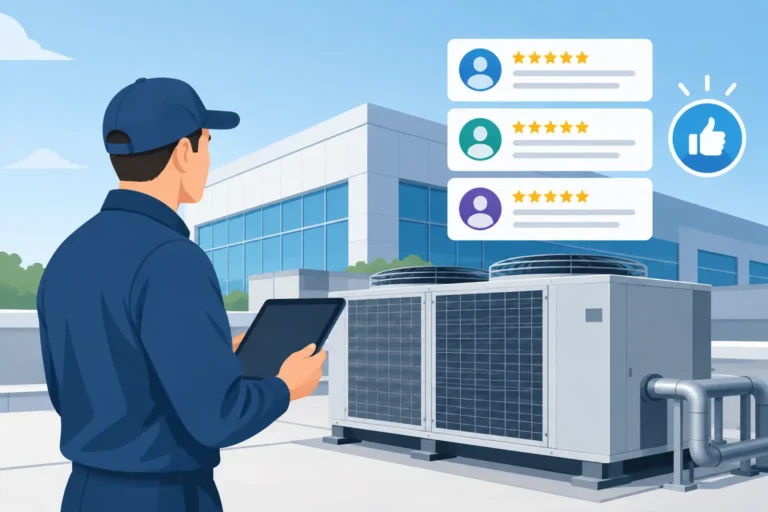
A failed rooftop unit can turn a comfortable office, restaurant, retail space, or multi-family property into a serious operational problem within hours. That is why commercial HVAC contractor reviews deserve more attention than a quick glance at the star rating. The most useful reviews show how a company responds under pressure, communicates with property decision-makers, and stands behind its work after the service call is over.
For commercial property owners and facility managers, the goal is not simply to find a contractor who can repair equipment today. It is to find a local HVAC partner who helps protect comfort, operating budgets, equipment life, and tenant or customer satisfaction over time.
What Commercial HVAC Contractor Reviews Should Tell You
A five-star rating is encouraging, but ratings alone leave out the details that matter in a commercial setting. A contractor may receive positive feedback for a simple residential tune-up yet have limited experience coordinating repairs for a building with several rooftop units, a boiler system, ventilation concerns, or specialized controls.
Read the written comments closely. Look for reviews from businesses, property managers, churches, restaurants, offices, retail locations, and multi-unit buildings. These customers often mention the practical issues that affect commercial work: whether the technician arrived when promised, explained the issue clearly, worked around business hours, and completed repairs without creating unnecessary disruption.
The strongest reviews tend to describe specific outcomes. A customer who says the contractor diagnosed an intermittent problem, provided options, sourced a part quickly, and verified system performance gives you more useful information than a short comment that simply says, Great service.
Consistency matters, too. One glowing review may reflect an excellent experience, but a pattern of positive feedback across months or years says more about a company’s operating standards. Pay attention to whether customers repeatedly mention honesty, professionalism, responsiveness, fair pricing, and clean, organized work.
Look Beyond the Overall Star Rating
Every established service company will occasionally receive a less-than-perfect review. Commercial HVAC work can involve aging equipment, delayed parts, difficult access, weather-related demand spikes, and repairs that uncover additional problems. A perfect score is less meaningful than a company that handles issues responsibly.
When reading lower-rated feedback, consider what happened and how the contractor responded. Was the complaint about a scheduling delay during an extreme-weather emergency? Was the customer unhappy with the cost of replacing a major component? Those concerns may be understandable, but they are different from complaints about poor communication, incomplete work, surprise charges, or a contractor who did not return calls.
A professional response to a negative review can be revealing. Look for a company that addresses concerns respectfully, protects customer privacy, and shows a willingness to make things right. Avoid assuming that either side tells the entire story. Instead, look for recurring themes.
Details That Matter for Commercial Properties
Commercial systems are not all alike. A small storefront may have a straightforward split system, while a larger facility may rely on multiple rooftop units, boilers, ductless equipment, VRF systems, makeup air, exhaust ventilation, or building controls. Reviews should give you confidence that the contractor can work with the type and scale of equipment at your property.
Look for evidence of diagnostic skill rather than parts swapping. A technician who identifies the underlying cause of repeated failures can save a business substantial money over the life of the equipment. Reviews that describe careful troubleshooting, clear recommendations, and repairs that held up over time are especially valuable.
It also helps to see comments about preventive maintenance. Emergency service is essential when a system goes down, but a contractor’s maintenance practices often determine how often those emergencies occur. For facility managers, planned inspections, filter changes, cleaning, safety checks, and performance testing can reduce surprise breakdowns and make budgeting more predictable.
Questions to Ask After Reading Reviews
Reviews can narrow your choices, but they should not replace a direct conversation. Before choosing a commercial HVAC contractor, ask how the company handles emergency calls, what types of commercial equipment its technicians service, and whether it offers ongoing maintenance agreements.
You should also ask how estimates are presented. A trustworthy contractor should explain what is wrong, what needs immediate attention, and what can reasonably be planned for later. In many cases, there is more than one appropriate option. Repairing an older unit may be sensible when the issue is isolated and the system has useful life remaining. Replacement may be the better financial decision when breakdowns are frequent, efficiency is poor, or parts are becoming difficult to obtain.
Clear communication is particularly important when the person approving work is not on site. Property owners, maintenance supervisors, and managers need timely updates, photographs or documentation when appropriate, and an understandable explanation of costs and priorities. Good reviews often mention this level of communication because it reduces the stress of managing a problem remotely.
Ask whether technicians are licensed, insured, and EPA-certified. For larger projects, ask about permits, scheduling, coordination with other trades, and how the company protects operations while work is underway. A contractor’s answer should be direct and practical, not vague or overly sales-focused.
Red Flags in Commercial HVAC Contractor Reviews
A few concerns should prompt a closer look before you schedule service. They do not automatically rule out a company, but repeated mentions of the same issue are worth taking seriously.
- Customers report unclear pricing, unexpected charges, or estimates that changed without explanation.
- Reviews repeatedly mention missed appointments, delayed callbacks, or difficulty reaching the company during urgent situations.
- Technicians are described as pushing replacement before completing a thorough diagnosis.
- Customers say the same problem returned soon after a repair and the contractor did not follow up.
Context still matters. Commercial repairs can become more complex after equipment is opened or tested, and parts availability is not always within a contractor’s control. The key question is whether the company communicates changes promptly, explains why they occurred, and offers a reasonable path forward.
Why Response Time Is Only Part of the Equation
Fast service is critical when heating or cooling affects employees, customers, inventory, or tenants. In the western Chicago suburbs, a winter heating failure or summer cooling outage can quickly become more than an inconvenience. Still, the fastest contractor is not always the best choice if the diagnosis is rushed or the repair is not completed correctly.
The right provider combines prompt scheduling with careful work. Reviews should indicate that technicians arrive prepared, assess the full system, and explain the repair before moving ahead. For urgent calls, 24/7 availability is a major advantage, but dependable follow-through matters just as much after the immediate problem is resolved.
This is also where a local company can make a difference. A contractor familiar with the area can often respond more efficiently and build an ongoing relationship with the people responsible for the building. Over time, that familiarity can make maintenance visits, repair approvals, and equipment planning far easier.
Use Reviews to Find a Long-Term Service Partner
The best commercial HVAC contractor reviews describe a relationship, not just a one-time repair. They mention a company that keeps records, recognizes recurring system concerns, helps clients plan for future replacement costs, and provides practical advice without unnecessary upselling.
For a business, that kind of partnership supports better decisions. You can prioritize repairs, schedule maintenance around operating hours, and avoid treating every equipment issue as a surprise. It may also help extend the useful life of systems that are still worth maintaining.
At Brian & Sons, we believe commercial customers deserve straightforward answers, responsive service, and recommendations that respect both comfort and budget. When you read reviews, look for those same qualities: clear communication, capable technicians, fair options, and a company that will still answer the phone when your building needs help most.
The right review is not necessarily the one with the most praise. It is the one that gives you confidence a contractor will show up, explain the work honestly, and help keep your property comfortable when it counts.