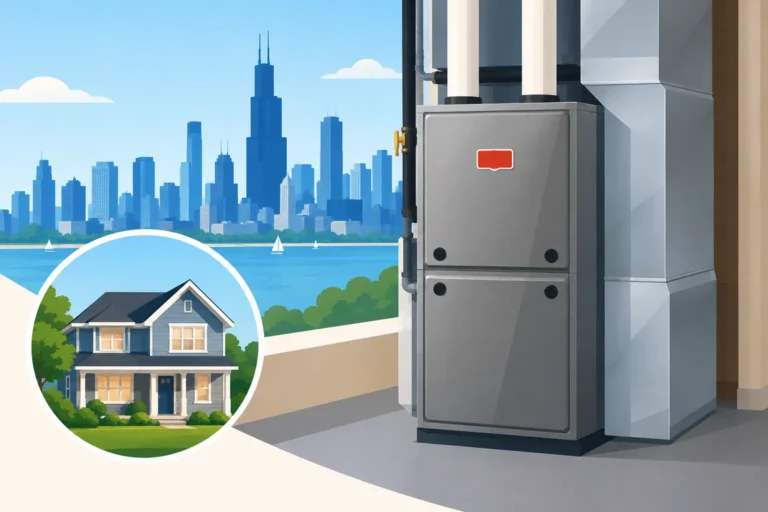
A furnace failure on a January night is not the time to learn that the lowest installation quote came with limited options, unclear warranty coverage, or poor workmanship. For homeowners weighing a replacement, this Bryant furnace review focuses on the questions that matter most: How reliable are Bryant furnaces, what comfort level can you expect, and is the added cost of a higher-efficiency model worth it?
Bryant is a well-established heating and cooling manufacturer with furnace options for a wide range of budgets and home sizes. The brand is often a strong fit for Chicagoland homes because its product line includes dependable standard-efficiency systems as well as high-efficiency, variable-speed equipment designed for long heating seasons. Still, the right Bryant furnace is not simply the most efficient one on the brochure. It is the properly sized system installed and supported by qualified local HVAC professionals.
Bryant Furnace Review: The Short Answer
Bryant furnaces have a solid reputation for dependable performance, good efficiency options, and useful comfort features at several price points. Their lineup gives homeowners a practical path from a basic single-stage furnace to premium modulating systems that make room temperatures more consistent and run more quietly.
The trade-off is that model selection and installation quality matter greatly. A premium furnace installed with undersized ductwork, incorrect gas pressure, or an improperly configured thermostat will not deliver the comfort or efficiency it was designed to provide. Conversely, a straightforward Bryant model that is correctly sized and maintained can provide many years of reliable heat.
Bryant is also part of the same larger manufacturing family as Carrier. While comparable equipment may share certain engineering platforms, the product match, available features, dealer support, and installation experience should drive the decision rather than the name alone.
What Bryant Offers at Different Price Points
Bryant organizes its furnace lineup into tiers that generally align with budget, efficiency, and comfort expectations. Not every model is appropriate for every home, especially when existing ductwork or ventilation limits the system options.
Entry-level furnaces for dependable heat
Bryant’s more basic furnaces are commonly single-stage units. A single-stage furnace operates at full capacity whenever it receives a call for heat. This design is simple, effective, and often the most affordable choice when replacing an aging furnace in a smaller home or rental property.
The drawback is that single-stage operation can create more noticeable temperature swings. The furnace may run for shorter, stronger cycles, and some rooms may feel warmer or cooler than others. For homeowners primarily focused on reliable heat and upfront value, that may be an acceptable compromise.
Two-stage furnaces for steadier comfort
A two-stage Bryant furnace can operate at a lower setting during milder weather and move to high heat only when outdoor temperatures demand it. Since winter in Illinois can shift from a 40-degree afternoon to a subzero night quickly, this flexibility can make a real difference.
Lower-stage operation usually means longer, quieter heating cycles and more even temperatures from room to room. It can also improve air circulation when paired with a compatible blower and thermostat. For many homeowners, a two-stage furnace represents the best balance of purchase price, comfort, and efficiency.
Variable-speed and modulating systems
Bryant’s premium models may include variable-speed blower motors and modulating gas valves. Rather than operating at only one or two output levels, a modulating furnace can make smaller adjustments to match the home’s heat demand more closely.
This is the strongest option for comfort-focused households, larger homes, homes with uneven temperatures, and homeowners who spend significant time indoors during winter. These systems generally offer quieter operation, gentler airflow, and tighter temperature control. They also cost more upfront and require careful installation, commissioning, and compatible controls to perform properly.
Efficiency Ratings: What AFUE Means for Your Bills
Furnace efficiency is measured by Annual Fuel Utilization Efficiency, or AFUE. A furnace with a 96% AFUE rating converts about 96 cents of every heating dollar into usable indoor heat under standardized test conditions. The remaining amount is lost through the combustion and venting process.
Standard-efficiency furnaces are typically less expensive to purchase and may work with existing metal venting in some replacement situations. High-efficiency condensing furnaces often reach 90% AFUE or higher, but they require dedicated PVC venting and a condensate drain. That additional installation work can affect the final price.
A higher AFUE rating can reduce natural gas use, but savings depend on your current furnace’s condition, insulation levels, thermostat habits, gas rates, and the local weather. Replacing a working 80% furnace solely to gain a few percentage points may not have the same payback as replacing a failing 60% or 70% unit. An honest recommendation should account for the full picture, including installation requirements and how long you expect to stay in the home.
Reliability and Expected Service Life
No furnace brand is maintenance-free. Bryant furnaces are built for long-term residential use, but reliability still depends on annual service, clean filtration, proper airflow, and correct installation. A well-maintained furnace can often provide 15 to 20 years of service, though actual lifespan varies by model, run time, and home conditions.
The most common threats to furnace longevity are not always dramatic mechanical failures. A dirty filter can restrict airflow and cause overheating. A neglected condensate drain can create shutdowns in a high-efficiency furnace. Poor duct design can make the blower work harder than it should. These issues can reduce comfort and place unnecessary strain on components.
Annual maintenance gives a technician the opportunity to inspect the heat exchanger, burners, flame sensor, electrical connections, safety controls, blower operation, filter condition, and venting. It is a practical way to catch smaller concerns before they become a no-heat emergency.
Warranty Considerations
Warranty coverage can be an important advantage, but homeowners should read the terms rather than relying on a broad promise of protection. Bryant warranties vary by furnace model and may include different coverage periods for major components, parts, and the heat exchanger. Registration requirements and installation dates can also affect coverage.
A manufacturer warranty typically covers qualifying defective parts, not necessarily labor, diagnostic time, maintenance-related issues, or damage caused by installation problems. Ask your contractor to explain what is covered, what registration is required, and whether a separate labor warranty applies to the installation.
Working with a Bryant Factory Authorized Dealer can provide additional confidence that the equipment is being selected and installed according to manufacturer standards. Just as importantly, choose a company that will be available after installation if you have questions or need service.
Installation Is the Make-or-Break Factor
The furnace cabinet is only one part of your heating system. The equipment must work with the ductwork, return air path, thermostat, gas line, venting, electrical supply, humidifier, air cleaner, and air conditioning coil. A mismatch in any of these areas can affect performance.
Before recommending a new Bryant furnace, a contractor should evaluate more than the size of the old unit. Proper sizing should consider the home’s square footage, insulation, windows, orientation, duct capacity, and heat loss. Installing an oversized furnace can lead to frequent cycling and uneven temperatures. An undersized furnace may struggle during extreme cold.
At Brian & Sons, our technicians focus on the complete system, not just swapping equipment. That approach helps homeowners in Oswego and nearby western suburbs make decisions based on comfort needs, home conditions, and realistic budget expectations.
Is a Bryant Furnace Right for Your Home?
A Bryant furnace can be a very good choice if you want a respected brand with multiple efficiency and comfort levels, from budget-conscious replacements to high-performance systems. It is particularly appealing for homeowners who want options instead of being pushed toward one expensive model.
Choose a single-stage or standard-efficiency option when the priority is dependable heat and controlling upfront costs. Consider a two-stage furnace when you want better temperature consistency without moving to the highest price tier. A variable-speed, modulating model may be worthwhile when quiet operation, even comfort, and premium control are priorities.
The best next step is a home-specific evaluation that includes furnace sizing, ductwork condition, venting needs, available rebates or financing, and the warranty details for the exact model being considered. A clear proposal should leave you knowing what you are buying, why it fits your home, and who to call when you need dependable heat.