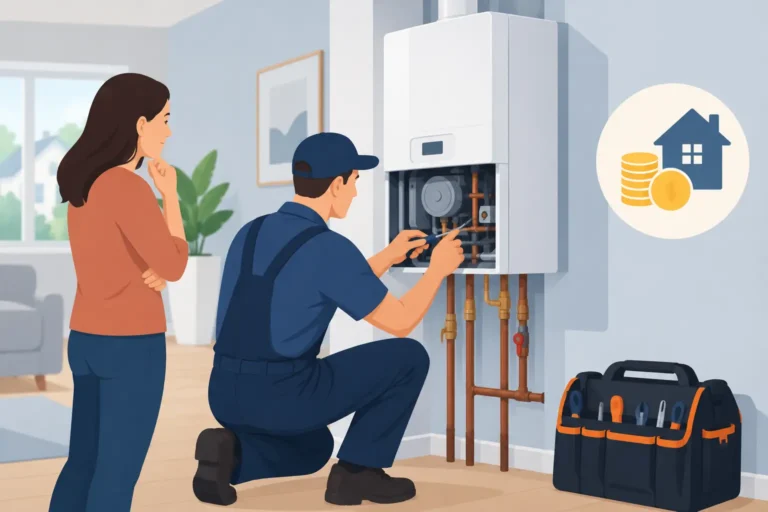
A boiler that stops heating on a cold Montgomery night creates two immediate questions: Is the home safe, and how much will it cost to fix? Boiler repair cost Montgomery homeowners face can vary widely because a boiler is a complete heating system, not one simple appliance. The issue may be a small electrical component, a circulation problem, a failed control, or a condition that calls for prompt professional attention.
The most useful way to think about cost is to start with a proper diagnosis. A qualified technician should identify the cause of the problem, explain the repair in clear terms, and provide pricing before the work begins. That approach helps homeowners make a confident decision without guessing or paying for parts that do not solve the underlying issue.
What Affects Boiler Repair Cost in Montgomery?
The final repair price depends on the type of boiler, the failed part, access to the equipment, and the time required to restore safe operation. Older cast-iron boilers, high-efficiency condensing boilers, steam systems, and radiant-heating systems each have different components and service needs.
A straightforward service call may involve restoring pressure, replacing an igniter or sensor, repairing a thermostat connection, or correcting a minor leak at an accessible fitting. These repairs generally cost less than replacing a major component. If the circulator pump, gas valve, heat exchanger, control board, or expansion tank has failed, both the part and labor can increase the total.
Emergency timing matters, too. A no-heat call outside normal business hours may carry an additional emergency-service charge. That cost can be worthwhile when temperatures are low, vulnerable household members are at home, or frozen pipes are a concern. A reliable contractor should explain any after-hours pricing before dispatching a technician whenever possible.
Typical Boiler Repair Price Ranges
No honest HVAC company can quote an exact repair price without inspecting the system. Still, broad ranges can help set expectations. A diagnostic visit and minor adjustment may fall in the lower end of the repair spectrum. Common component repairs often run into the hundreds of dollars, depending on the boiler model and replacement part. Major repairs involving a pump, valve, advanced controls, or extensive leak work can reach well above that.
The expensive end of the range is usually tied to major system components, hard-to-source parts, or damage caused by neglect. For example, a boiler that has been leaking for months may need more than one repair. Corrosion, damaged wiring, failing valves, and water-quality issues can compound over time.
It also depends on whether the system is conventional or high efficiency. High-efficiency boilers can provide excellent comfort and fuel savings, but their electronic controls, condensate systems, and venting requirements may require more specialized troubleshooting. Paying for accurate diagnostics is often less costly than replacing parts based on a guess.
Parts That Commonly Drive Repair Costs
Several components appear regularly in boiler service calls. The circulator pump moves heated water through radiators, baseboards, or radiant-floor tubing. When it fails, some areas may stay cold even though the boiler itself is firing.
Expansion tanks manage pressure changes as water heats and cools. A failed tank can contribute to pressure problems, relief-valve discharge, or inconsistent heating. Igniters, flame sensors, gas valves, and control boards affect whether the boiler can start and operate safely. Thermostats and zone valves can also cause rooms or zones to receive too little heat.
A heat exchanger deserves special attention. It is one of the most critical and costly parts of the boiler. Cracks, severe corrosion, or a compromised heat exchanger may make replacement a more practical choice, especially on an older unit. A technician should explain what was found and why a repair or replacement recommendation is being made.
Signs You Should Schedule Boiler Service Soon
Not every boiler concern means the system is about to fail, but waiting can turn a manageable repair into a larger one. Schedule service if you notice banging, whistling, repeated cycling, uneven heating, unexplained water around the boiler, or a pressure gauge that is consistently too high or too low.
Other warning signs include rising utility bills, radiators that do not heat evenly, a boiler that needs frequent resets, or a yellow burner flame instead of a steady blue flame. If you smell gas, suspect carbon monoxide, see soot, or have a carbon monoxide alarm activate, leave the area and contact the appropriate emergency services and gas utility first. Do not attempt to restart the boiler.
For less urgent problems, prompt service protects comfort and can reduce the risk of damage to connected pipes, pumps, and controls. It also gives you time to consider options rather than making a rushed decision during a complete no-heat emergency.
When Does Boiler Repair Make More Sense Than Replacement?
Repair is often the sensible option when the boiler is relatively young, has been maintained, and needs a single common component. A repair can also make sense when the system is otherwise operating efficiently and replacement parts are readily available.
Replacement deserves a closer look when repairs are becoming frequent, the unit is near or beyond its expected service life, or a major component has failed. Age alone is not the only factor. A well-maintained boiler can sometimes remain dependable for many years, while a neglected newer unit may have recurring problems.
Ask for a clear comparison: the repair cost, the expected reliability after repair, the condition of the rest of the system, and the cost of replacement. For homes with radiant heat or multiple zones, it is also wise to consider whether pumps, controls, and piping are in good condition. The goal is not to replace equipment unnecessarily. It is to avoid putting substantial money into a system that may continue to create expensive disruptions.
How Maintenance Can Help Control Repair Costs
Annual boiler maintenance gives a technician the chance to inspect burners, safety controls, venting, pressure, pumps, electrical connections, and visible signs of leakage or corrosion. Small concerns can often be addressed before they cause a no-heat call.
Maintenance is particularly valuable before a Chicagoland heating season. Homeowners often do not realize a boiler has a weak igniter, dirty sensor, pressure issue, or failing circulator until the first extended cold spell. A preseason visit provides more scheduling flexibility and helps the system start the winter in better condition.
Homeowners can also support boiler performance by keeping the area around the equipment clear, checking that vents are unobstructed, and paying attention to changes in noise or heat distribution. Leave internal repairs, gas components, electrical work, and pressure adjustments to a licensed professional. Boilers operate with hot water, fuel, combustion, and pressurized components, so a quick DIY fix can create a bigger safety issue.
Getting a Straight Answer on Boiler Repair
Before approving work, ask what failed, what caused the failure if known, and whether the proposed repair addresses the full problem. You should also know whether the replacement part is covered by a manufacturer warranty and what to expect after the repair is complete.
At Brian & Sons, our technicians focus on clear explanations, practical options, and repairs that put safety first. Whether your boiler serves a single-family home, a multi-unit property, or a commercial space, the right service starts with listening to the symptoms and testing the system carefully.
A boiler repair should leave you with more than restored heat. It should leave you knowing what happened, what was done, and what to watch for next. If your boiler is making new noises, losing pressure, leaking, or failing to heat consistently, scheduling service early can protect both your comfort and your budget.