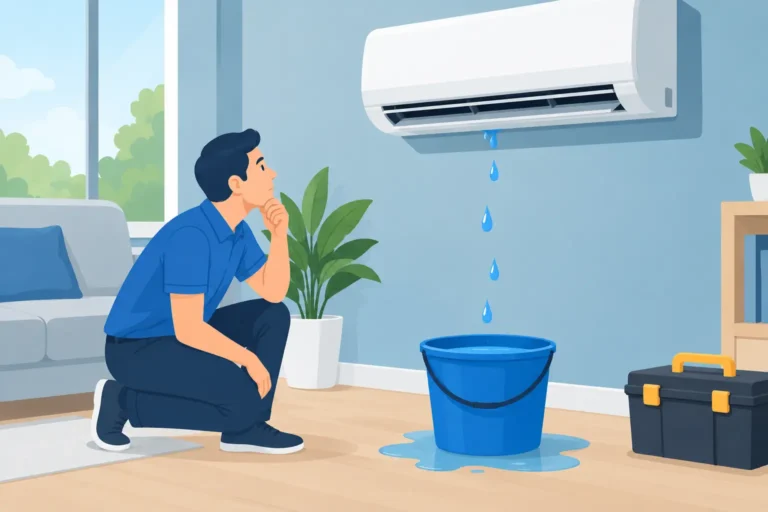

A puddle near your indoor AC equipment can turn an ordinary hot afternoon into a stressful repair question. If you are asking why AC units leak water, the short answer is that your air conditioner removes humidity from indoor air as it cools. That moisture has to drain away safely. When it cannot, water ends up where it does not belong.
Some AC leaks have a simple cause, such as a clogged condensate drain line. Others can point to a frozen evaporator coil, a failed condensate pump, or an installation issue that needs professional attention. Acting early can help protect ceilings, flooring, drywall, insulation, and the equipment itself.
Why AC Units Leak Water Indoors
Your central air conditioner does more than lower the temperature. Warm household air passes over the cold evaporator coil inside the indoor unit. As the air cools, water vapor condenses on that coil, much like moisture forming on a cold glass on a humid day.
Under normal conditions, that condensation drips into a drain pan and travels through a condensate line to a safe discharge point. A small amount of water coming from an exterior drain pipe while the system runs can be completely normal, especially during humid Illinois weather. Water pooling around the furnace, air handler, or indoor portion of the AC system is not normal and should be addressed.
A clogged condensate drain line
A blocked drain line is one of the most common causes of an indoor AC water leak. Dust, algae-like growth, rust particles, and other debris can build up in the line over time. Once the blockage prevents water from draining, the drain pan can overflow.
You may notice standing water around the indoor unit, a musty smell, or the system shutting off unexpectedly. Many newer systems have a float safety switch designed to stop cooling before an overflow causes more damage. That safety feature is useful, but it still means the drain needs service.
A technician can clear the line properly, inspect the trap and drain setup, and verify that water is flowing as it should. Pouring household chemicals into the drain is not always a good fix. Some products can damage components or fail to remove the buildup farther inside the line.
A dirty air filter causing a frozen coil
A neglected air filter can restrict airflow across the evaporator coil. Without enough warm air moving over the coil, the coil may get cold enough to freeze. Ice forms during operation, then melts after the system cycles off or is turned off. That sudden meltwater can overwhelm the drain pan and create a leak.
Signs of a frozen coil can include weak airflow from vents, air that is not cooling well, visible ice on refrigerant lines, or water appearing after the AC has been running for a long time. If you see ice, turn the cooling system off and set the fan to ON if your thermostat allows it. This can help the coil thaw while preventing additional strain on the compressor.
Replace a visibly dirty filter with the correct size and type. If the coil freezes again, the problem may be more than airflow. Low refrigerant, a failing blower motor, ductwork issues, or a dirty coil can also lead to freezing and should be diagnosed by a licensed HVAC technician.
Low refrigerant levels
Your AC does not use up refrigerant during normal operation. If the refrigerant level is low, there is usually a leak somewhere in the sealed system. Low refrigerant pressure can make the evaporator coil freeze, leading to meltwater and an apparent water leak indoors.
Adding refrigerant without finding the source of the leak is only a temporary measure. A qualified technician should locate the issue, make the appropriate repair, test the system, and recharge it to the manufacturer’s specifications. This protects cooling performance and helps avoid damage to the compressor.
A damaged or rusted drain pan
Drain pans do not last forever. Older metal pans may corrode, crack, or develop pinholes. Plastic pans can also deteriorate or warp with age. Water may then leak from the pan even when the drain line is clear.
Many systems have a primary pan near the evaporator coil and may also have a secondary pan underneath the unit or coil cabinet. Determining which pan is leaking can be difficult without opening the equipment. Because water is often close to wiring and electrical controls, this is a repair best left to a professional.
A failed condensate pump
Not every system can rely on gravity to carry condensation to a drain. Basement installations, certain utility-room layouts, and some commercial setups use a condensate pump to move water upward or across a longer distance.
If that pump loses power, becomes clogged, or reaches the end of its service life, water has nowhere to go. The reservoir can overflow onto the floor. A humming pump that does not move water, frequent cycling, or an unusually full pump reservoir can all signal a problem.
An improperly installed or sloped drain line
Condensate lines need the right slope, support, and trap configuration to drain consistently. A line that sags, runs uphill, has an improper connection, or lacks a necessary trap can allow water to back up into the equipment.
This kind of issue sometimes becomes noticeable shortly after a new installation, a remodeling project, or a change to the HVAC system. It can also develop over time if pipe supports loosen. Correcting the drain layout may be straightforward, but it requires an understanding of how your specific system handles condensation.
What to Do When Your Air Conditioner Is Leaking
First, protect the area around the unit. Move boxes, rugs, and valuables away from the water, and use towels or a wet/dry vacuum to contain the puddle if it is safe to do so. If water is near electrical connections, the furnace control board, or an outlet, shut off the system at the thermostat and avoid handling wet electrical equipment.
Next, check the air filter. If it is heavily coated with dust, replace it and allow any visible ice to thaw fully before restarting cooling. Do not chip ice off the coil or continue running an AC system that is frozen. Both can cause more damage.
You can look for an obvious drain-line issue, such as a disconnected pipe or water overflowing from a visible cleanout. However, avoid dismantling the indoor equipment or using high-pressure air without the right tools. A clog may be only part of the problem, and forcing it deeper can create a more difficult repair.
If the leak is steady, returns after you clean up the water, affects a ceiling or finished space, or accompanies poor cooling, schedule service promptly. Water damage can spread behind walls and beneath flooring long before it becomes visible.
Can High Humidity Make an AC Leak?
High humidity increases the amount of condensation your AC produces. During a stretch of muggy weather in Aurora, Oswego, or the surrounding western suburbs, a healthy system may drain much more water than usual. That does not cause a leak by itself, but it can expose a partially clogged drain line or undersized drain setup.
This is why maintenance matters before the hottest part of the cooling season. A seasonal AC tune-up gives a technician the opportunity to inspect the condensate system, clean components as needed, check airflow, and catch small concerns before they become an emergency call.
When to Call an HVAC Professional
Call for service when you have repeated leaking, a frozen coil, reduced cooling, an AC that keeps shutting down, or water near electrical components. Those symptoms can overlap, and a clear drain line does not automatically mean the system is healthy.
Brian & Sons technicians can identify whether the cause is a drain blockage, pump failure, airflow problem, refrigerant concern, or damaged component, then explain the repair clearly before work begins. For homes and businesses, a fast diagnosis is often the best way to limit disruption and avoid avoidable water damage.
A leaking AC is rarely something to ignore until the next heat wave passes. Catching the problem while it is still a small puddle can help keep your home comfortable, your equipment protected, and your repair costs under control.