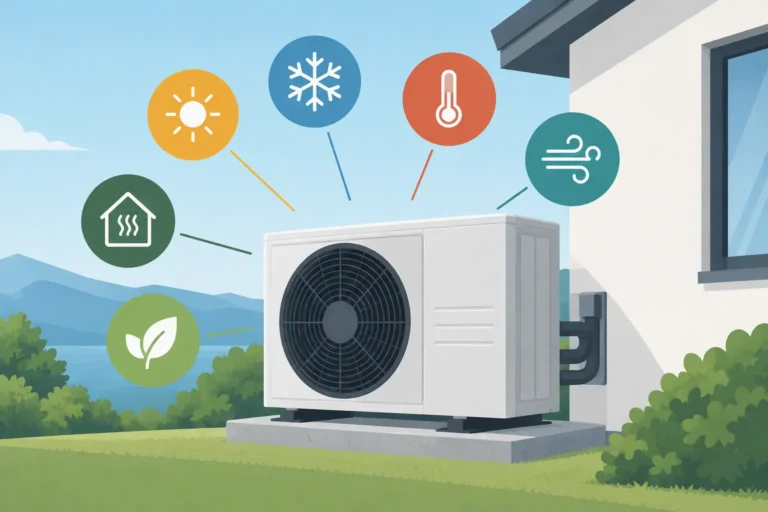
A heat pump should not feel mysterious. When it is properly selected, installed, and maintained, it can provide efficient heating in winter and dependable cooling in summer. But heat pump performance changes with outdoor conditions, your home’s construction, thermostat settings, and the condition of the equipment. Understanding those factors helps you recognize what is normal, what wastes energy, and when it is time to call for service.
For homeowners in the western Chicago suburbs, winter performance often raises the most questions. A heat pump may run longer during a cold snap than a furnace would. That does not automatically mean something is wrong. The key is whether it is maintaining a comfortable indoor temperature efficiently and consistently.
How Heat Pump Performance Works
Unlike a gas furnace, a heat pump does not create heat by burning fuel. It moves heat. In heating mode, it pulls available heat from outdoor air and transfers it indoors. In cooling mode, it moves heat out of the house, much like a central air conditioner.
This process is highly efficient in mild weather because moving heat requires less energy than generating it. As outdoor temperatures drop, there is less heat available in the air, so the system has to work harder. Modern cold-climate heat pumps can still operate in low temperatures, but their capacity and efficiency are affected by equipment design, installation quality, and the home’s heating needs.
That is why the right question is not simply, “Does a heat pump work in Illinois?” It does. The better question is whether the system was designed for your home and local weather, with a backup heat strategy that makes sense for your comfort and budget.
The Factors That Affect Heat Pump Performance Most
Outdoor temperature and winter demand
Cold weather is the most visible influence on heat pump operation. When temperatures fall, your home loses heat faster through walls, windows, attic spaces, air leaks, and doors. At the same time, an air-source heat pump has less outdoor heat to collect.
During very cold weather, many systems use supplemental heat. This may be electric heat strips or a dual-fuel setup that pairs the heat pump with a gas furnace. Supplemental heat is not necessarily a failure. It is there to maintain comfort when the heat pump alone cannot meet the home’s heating load efficiently.
The concern is supplemental heat running too often in moderate temperatures, or a system that cannot keep up during ordinary winter conditions. Those issues may point to incorrect sizing, airflow trouble, thermostat setup, refrigerant concerns, or an aging component.
Proper sizing and installation
A bigger heat pump is not automatically better. An oversized unit may cycle on and off too frequently, struggle to remove humidity in summer, and experience unnecessary wear. An undersized unit may run for long periods and rely heavily on auxiliary heat during winter.
Accurate sizing starts with a load calculation, not a quick estimate based on square footage alone. A qualified HVAC professional considers insulation levels, window orientation, ceiling height, ductwork, air leakage, occupancy, and the home’s layout. This is especially important after remodeling, adding rooms, replacing windows, or finishing a basement.
Installation details matter just as much. Refrigerant charge, electrical connections, condensate drainage, outdoor unit placement, line-set installation, and airflow settings can all affect results. Even high-efficiency equipment cannot deliver its rated performance when those details are overlooked.
Airflow and ductwork condition
Your heat pump depends on steady airflow to transfer heat effectively. A clogged filter, blocked return grille, closed supply registers, dirty indoor coil, or weak blower motor can reduce comfort and raise operating costs.
Ductwork also deserves attention. Leaky ducts can send conditioned air into attics, crawl spaces, garages, or wall cavities instead of living areas. Poorly sized ducts may create noisy airflow, uneven rooms, and pressure problems that make the system work harder. In homes with persistent hot or cold rooms, the heat pump itself may not be the only issue.
Ductless heat pumps avoid many duct-related losses, but they still need clear airflow. Furniture, curtains, or shelving should not block an indoor head, and the filters need regular cleaning.
Thermostat settings and auxiliary heat use
Frequent thermostat adjustments can work against efficient operation. Heat pumps generally perform best when allowed to maintain a steady temperature. Turning the thermostat down significantly overnight and raising it sharply in the morning can trigger auxiliary heat, particularly in cold weather. That may bring the temperature up faster, but it can increase electric use.
A properly configured programmable or smart thermostat can help, but it needs to be compatible with the system. Heat pump controls have different requirements than standard furnace controls. Incorrect wiring or programming can cause the backup heat to run when it is not needed.
If your thermostat displays “Aux Heat” or “Emergency Heat,” do not panic. Auxiliary heat can be normal during cold conditions or defrost cycles. Emergency heat is typically a manual setting that bypasses the heat pump and relies only on backup heat. It should generally be used only when the heat pump has a problem or a technician instructs you to use it.
Defrost cycles and outdoor unit condition
In winter, frost can collect on the outdoor coil. A heat pump periodically enters a defrost cycle to melt that frost and restore airflow. You may notice steam rising from the outdoor unit, a change in sound, or a brief pause in heating. These are often normal signs of defrost operation.
Thick ice that stays on the unit is different. So are loud grinding noises, repeated defrost cycles, water that refreezes around the base, or an outdoor unit buried in snow. Keep leaves, grass clippings, snow, and other debris clear from the equipment. Avoid chipping ice from the coil or using sharp tools, which can damage delicate fins and refrigerant lines.
Maintenance and system age
Routine maintenance protects both performance and reliability. A technician can inspect electrical components, verify refrigerant levels, clean coils, check condensate drainage, test defrost operation, measure airflow, and identify wear before it becomes an urgent repair.
Homeowners can support that work by changing or cleaning filters as recommended, keeping outdoor equipment clear, and paying attention to changes in comfort or sound. A sudden jump in utility costs, short cycling, weak airflow, or rooms that no longer reach the set temperature should be checked rather than ignored.
As a system ages, efficiency can decline and repair needs may increase. Replacement is not always the immediate answer. A professional evaluation should weigh the repair, the condition of major components, available efficiency improvements, and how well the current system meets the home’s needs.
Signs Your Heat Pump May Need Service
Some operating changes are normal, especially during extreme weather. Others deserve prompt attention. Schedule an evaluation if the system blows cool air while in heating mode for extended periods, runs constantly without reaching the thermostat setting, trips breakers, makes unusual mechanical noises, or develops persistent ice buildup.
You should also call if your energy bills rise without a clear weather-related reason. A heat pump can continue running while losing efficiency, which means comfort issues may not appear until the problem has progressed. Addressing small issues early can help prevent a no-heat situation during a cold Illinois night.
Getting Better Results From Your System
The most effective improvements are often practical rather than dramatic. Keep filters clean, leave most supply registers open, use steady thermostat settings, and make sure the outdoor unit has room to breathe. If certain rooms are consistently uncomfortable, ask about ductwork, insulation, air sealing, zoning, or whether a ductless solution could help.
For a new installation or replacement, focus on the complete system rather than a single efficiency rating. The right equipment size, a thoughtful backup-heat plan, quality installation, and reliable ongoing service will have a greater impact on day-to-day comfort than a label alone.
Heat pumps can be an excellent choice for efficient year-round comfort, including in Aurora, Oswego, and nearby communities. When something does not feel right, a clear explanation from a qualified technician is more valuable than guessing at the cause. A well-maintained system should give you steady comfort, understandable operation, and confidence when the weather changes.