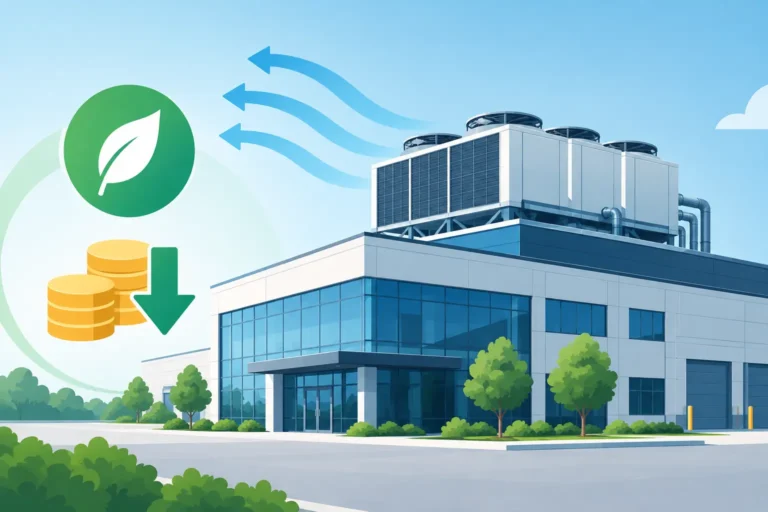
A hot dining room, an overheated server closet, or a stuffy office can become an immediate business problem. Commercial cooling efficiency is not simply about reducing a utility bill. It is about keeping employees productive, customers comfortable, inventory protected, and equipment dependable through a demanding Chicagoland summer.
For facility managers and business owners, the best improvements usually come from a careful look at the whole system: equipment condition, airflow, controls, operating habits, and maintenance history. Replacing equipment can make sense, but it is not always the first or only answer.
What Commercial Cooling Efficiency Really Means
An efficient commercial cooling system removes heat while using the least practical amount of energy. That sounds simple, but a rooftop unit or split system works against several variables every day. Outdoor temperature and humidity, occupancy, sunlight through windows, kitchen equipment, computer loads, duct condition, and thermostat settings all affect performance.
A system can still blow cold air and waste a significant amount of energy. Dirty coils force the equipment to work harder to transfer heat. A worn blower motor can reduce airflow. Leaky ducts can send conditioned air into areas that do not need it. A poorly placed thermostat may cause unnecessary run time because it is reading heat from direct sun or nearby equipment instead of the occupied space.
Efficiency also has a comfort side. Short cycling, uneven temperatures, and high indoor humidity can signal that a system is not operating as it should. Lower energy use is valuable, but a solution that leaves customers or staff uncomfortable is not a true operational improvement.
Start With Maintenance Before Major Upgrades
Preventive maintenance is often the most cost-effective way to improve performance. Commercial systems run longer hours and face more wear than many residential units, especially in businesses with frequent door traffic, heat-producing equipment, or high occupancy.
A professional maintenance visit should go beyond replacing filters. Technicians should inspect electrical components, verify refrigerant performance, clean evaporator and condenser coils, check drain lines, assess belts and motors where applicable, test safety controls, and confirm that airflow and thermostat operation are appropriate. Small issues are easier to address before they turn into a no-cooling call during peak demand.
Filters deserve special attention. A clogged filter restricts airflow, which can reduce capacity, increase energy consumption, and contribute to coil problems. The right replacement schedule depends on the building and its use. A busy retail space, restaurant, shop, or medical office may need more frequent attention than a lightly occupied professional office.
Maintenance also protects planning. When a technician identifies declining capacity, repeated electrical failures, or compressor concerns early, a business has time to evaluate repair and replacement options instead of making a rushed decision during an emergency.
Improve Airflow and Control the Load
Cooling equipment cannot perform efficiently if air distribution is poor. Before assuming a unit is undersized, look for closed or blocked registers, damaged ductwork, loose connections, failing dampers, or rooms that have changed use since the system was installed.
An office converted into a conference room may now hold more people and electronics than the original design anticipated. A storage area turned into a workspace may need better supply and return airflow. These changes alter the cooling load, and simply lowering the thermostat can create higher bills without correcting the root cause.
Thermostat settings and schedules are another practical opportunity. Many businesses cool empty spaces longer than necessary because equipment schedules no longer match operating hours. Programming temperatures to rise modestly after closing can reduce unnecessary runtime, provided the building is brought back to a comfortable level before staff or customers arrive.
Avoid aggressive setbacks in spaces with high humidity or sensitive equipment. In some buildings, allowing indoor conditions to drift too far overnight can make morning recovery difficult and may create moisture concerns. The right schedule depends on the building, the equipment, occupancy patterns, and what the space needs to protect.
Commercial Cooling Efficiency and Smart Controls
Modern controls can make a meaningful difference when they are selected and configured correctly. Smart thermostats, zoning controls, occupancy scheduling, and building automation features can help operators see when and where cooling is being used.
The key is using controls to solve a real operating problem. A multi-zone office may benefit from separate schedules for customer areas, private offices, and conference rooms. A business with varying weekend hours may benefit from simple scheduling adjustments. Larger or more complex properties may need more advanced control strategies and professional commissioning.
Controls are not a cure for mechanical problems. Adding a smart thermostat to a system with a dirty coil, incorrect refrigerant charge, or poor duct airflow will not create the savings a business expects. First confirm that the equipment is operating properly, then use controls to reduce avoidable run time.
Know When Replacement Is the Better Investment
A well-maintained commercial unit can provide years of dependable service. Still, repair is not always the most affordable long-term choice. Frequent breakdowns, rising repair costs, unreliable comfort, obsolete refrigerant concerns, and unusually high energy use are all reasons to evaluate replacement.
Newer commercial equipment can offer improved efficiency, better staging, variable-speed operation, and stronger humidity control. However, higher efficiency equipment must be properly sized and installed to deliver those benefits. An oversized unit can short cycle and struggle with dehumidification. An undersized unit may run continuously during extreme weather and still fail to maintain comfort.
A qualified load calculation and site evaluation matter more than choosing equipment based on the size of the old unit. Building additions, insulation upgrades, new windows, changes in occupancy, and added heat-generating equipment may mean the previous system no longer reflects the building’s needs.
For some properties, a phased approach is the right answer. Address immediate reliability concerns, improve maintenance and controls, then plan replacement for equipment nearing the end of its useful life. This can make capital costs more predictable while protecting daily operations.
Do Not Overlook Ventilation and Humidity
Commercial cooling involves more than temperature. Ventilation brings in outdoor air, which supports indoor air quality but also adds heat and humidity during warm weather. If ventilation rates, exhaust systems, or outside-air dampers are not operating correctly, the cooling system may be carrying a larger load than necessary.
Humidity is especially important in customer-facing spaces. Air that feels sticky can make a room uncomfortable even when the thermostat displays a reasonable temperature. It can also contribute to odors, moisture issues, and employee complaints.
The solution depends on the application. A restaurant, salon, medical office, retail location, and standard office space each have different ventilation and moisture demands. Proper system setup should balance comfort, air quality, code requirements, and energy use rather than treating every building the same.
Track the Signs That Costs Are Rising
Utility bills are useful, but they are easier to act on when compared with equipment behavior. Keep a record of service calls, recurring comfort complaints, temperature inconsistencies, and changes in operating hours. If a unit begins running longer to achieve the same temperature, that pattern is worth investigating.
Watch for warm rooms, weak airflow, unusual sounds, water around equipment, ice formation, frequent thermostat adjustments, or a sudden increase in electrical costs. These signs do not always mean replacement is needed, but they should prompt a professional inspection.
For businesses in Oswego and nearby western Chicago suburbs, fast response matters when cooling affects customers, staff, or operations. Brian & Sons can assess commercial equipment, explain what is causing the issue in clear terms, and help weigh repair, maintenance, and replacement options without unnecessary upselling.
The most effective next step is usually straightforward: schedule service before the next heat wave turns a manageable performance issue into an interruption for your business.