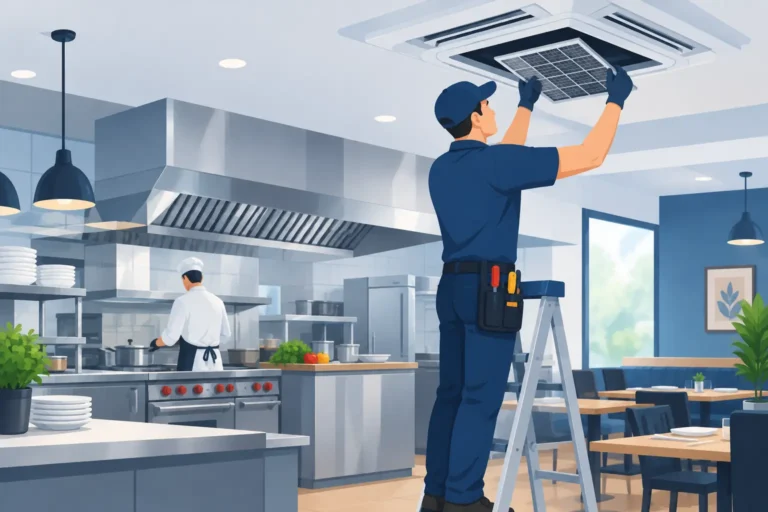
A packed dining room can turn uncomfortable quickly when the air conditioning cannot keep up, kitchen exhaust is struggling, or a rooftop unit shuts down without warning. Restaurant HVAC repair Aurora owners can depend on is not simply about getting cool or warm air moving again. It is about protecting the guest experience, supporting your staff, managing humidity, and keeping a busy shift from becoming an operational problem.
A restaurant HVAC system works harder than most commercial systems. Heat from cooking equipment, constant door traffic, refrigeration equipment, dining-room occupancy, and grease-laden kitchen air all create demands that change throughout the day. A fast repair matters, but so does finding the actual cause before a small issue becomes a repeat breakdown.
Why Restaurant HVAC Problems Need a Faster Response
For a restaurant, comfort has a direct effect on business. Guests who are too hot, too cold, or bothered by stale air may shorten their visit or decide not to return. Employees working near grills, ovens, dishwashers, or prep areas can face even more challenging conditions when cooling or ventilation falls behind.
The stakes can be higher than comfort alone. Excess humidity may create condensation, slippery floors, unpleasant odors, and strain on building finishes. Inadequate ventilation can leave smoke, heat, and kitchen odors lingering where they do not belong. During an Illinois winter, a heating failure can make a dining room unusable and put plumbing at risk in poorly heated areas.
The right service response starts with urgency, but it should not stop at a temporary reset. A qualified commercial HVAC technician should identify whether the issue is tied to the unit itself, controls, airflow, electrical components, thermostats, ductwork, ventilation equipment, or a maintenance concern that has been building over time.
Restaurant HVAC Repair Aurora Businesses Can Plan Around
A restaurant system may appear to have one simple symptom, such as weak airflow or uneven temperatures, while several conditions are contributing to it. For example, a clogged filter can restrict airflow, but a dirty evaporator coil, failing blower motor, damaged belt, or poorly operating outside-air damper may be part of the larger picture. Replacing only the filter may improve conditions briefly without solving the underlying strain on the equipment.
Restaurants also need to consider how the system is used. A unit that seems adequate during a quiet weekday lunch may fall behind during a full dinner service. Dining rooms with sun-facing windows, private event spaces, patio-adjacent entrances, or open kitchen concepts often have distinct load challenges. A professional diagnosis should account for occupancy, kitchen heat, the condition of ventilation systems, and where employees or guests are experiencing discomfort.
Clear communication matters during every repair. A facility manager or restaurant owner should understand what failed, what can be repaired immediately, whether the system is safe to operate, and what follow-up work may be needed. Honest options help owners make sound decisions without unnecessary disruption or surprise costs.
Common Signs Your System Needs Attention
Do not wait for a full shutdown if your restaurant is showing early warning signs. Rising utility bills, repeated thermostat adjustments, rooms that are consistently warmer or cooler than others, new rattling or grinding sounds, and water around indoor equipment all deserve attention.
Other red flags are more specific to restaurants. If cooking odors are drifting into the dining room, the kitchen feels unusually hot, staff members notice weak airflow near prep areas, or the entryway becomes humid each time the doors are busy, HVAC and ventilation performance should be evaluated. These issues may not always mean the main heating and cooling unit has failed, but they can affect comfort, air quality, and system efficiency.
An HVAC system that trips breakers, short cycles, freezes up, or produces burning odors should be addressed promptly. If there is a gas odor, visible smoke, or a carbon monoxide concern, move people away from the area and treat the situation as an emergency. Do not continue operating equipment that may create a safety hazard.
Repair, Replacement, or Maintenance: The Right Choice Depends
Repair is often the best answer when a component has failed and the rest of the equipment is in sound condition. Common repairs may include replacing capacitors, contactors, belts, motors, sensors, thermostats, fan components, or electrical connections. A timely repair can restore service and help prevent a minor part failure from damaging more expensive components.
Replacement becomes worth discussing when repairs are frequent, major components are failing, parts are difficult to source, or the unit no longer performs reliably during peak demand. Equipment age is relevant, but it is not the only factor. A newer system that was improperly sized, poorly maintained, or exposed to demanding conditions may need a more comprehensive solution. Conversely, an older unit with a limited, practical repair may still have useful life left.
Maintenance is what helps owners avoid having to make that decision during a rush. Regular service gives a technician the opportunity to inspect electrical connections, clean critical components, check drains and filters, verify refrigerant performance where applicable, assess airflow, and catch wear before it creates a shutdown. The service schedule should reflect the restaurant’s operating hours, equipment type, kitchen conditions, and seasonal demand. A high-volume kitchen may need more attention than a lightly used office space.
Protecting Indoor Air Quality and Kitchen Comfort
Heating and cooling are only part of a restaurant comfort plan. Fresh-air ventilation, exhaust performance, filtration, humidity control, and balanced airflow all influence the environment guests and staff experience.
Kitchen exhaust systems have their own maintenance and code-related considerations, but they also affect HVAC performance. When exhausted air is not properly replaced with conditioned make-up air, the building can become negatively pressurized. That may pull unconditioned outdoor air through doors and gaps, make doors difficult to open, and contribute to hot, humid, or drafty areas. It can also make a dining room feel uncomfortable even when the air conditioner itself is operating.
The best approach is coordinated problem-solving. If the complaint is a hot kitchen, the solution may involve the cooling system, exhaust operation, make-up air, airflow balancing, or a combination of these factors. A technician should avoid guessing from one symptom alone.
What to Do Before the Technician Arrives
During a busy service day, a few practical details can speed up diagnosis. Note when the problem began, which rooms are affected, whether it occurs only during certain hours, and any recent changes to the building or equipment. A new menu item requiring more cooking, a remodeled dining area, a blocked vent, or an event with unusually high occupancy can all be relevant.
Make sure the technician can safely access the thermostat, indoor equipment, electrical panels, roof access if applicable, and areas where employees have noticed problems. Avoid repeatedly turning the system on and off in an attempt to force it to recover. If water is leaking near electrical equipment, shut off the affected system if it is safe to do so and keep the area clear.
Keep the conversation focused on operating conditions, not just the immediate failure. Sharing your comfort goals, recurring concerns, and hours of peak demand helps create a repair plan that fits the way your restaurant actually runs.
Dependable Help When Service Cannot Wait
A restaurant does not have much room for downtime. When heating, cooling, or ventilation fails, prompt commercial service and straightforward recommendations can help protect the next shift, the next reservation, and the people working through both. Brian & Sons provides responsive commercial HVAC support with the practical, customer-first approach local business owners expect.
The goal is not to sell more work than a restaurant needs. It is to restore safe, dependable operation, explain the condition of the equipment clearly, and help you plan the next sensible step before a comfort problem becomes a disruption to your business.