A second-floor bedroom that never cools down, an addition with no ductwork, or an aging central air conditioner can all lead to the same question: ductless versus central cooling, which is the better investment? The answer depends less on what is “best” in general and more on how your home is built, how you use each room, and what problem you need the new system to solve.
For homeowners in the western Chicago suburbs, cooling decisions also need to account for humid summers, changing family needs, and the cost of operating equipment over many years. A qualified HVAC evaluation should look beyond square footage to consider insulation, windows, existing ductwork, airflow, and the condition of your current heating system.
How Central Cooling Works
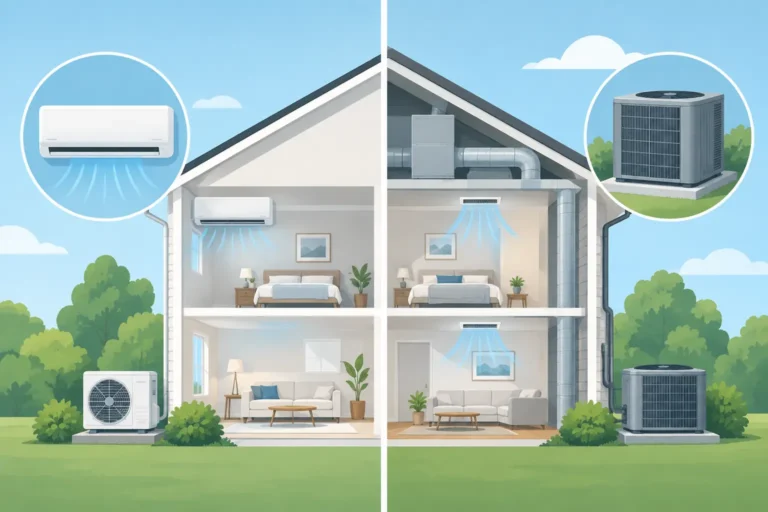
Central air conditioning uses one outdoor condensing unit connected to an indoor evaporator coil, typically installed above or beside a furnace or air handler. Conditioned air moves through supply ducts and returns through return ducts, cooling the home from a central source.
This is the familiar setup in many area homes, and it can be an excellent choice when the duct system is already in good condition. One system can cool multiple rooms consistently, and the indoor equipment stays largely out of sight. If your furnace, blower, and ductwork are sized and maintained correctly, central cooling can provide dependable whole-home comfort without placing a unit on every wall.
The key phrase is “if the ductwork is in good condition.” Leaky, undersized, poorly insulated, or poorly designed ducts can waste cooled air and create uneven temperatures. A new air conditioner cannot fully correct an airflow problem caused by the duct system around it. In some homes, duct improvements should be part of the installation conversation.
How Ductless Cooling Works
Ductless mini-split systems pair an outdoor unit with one or more indoor air handlers. The indoor units are commonly wall-mounted, although ceiling cassettes and floor-mounted options may be available. Small refrigerant lines and electrical wiring run between the indoor and outdoor equipment through a compact exterior opening, rather than through a full duct network.
Each indoor unit serves a defined area, called a zone. You can set different temperatures in different spaces, which is a meaningful advantage for households where one person prefers a cooler bedroom while another works comfortably in a warmer office.
Because ductless systems do not depend on ductwork, they are especially useful for homes with hot or cold rooms, finished basements, garages, sunrooms, additions, attic conversions, and older homes where adding ducts would mean opening walls or sacrificing closet space. Many ductless systems also operate as heat pumps, providing efficient cooling in summer and useful supplemental heat during milder weather.
Ductless Versus Central Cooling: The Biggest Differences
The most visible difference is how air reaches each room. Central air distributes cooled air throughout the home using ducts. Ductless systems cool specific zones directly. That distinction affects installation, comfort control, appearance, and long-term operating costs.
Central cooling generally makes the most sense for a full-home replacement when usable ductwork is already in place. A properly sized central system offers a clean, integrated solution for homes designed around forced-air heating and cooling. It is also often easier to keep a consistent look from room to room because there are no wall-mounted air handlers.
Ductless cooling can avoid the cost and disruption of installing new ductwork. It also gives you room-by-room control. If you only use a guest room occasionally, you do not need to cool it to the same level as the main living area. This zoning can reduce unnecessary energy use, particularly when paired with thoughtful thermostat settings.
However, zone control is not automatically a guarantee of lower utility bills. A system must still be correctly sized, professionally installed, and used wisely. Setting every indoor unit to very low temperatures all day can erase much of the potential savings.
Installation Costs and What Changes the Price
It is understandable to compare the initial price first, but the lowest quote does not always represent the best value. Cooling equipment is only one part of the project. The final cost is affected by capacity, efficiency rating, electrical needs, equipment location, number of indoor zones, drain routing, permits, and any duct repairs or modifications.
Replacing a central air conditioner where the existing coil, blower, and ducts are compatible may be more straightforward than a major retrofit. On the other hand, installing central cooling in a house with no ducts can become a large construction project. In that situation, a ductless system may be the more practical option even if the equipment cost is not lower on paper.
A multi-zone ductless system can also become a significant investment when several rooms need separate indoor units. That is why a one-zone mini-split for a troublesome bedroom is a very different decision from converting an entire home to ductless cooling.
When reviewing estimates, ask what is included. A clear proposal should address equipment, labor, electrical work, condensate drainage, thermostat or controls, permits when required, start-up testing, and warranty details. It should also explain whether the existing system has issues that could affect performance.
Comfort, Humidity, and Air Quality
Cooling is not only about the temperature displayed on a thermostat. In Illinois summers, humidity has a major effect on comfort. Both central and ductless equipment can remove moisture when sized and set up correctly, but oversized equipment can short-cycle. That means it reaches the temperature setting too quickly, runs in short bursts, and may not operate long enough to manage humidity effectively.
Central systems can support whole-home filtration and indoor air quality accessories through the ductwork. Depending on your needs, that may include upgraded media filters, humidifiers, dehumidification solutions, or air purification equipment. For families concerned about allergens, dust, or pet dander throughout the home, this can be a significant benefit.
Ductless indoor units include washable filters, but those filters require regular attention. They are not a replacement for a whole-home filtration plan in every situation. The units also need professional cleaning and maintenance to prevent buildup that can affect airflow, efficiency, and indoor air quality.
Which System Fits Common Home Situations?
If you have a newer home with a functioning forced-air furnace and well-designed ducts, central air is usually the logical whole-home choice. It provides even cooling through a system your home already supports.
If one or two rooms stay uncomfortable while the rest of the house feels fine, ductless may solve the issue without replacing a central system that still has useful life. A single-zone unit can be a targeted solution for a top-floor bedroom, home office, or finished bonus room.
For an addition, converted garage, enclosed porch, or older home without ductwork, ductless often avoids extensive remodeling. It can deliver dependable comfort without asking a central system to stretch beyond the capacity it was designed to handle.
For larger homes with difficult layouts, a hybrid approach may be ideal. Central cooling can serve the main living spaces while ductless equipment handles areas with unique comfort demands. This approach is common when homeowners want to improve a problem room without disturbing the rest of the home.
Do Not Skip Sizing and Maintenance
No matter which option you choose, correct sizing is essential. An HVAC professional should perform a load calculation rather than selecting equipment based solely on the size of the old unit or the home’s square footage. Insulation levels, window exposure, ceiling height, occupancy, and duct condition all matter.
Ongoing maintenance protects the investment. Central systems need clean filters, clear outdoor coils, and periodic inspections of refrigerant levels, electrical components, drainage, and airflow. Ductless systems need clean filters, inspected coils, properly functioning condensate drains, and service for each indoor head.
At Brian & Sons, our technicians help homeowners weigh practical comfort needs, installation realities, and budget before recommending a path forward. The right recommendation should be easy to understand and never feel like unnecessary upselling.
A cooling system should make your home easier to live in, not add another source of worry. Whether you need whole-home replacement, relief for one difficult room, or guidance on a planned addition, start with an honest assessment of the space and the system you already have.