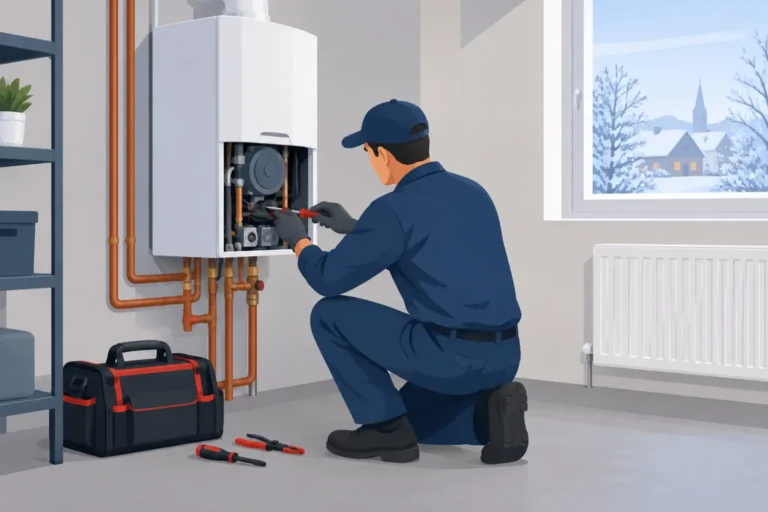

A boiler can seem fine right up until a cold North Aurora morning when the radiators stay cool, the thermostat keeps dropping, or the system starts making a sound it never made before. For boiler repair North Aurora IL homeowners can count on, the first priority is not guessing at the cause. It is protecting your household, preventing a small failure from becoming water damage or a no-heat emergency, and getting a clear answer from a qualified technician.
Boilers are built to provide dependable, even heat, but they work through a connected system of burners, controls, pumps, piping, pressure components, and safety devices. One worn or failed part can affect comfort throughout the building. Knowing what to watch for helps you act early and make a more informed repair decision.
When Boiler Trouble Needs a Fast Response
Some boiler problems can wait for a scheduled appointment. Others should be treated as urgent. If you smell gas, notice a carbon monoxide alarm, see smoke, or feel dizzy, nauseated, or unusually fatigued while the boiler is operating, leave the building and call emergency services or your gas utility from a safe location. Do not try to relight the system or investigate the source yourself.
A significant water leak also deserves prompt attention. Turn off the boiler if it is safe to do so, shut off the water supply if you know where it is located, and move valuables away from the area. Water around electrical components, ceilings that are beginning to stain, or a leak that will not stop can quickly become more than a heating repair.
No heat during freezing weather is another reason to call right away. Beyond an uncomfortable home or workplace, prolonged cold can put vulnerable residents at risk and allow pipes to freeze. A responsive HVAC team can diagnose the failure and help limit further damage.
Common Signs You May Need Boiler Repair in North Aurora IL
Boilers often give warning signs before they stop working completely. A room that takes much longer to warm up, radiators that heat unevenly, or a thermostat setting that no longer delivers the same comfort can point to circulation, control, or zoning issues. In a radiant-floor system, you may notice cooler areas across the floor rather than a complete loss of heat.
Strange sounds are worth taking seriously. Banging, whistling, gurgling, or rumbling may result from trapped air, mineral buildup, a circulation issue, or pressure trouble. The exact cause depends on whether your home has a hot-water, steam, or combination boiler, so the sound alone is not a diagnosis. It is, however, a good reason to schedule service before the system fails under heavier demand.
Watch for visible changes, too. Water near the boiler, corrosion around pipe connections, repeated pressure drops, or a relief valve that discharges water should be assessed by a professional. A boiler that frequently turns on and off can waste fuel and place extra strain on ignition components, sensors, and controls.
Higher utility bills can be another clue. Winter energy costs naturally rise when temperatures fall, but a sharp increase without a change in household use may mean the boiler is running longer than necessary. A repair may be as straightforward as correcting a control issue or restoring proper circulation. In other cases, an older system may be losing efficiency because multiple components are nearing the end of their service life.
What to Check Before Calling for Service
Homeowners can safely check a few basic items without opening the boiler cabinet or handling gas, electrical, or combustion components. Confirm that the thermostat is set to heat, the temperature setting is above the current room temperature, and the batteries are fresh if the thermostat uses them. If your heating system has separate zones, check whether the concern affects one area or the entire home.
You can also look at the boiler display for an error code and make a note of it for the technician. Check that the electrical breaker has not tripped. If it has, reset it once only. If it trips again, leave it off and request service. Repeated tripping can indicate an electrical fault that should not be ignored.
Avoid repeatedly pressing reset, relighting a pilot, adjusting gas valves, or trying to stop a leak with a temporary patch. Those steps can conceal the real issue or create a safety hazard. A good service call starts with simple observations: when the problem began, what you noticed, whether it is intermittent, and whether there has been recent construction, a power outage, or a change in fuel service.
What a Professional Boiler Repair Visit Should Include
A proper diagnosis is more than replacing the part that appears to have failed. A licensed technician should evaluate the system’s operation and safety controls, inspect for leaks and corrosion, check pressure and circulation where applicable, and assess the burner and venting system. The technician may also test ignition components, sensors, pumps, valves, thermostat communication, and zone controls.
For a gas boiler, combustion and venting deserve special attention. A boiler can produce heat while still operating inefficiently or showing signs of a developing venting problem. Clear explanations matter here. You should understand what failed, why the repair is recommended, what the repair is expected to address, and whether there are any related concerns to plan for.
For commercial properties, the stakes can be higher. A boiler issue may affect tenants, employees, customers, inventory, or multiple zones of a building. Fast troubleshooting is important, but so is identifying whether the problem is isolated to a control, pump, distribution loop, or the boiler itself. This helps property decision-makers avoid repeated downtime and better plan for repair or replacement costs.
Repair or Replacement: How to Make the Right Call
Repair is often the sensible choice when the boiler is otherwise in good condition, the issue is isolated, replacement parts are available, and the repair restores safe, dependable operation. A newer boiler with a failed sensor, circulator pump, ignition component, or control may have many useful years remaining.
Replacement becomes more reasonable when breakdowns are recurring, repair costs are rising, efficiency has fallen noticeably, or a critical part is obsolete. Age matters, but it is not the only factor. A well-maintained boiler can last a long time, while a poorly maintained system may need major work sooner. The condition of the piping, venting, controls, and heat distribution system also affects the decision.
Ask for an honest comparison rather than a one-size-fits-all recommendation. A lower-cost repair may be appropriate when budgets are tight and the system is safe to operate. On the other hand, putting substantial money into an unreliable boiler can cost more over time through emergency calls, lost comfort, and higher utility use. Financing options, available specials, and the needs of the building should all be part of the conversation.
Preventing the Next No-Heat Call
Annual boiler maintenance gives technicians a chance to find small concerns before the heating season puts the system under stress. Maintenance typically focuses on safe operation, cleaning and inspection, control checks, pressure and circulation review, and testing key components. The precise work depends on your boiler type and manufacturer recommendations.
Homeowners should also keep the area around the boiler clear, avoid storing flammable materials nearby, and pay attention to changes in sound, performance, or pressure. If your boiler serves radiant heat or multiple zones, report uneven temperatures early. Addressing one cool area is usually easier than waiting until several zones are affected.
Brian & Sons provides responsive boiler service for homeowners and commercial property decision-makers who want straightforward answers, fair options, and dependable heat. With 24/7 service available for urgent heating problems, our team is ready to help when comfort cannot wait.
If your boiler is showing warning signs, do not wait for a complete shutdown to decide what to do. A timely professional inspection can protect your comfort, your property, and your peace of mind through the next cold stretch.