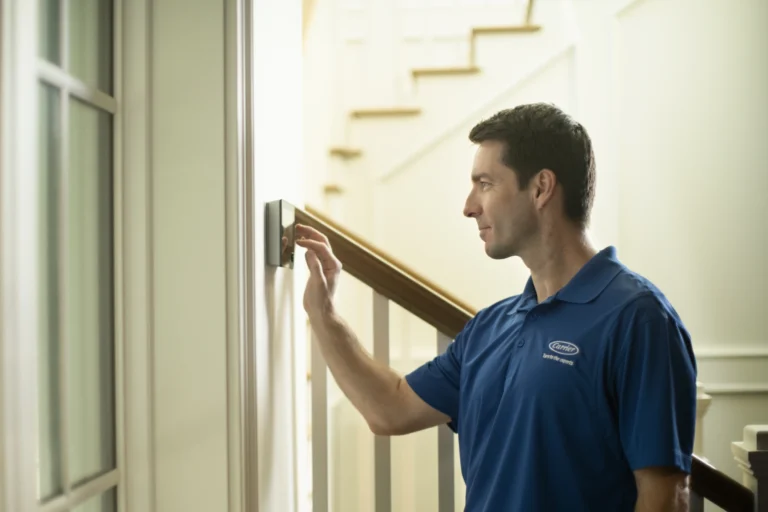
Picture a weeknight in late February. The furnace has been cycling a little more often than usual, but nobody notices because everyone is busy. Then one morning the house is cold, the thermostat reads fifty-five degrees, and the furnace will not restart. What looked like a quiet winter evening turns into an emergency call and a repair bill that could have been avoided. This scenario plays out across the Chicagoland area every heating season, and almost every time, the system was giving warning signs for weeks before it failed. Smart home monitoring technology exists to catch those signs early, and at Brian & Sons we help homeowners put that technology to work.
What Smart Monitoring Actually Watches For
A modern connected HVAC system does far more than let you adjust the temperature from your phone. It continuously measures how your heating and cooling equipment behaves and compares that behavior against expected baselines. When a furnace takes longer than normal to reach a set temperature, or when an air conditioner draws more current than it should to produce the same cooling output, the system records it. These small deviations are the earliest indicators of a developing problem, long before a homeowner would notice reduced comfort.
The sensors involved track a wide range of conditions throughout your home and equipment. Temperature differentials across the supply and return air tell us whether the system is moving heat efficiently. Runtime logs reveal whether a unit is short-cycling, which often points to an oversized system, a failing flame sensor, or a refrigerant issue. Humidity readings help identify problems with evaporator coils and ventilation. Taken together, this stream of data paints a detailed picture of system health that no monthly visual inspection could match.
Turning Data Into Early Warnings
Collecting information is only useful when it leads to action. The value of monitoring comes from the interpretation of what the numbers mean and the timing of the response. A smart thermostat or connected control board can flag an anomaly the moment it appears, which gives you the opportunity to schedule service on your own terms rather than during a breakdown. For the Chicagoland homeowner, that difference often means catching a worn blower motor in October instead of losing heat during a January cold snap.
Here are several of the most common problems that monitoring technology helps catch before they escalate:
- Clogged or dirty air filters: rising static pressure and longer runtimes signal restricted airflow that strains the blower and wastes energy.
- Refrigerant leaks: gradual drops in cooling performance paired with rising energy use point to a charge problem before the compressor is damaged.
- Failing ignition components: repeated ignition attempts logged by the control board warn of a flame sensor or igniter nearing the end of its life.
- Thermostat and sensor drift: mismatches between measured and actual temperatures expose calibration issues that quietly inflate bills.
- Ductwork leakage: unexpected temperature losses between equipment and living spaces reveal gaps that reduce efficiency.
When one of these alerts appears, our NATE-certified technicians can review the data, confirm the diagnosis, and arrive prepared with the right parts. Every member of our team holds a degree in HVAC, so the interpretation of system data is grounded in real technical training rather than guesswork.
Protecting Comfort and Budget Across Every Property
Smart monitoring is not only for new construction or large homes. We install and support connected systems in a wide range of settings across the region, including Aurora, Oswego, Batavia, Montgomery, Geneva, and Warrenville. The same principles that protect a single-family house also protect a church that needs steady comfort for weekend gatherings, a small business that cannot afford downtime, or a light industrial site where equipment runs around the clock.
The benefits extend well beyond preventing emergencies. Continuous monitoring supports several practical goals for property owners:
- Lower energy costs: catching efficiency losses early keeps monthly bills predictable through both the heating and cooling seasons.
- Longer equipment life: addressing small faults before they cascade reduces strain on expensive components like compressors and heat exchangers.
- Fewer surprise failures: scheduled repairs replace emergency calls, which protects both your comfort and your wallet.
We have provided service for the entire Chicagoland area for more than twenty years, and that experience shapes how we approach this technology. We believe in honesty and quality work by people who care. There are no high-pressure sales pitches here. We recommend monitoring solutions because they genuinely help you avoid costly surprises, and we stand behind the service we provide. When a system does need attention, our 24-hour service, available 365 days a year, means help is never far away.
Getting Started With Smarter Oversight
Adding monitoring to your home or business usually begins with a straightforward assessment of your existing equipment. Many furnaces and air conditioners already installed in Chicagoland homes can be paired with smart thermostats and sensor packages without a full replacement. For older systems, we explain which upgrades offer the most meaningful protection and which can wait, so you can make informed decisions at your own pace.
If you want to stop reacting to breakdowns and start preventing them, Brian & Sons is ready to help you build a monitoring setup suited to your property and your priorities. The goal is simple: give you clear, early insight into the systems that keep your home comfortable, so small problems stay small and the surprise emergency calls become a thing of the past.