A failed rooftop unit on a July afternoon can turn a productive workplace into a stream of comfort complaints, early departures, and emergency calls. A practical commercial HVAC maintenance checklist gives building owners and facility managers a way to spot problems early, plan service around business hours, and protect a major operating expense.
For offices, retail spaces, restaurants, medical facilities, and multi-tenant properties, maintenance is not a one-size-fits-all task. Equipment age, occupancy, operating hours, indoor air quality needs, and the type of system all affect the right service schedule. Still, a consistent checklist creates the foundation for more reliable heating and cooling.
Why Preventive HVAC Maintenance Pays Off
Commercial HVAC equipment works harder than many people realize. A system may run long hours, serve rooms with different temperature demands, and contend with dust, foot traffic, kitchen exhaust, or changing occupancy. Small issues such as a dirty filter, loose electrical connection, clogged drain, or worn belt can increase energy use and place extra strain on expensive components.
Routine maintenance helps reduce surprise downtime, but it also supports better day-to-day comfort. When airflow is balanced and controls are working correctly, employees, customers, and tenants are less likely to experience hot and cold spots. It can also help facility teams document equipment condition and make informed replacement decisions before a system becomes an emergency.
Maintenance does not eliminate every repair. A compressor can fail unexpectedly, and older equipment may have limits even with excellent care. The goal is to reduce avoidable breakdowns, catch safety concerns early, and get the most dependable performance possible from the equipment you have.
Commercial HVAC Maintenance Checklist: 12 Key Tasks
The following checklist covers the core work that should be completed on a regular schedule. Some items can be handled by an on-site facilities team, while electrical, refrigerant, combustion, and internal equipment service should be performed by a licensed commercial HVAC technician.
1. Inspect and replace air filters
Filters protect indoor air quality and keep dirt from collecting on coils, blower components, and ductwork. Check them monthly, especially in high-traffic buildings or spaces with construction dust, pets, food service, or heavy outdoor pollutants. Replace filters when they are loaded, not simply when the calendar says so.
Using a higher-efficiency filter can improve particle capture, but it may also increase airflow resistance if the system is not designed for it. A technician can help confirm the right filter type and replacement interval for your equipment.
2. Check thermostats and building controls
Verify that thermostats, sensors, programmed schedules, and building automation controls match the building’s actual hours and comfort needs. A schedule that runs full capacity overnight or on weekends can waste energy. On the other hand, aggressive setbacks may make it difficult for the system to recover before occupants arrive.
Confirm that sensors are not blocked by furniture, exposed to direct sunlight, or located near heat-producing equipment. A poorly placed sensor can make a properly operating system appear unreliable.
3. Clear condensate drains and inspect drain pans
Cooling equipment creates condensation. If drains clog, water can overflow, damage ceilings or finishes, create odors, and trigger system shutdowns. Technicians should clear drain lines, inspect pans for corrosion, and confirm that condensate pumps operate properly where applicable.
This task matters most during the cooling season, but a drain problem can develop at any time. Water around indoor units should never be ignored.
4. Inspect belts, pulleys, bearings, and motors
Air handlers and rooftop units often rely on moving parts that wear gradually. A slipping belt, failing bearing, or vibrating motor can reduce airflow and eventually cause a larger breakdown. During service, technicians inspect belt condition and tension, listen for unusual noise, and check motors for overheating or excess vibration.
Not every commercial system uses belts. Variable-speed equipment, ductless systems, and some newer units have different maintenance needs, which is why equipment-specific service matters.
5. Clean coils and confirm airflow
Evaporator and condenser coils transfer heat. When they become dirty, the system has to work longer to deliver the same cooling or heating result. Technicians should inspect coils, clean them using appropriate methods, and check for bent fins or obstructions around outdoor equipment.
Airflow checks also include blower operation, supply and return openings, and accessible duct connections. Restricted airflow can contribute to frozen coils, uneven temperatures, and premature component wear.
6. Inspect electrical components
Loose connections, worn contactors, damaged wiring, and failing capacitors can cause intermittent operation or a full system failure. A qualified technician should inspect electrical panels and components, test operating values, and tighten connections when needed.
Electrical work is not a DIY maintenance item. Commercial equipment carries serious voltage and safety risks, so this portion of the checklist belongs with trained professionals.
7. Test refrigerant performance
A refrigerant system should not need frequent topping off. Low refrigerant often indicates a leak, and adding refrigerant without finding the cause can lead to repeat problems and unnecessary expense. During cooling maintenance, technicians can evaluate pressures, temperatures, and overall system performance to identify concerns.
If a unit is older or has a history of refrigerant repairs, it may be time to compare the cost of continued repairs with a planned replacement strategy.
8. Inspect heat exchangers and combustion components
For gas-fired furnaces, unit heaters, and boilers, heating maintenance should include a careful safety inspection. Technicians check burners, ignition components, venting, gas connections, flame operation, and heat exchangers. A cracked heat exchanger or combustion problem can create a serious safety concern and requires prompt professional attention.
Carbon monoxide detectors should also be tested according to the manufacturer’s instructions and local requirements. They are an important layer of protection, not a substitute for proper equipment maintenance.
9. Test safeties and system startup
Commercial systems contain safety switches and controls designed to prevent equipment damage. Technicians should test relevant safeties, observe startup and shutdown sequences, and verify that the system responds correctly to thermostat or control commands.
This is particularly useful before peak seasons. Finding a weak igniter in fall or a failing capacitor in spring is far less disruptive than discovering it during extreme weather.
10. Check rooftop units and outdoor clearances
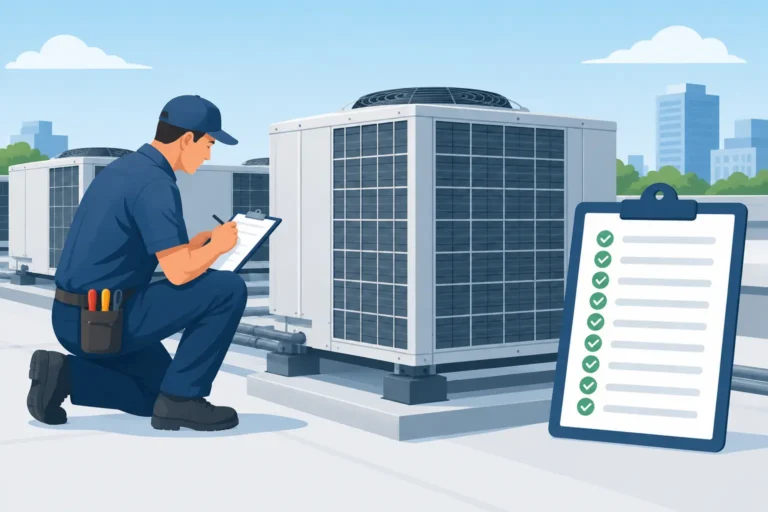
Rooftop equipment needs a clear, stable environment to operate safely. Inspect panels, mounting hardware, weather seals, coil guards, and drainage. Remove leaves, loose debris, and other obstructions from around outdoor units while maintaining safe access practices.
For rooftop units, access and safety are part of the maintenance plan. Keep service paths clear and address damaged curbs, roof penetrations, or standing water that could affect the equipment or roof system.
11. Review indoor air quality and ventilation
Ventilation needs vary widely by building use. A busy office, retail location, salon, restaurant, or health care setting may need closer attention to outdoor air delivery, exhaust operation, humidity, and filtration. Stuffy rooms, persistent odors, visible dust, or recurring humidity complaints are signs to investigate.
A technician can assess whether the issue is tied to ventilation, filtration, duct leakage, equipment capacity, or controls. The right solution depends on the building, not just the symptom.
12. Document findings and plan repairs
Every service visit should produce useful records. Track filter changes, repairs, refrigerant findings, inspection notes, equipment age, and recurring comfort complaints. Documentation helps managers identify patterns, budget for capital improvements, and avoid approving the same diagnosis twice.
Ask your HVAC partner to separate urgent safety or reliability repairs from recommended improvements. Clear priorities make it easier to protect the budget without delaying work that cannot wait.
Set the Right Schedule for Your Building
Most commercial properties benefit from professional maintenance at least twice each year: once before cooling season and once before heating season. However, that is a starting point, not a universal rule. Buildings with long operating hours, multiple rooftop units, sensitive inventory, high occupancy, or demanding indoor air quality requirements may need quarterly service.
Between professional visits, staff can monitor filter condition, listen for unusual noises, watch for water leaks, and report comfort concerns quickly. Early reporting gives technicians more information and often prevents a minor issue from becoming an after-hours emergency.
For businesses in Oswego and the western Chicago suburbs, seasonal planning matters. Winter heating demand and humid summer conditions put different stresses on commercial equipment. Scheduling maintenance before the weather changes gives your team more flexibility than waiting for the first major outage.
A dependable maintenance plan should fit your equipment, operating schedule, and budget. Brian & Sons can help commercial property decision-makers build a service plan that keeps priorities clear, protects comfort, and provides a trusted number to call when a problem needs immediate attention.