A heating replacement is rarely just about replacing a piece of equipment. It affects how every room feels on a January morning, how much usable space your home needs for mechanical equipment, and what future cooling upgrades may look like. When comparing boiler versus forced air heating, the right answer depends on your home’s existing systems, comfort preferences, budget, and long-term plans.
For homeowners in the western Chicago suburbs, both options can deliver dependable heat through long winters when properly sized and maintained. The key is understanding what each system does well, where the trade-offs are, and when keeping your existing setup makes more financial sense than changing it.
How Boiler Heat and Forced Air Work
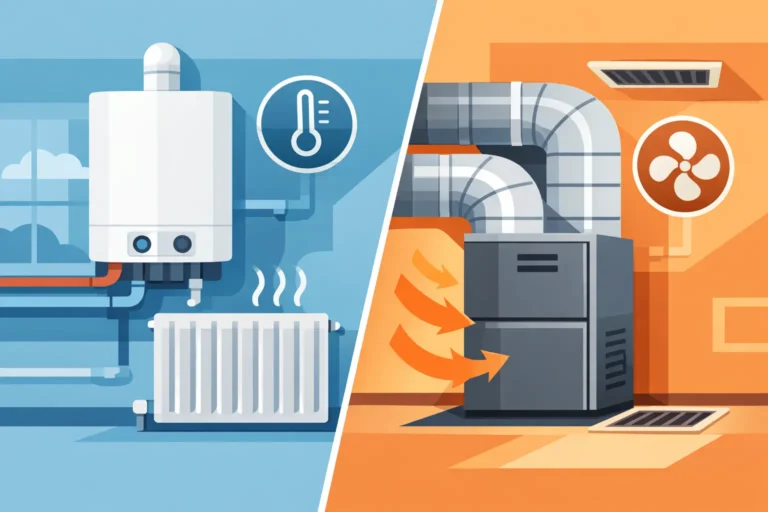
A boiler heats water and moves it through piping to radiators, baseboard units, wall convectors, or radiant floor tubing. The water transfers heat into the room, then returns to the boiler to be reheated. This is called hydronic heating.
Forced air heating uses a furnace or air handler to warm air, then a blower sends that air through ductwork and out through supply vents. The air circulates back through return ducts, where it is reheated and sent through the home again.
Both systems can use high-efficiency equipment. A modern condensing boiler or furnace may offer significantly better performance than an older unit, but equipment efficiency is only part of the picture. Duct leakage, poor insulation, aging radiators, incorrect sizing, and deferred maintenance can all reduce real-world comfort and operating efficiency.
Boiler Versus Forced Air Heating for Comfort
The most noticeable difference is the type of warmth each system provides.
Boiler heat is often described as steady, quiet, and even. Radiators and radiant floors continue releasing heat after a heating cycle ends, so the temperature can feel less abrupt. Radiant floor heating is especially appealing in bathrooms, kitchens, basements, and other rooms where cold floors are a regular complaint. There is no blower noise and no air rushing from a vent.
Forced air usually heats a room more quickly. A properly designed system can bring the home to the thermostat setting faster than many radiator systems, particularly after a nighttime temperature setback. However, some homeowners notice more temperature variation between cycles, especially in homes with undersized ducts, poorly located vents, or rooms far from the furnace.
Neither system automatically guarantees even temperatures. A well-designed forced-air system with balanced ductwork can be very comfortable, while an older boiler system with air trapped in the lines or poorly sized radiators can leave rooms chilly. The condition and design of the entire system matter as much as the fuel source.
Where radiant heat stands out
If comfort means warm floors and gentle, consistent heat, a boiler paired with radiant flooring is hard to beat. It is particularly useful for additions, bathrooms, finished basements, and homes with tile or stone flooring.
Radiant heating does respond more slowly than forced air. That is not necessarily a problem, but it does mean thermostat programming should be handled thoughtfully. Drastically lowering the temperature overnight may not produce the savings homeowners expect if the system must work hard to recover in the morning.
Cooling Can Change the Decision
Air conditioning is often the deciding factor in a boiler replacement conversation.
A forced-air furnace already has the ductwork needed for a central air conditioner or heat pump. The indoor coil is typically installed with the furnace or air handler, using the same blower and ducts to distribute cooled air. If your home needs new heating and cooling equipment, a forced-air setup can be a practical all-in-one distribution solution.
A boiler does not provide air conditioning on its own. Homes with boiler heat may use window units, ductless mini-splits, high-velocity cooling, or separate central air ductwork. Ductless systems can be an excellent match for older homes without ducts, but they should be planned room by room to ensure proper coverage and appearance.
For a homeowner who loves radiator heat but wants better summer comfort, it is often possible to keep the boiler and add ductless cooling. For a homeowner facing both a boiler replacement and a major cooling upgrade, converting to forced air may be worth evaluating. The best path depends on the home’s layout and the cost of adding or modifying ductwork.
Installation Cost Depends on What Is Already There
Comparing equipment price alone can be misleading. A new furnace and a new boiler have different installation requirements, and the existing infrastructure can change the total cost dramatically.
Replacing an existing boiler while keeping usable piping and radiators is often more straightforward than converting that home to forced air. A full conversion may require duct runs through walls, ceilings, closets, basements, or attics. It can also involve electrical work, drywall repairs, register placement, and changes to the home’s layout.
On the other hand, replacing an aging furnace in a home with sound ductwork is typically more economical than installing a new boiler, radiator system, and hydronic piping from scratch. New construction and major renovations give homeowners more flexibility because mechanical systems can be designed before walls and finishes are complete.
Operating costs also vary. Fuel rates, thermostat habits, insulation levels, local weather, equipment efficiency, and maintenance all affect monthly bills. A high-efficiency system cannot compensate for a drafty attic, unsealed ductwork, or a home that loses heat quickly through old windows and poorly insulated exterior walls.
Maintenance and Repair Considerations
Both systems need annual professional maintenance before heating season. Preventive service supports safe operation, helps catch developing issues early, and can reduce the risk of losing heat during severe weather.
Boiler maintenance typically includes checking combustion and venting, inspecting pumps and valves, verifying pressure, examining the expansion tank, and checking for leaks or corrosion. Water quality and system pressure matter. Small leaks, trapped air, and failing circulator pumps can affect performance long before the boiler stops heating entirely.
Forced-air maintenance includes inspecting the furnace heat exchanger, burners, ignition system, blower components, condensate drainage on high-efficiency equipment, and venting. Homeowners also need to replace or clean filters regularly. A clogged filter can restrict airflow, reduce comfort, and put extra strain on equipment.
A boiler has no ducts to clean and no furnace filter to replace, which some homeowners prefer. A forced-air system has more air-moving components, but it also makes it easier to include whole-home filtration, humidification, UV treatment, or other indoor air quality equipment.
Air Quality and Humidity: A Real Difference
Forced air moves air throughout the home, which means it can also move dust, pet dander, and other airborne particles if filtration is inadequate. The benefit is that the system can actively filter the air. High-quality media filters and properly selected indoor air quality equipment can make a meaningful difference for households with allergies, pets, or respiratory concerns.
Boiler heat does not blow air through rooms, so it generally creates less air movement and fewer drafts. That can be a welcome feature for people sensitive to dry, moving air. Still, boiler heat does not filter the home’s air. If indoor air quality is a concern, standalone purification, ventilation improvements, and humidity control may still be appropriate.
Winter dryness affects both types of heating. Forced-air homes commonly use whole-home humidifiers because ductwork provides a convenient distribution path. Boiler-heated homes can use room humidifiers or other targeted solutions, depending on the home and the moisture issue. Excess humidity can cause condensation and other problems, so humidity levels should be managed carefully rather than simply turned up.
Which System Makes Sense for Your Home?
Choose a boiler when you value quiet, even hydronic heat; your home already has radiators or radiant piping in good condition; or you are planning a targeted radiant-floor project. Keeping a well-designed boiler system can be a smart investment, especially in an older home where adding ductwork would be disruptive.
Choose forced air when you want a single duct system for heating and central cooling, need faster temperature recovery, or are replacing equipment in a home that already has usable ducts. It can also be the more flexible choice for whole-home filtration and humidity control.
There are situations where a hybrid approach is best. A home may keep its boiler for dependable radiator heat while adding ductless cooling upstairs. An addition may use radiant flooring while the original home keeps its furnace. A heat pump may work alongside a furnace or boiler to provide efficient mild-weather heating with reliable backup for Illinois cold snaps.
Before choosing, have a qualified HVAC professional evaluate more than the existing unit. They should consider the home’s heat loss, insulation, duct condition or piping condition, room-by-room comfort concerns, cooling needs, electrical capacity, and future renovation plans. A system that is simply replaced with the same size and style is not always the system that best serves the home now.
When you are ready to make a decision, Brian & Sons can help you compare practical options without unnecessary pressure. A clear assessment of your home gives you the confidence to invest in comfort that fits your family, your building, and the winters ahead.