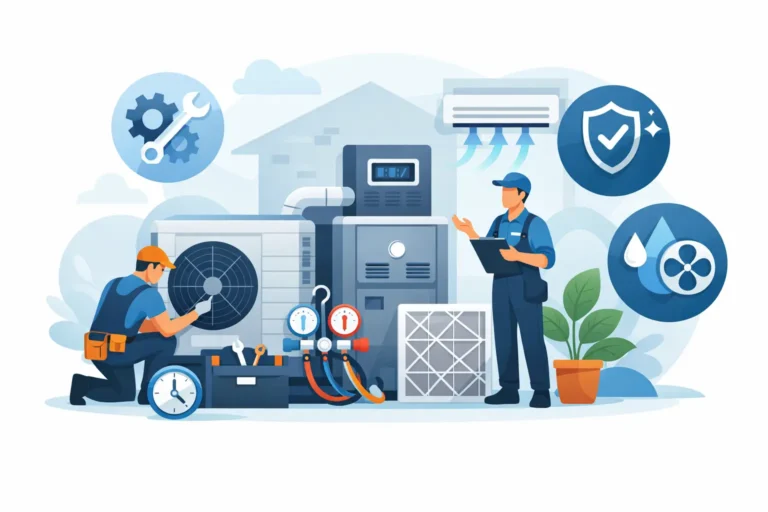
A furnace that quits during a January cold snap or an air conditioner that fails on the first 90-degree weekend rarely gives much warning. The best HVAC maintenance plan features are designed to catch developing problems before they turn into urgent calls, while making routine care simpler and more affordable for your household.
A maintenance plan should not feel like a vague promise or an automatic add-on. It should give you clear service, useful savings, and a dependable place in line when your heating or cooling system needs attention. For homeowners in the western Chicago suburbs, where both summer humidity and winter cold put equipment to work, the details of the plan matter.
1. Seasonal Service for Heating and Cooling
At the center of a worthwhile plan are scheduled tune-ups for the systems you rely on most. For a typical forced-air home, that means one visit before heating season and another before cooling season. This timing gives a technician the opportunity to inspect and test equipment before it is under its heaviest demand.
A heating visit may include checking ignition components, burners, heat exchangers, safety controls, airflow, electrical connections, and thermostat operation. A cooling visit should address refrigerant performance, condenser condition, condensate drainage, electrical components, blower operation, and overall system efficiency.
The exact checklist depends on your equipment. A boiler, heat pump, ductless system, humidifier, or commercial rooftop unit needs a different approach than a standard furnace and central air conditioner. A good plan makes room for those differences rather than treating every system like the same model.
2. A Clear, Documented Maintenance Checklist
You should know what the technician actually did during the visit. Look for a plan that includes a thorough, documented inspection instead of a quick filter change presented as a tune-up.
A useful service report identifies what was checked, what was cleaned or adjusted, the condition of key components, and any concerns found. It also distinguishes between a repair that needs prompt attention and an item that can be monitored. That clarity helps you make decisions without pressure or guesswork.
For example, a weak capacitor may still be operating but show signs of decline. A technician should explain the risk, the expected repair, and whether waiting is reasonable. Honest maintenance is not about finding a reason to sell a part at every visit. It is about giving you the information needed to avoid surprises.
3. Priority Scheduling When You Need Help
Priority service is one of the most valuable HVAC maintenance plan features, especially during extreme weather. When many homes need service at once, members should receive earlier scheduling availability than customers calling for a standard appointment.
Priority does not mean a technician can appear instantly or that an emergency can never happen. Severe weather, widespread outages, and parts availability can affect any schedule. It does mean your relationship with the service company is already established, your equipment history is on file, and your call receives prompt attention.
This benefit matters for families with young children, older adults, health concerns, or a home that becomes uncomfortable quickly. It is also valuable for small businesses and property managers that cannot afford to leave tenants, employees, or customers without reliable heating or cooling for long.
4. Straightforward Repair Savings
Maintenance cannot prevent every repair. Motors wear out, electrical parts fail, drains clog, and older equipment eventually reaches the point where repair may no longer be the best value. A plan that includes a member discount on qualifying repairs can lower the cost when those needs arise.
The key word is straightforward. The plan should explain what the discount applies to and what it does not cover. Some repairs require special-order parts, major labor, permits, or manufacturer-specific components that may have different terms. There is nothing wrong with exclusions when they are explained clearly before work begins.
Be cautious of a low monthly price that comes with unclear pricing, automatic charges you did not expect, or repair recommendations that are not explained. A good plan supports fair pricing and gives you a clear estimate before repair work moves forward.
5. Filter, Drainage, and Airflow Attention
Some of the most common HVAC problems start with simple maintenance issues. A clogged air filter can restrict airflow, increase operating costs, strain the blower, and contribute to uneven temperatures. A blocked condensate drain can create water damage risks or shut down an air conditioner at the worst time.
Your plan should include attention to these practical details, along with guidance on what you can do between visits. Many homes need filter changes more often than twice a year, particularly when there are pets, allergies, recent remodeling, or high system use. The right interval depends on the filter type and your home, not a one-size-fits-all calendar reminder.
Airflow should also be part of the conversation. Closed supply vents, damaged ductwork, improperly sized filters, and neglected humidifiers can all affect comfort. A technician may not solve every airflow issue during a standard visit, but should identify what deserves further evaluation.
6. Honest Equipment Health and Replacement Guidance
A maintenance plan should help extend the useful life of working equipment, not push replacement before it is necessary. At the same time, a technician should be candid when an aging system has frequent breakdowns, poor efficiency, unsafe conditions, or repair costs that no longer make financial sense.
The best guidance considers the full situation: the age and condition of the system, the repair cost, energy use, comfort concerns, available warranties, and your plans for the property. A five-year-old furnace with a minor repair is very different from a 20-year-old unit with repeated failures.
For a homeowner, that discussion creates time to plan rather than forcing a major purchase during an emergency. For commercial property decision-makers, regular maintenance records can support budgeting and help prioritize equipment replacement across multiple spaces.
7. Qualified Technicians and a Company That Answers
A plan is only as dependable as the people behind it. Look for a company that sends licensed, insured, and properly trained technicians who can work safely on your equipment. EPA certification is particularly relevant for air conditioning and heat pump service because these systems involve refrigerant handling.
Technical skill should come with clear communication. You deserve a technician who explains the issue in plain language, respects your home or building, and answers questions without making you feel rushed. Brian & Sons has built its local reputation around that kind of responsive, customer-first service since 1997.
It also helps to choose a company with real availability when conditions change. Regular maintenance reduces the odds of a breakdown, but it cannot eliminate them. Knowing who to call when the system stops working is part of the comfort a plan should provide.
8. Flexible Terms That Fit Your Equipment
Before enrolling, ask how the agreement works. Find out which systems are included, how often visits occur, whether there is a service fee, how renewal works, and what happens if you move or replace equipment. These questions are not picky. They help you compare plans based on real value rather than a headline price.
A single-system plan may be enough for a newer home with a furnace and air conditioner. A larger home with multiple zones, a heat pump, humidifier, air purifier, or boiler may benefit from broader coverage. Commercial agreements often need customized visit schedules based on operating hours, occupancy, and equipment type.
How to Choose the Right Plan for Your Home
Start with the equipment you own and the problems you want to avoid. If your furnace and air conditioner are newer, preventive tune-ups, documentation, and priority scheduling may be your top priorities. If your equipment is older, repair discounts and regular condition reports may provide more immediate value.
Then compare more than the monthly or annual fee. Ask whether seasonal visits are included, what each visit covers, how repair savings work, and whether the company provides clear recommendations. The least expensive plan is not always the best buy if it offers only a basic inspection and little help when a real repair is needed.
A strong HVAC maintenance plan gives you more than two appointments on a calendar. It gives you a clearer picture of your equipment, a trusted team to call, and a better chance of staying comfortable when Chicagoland weather puts your system to the test.