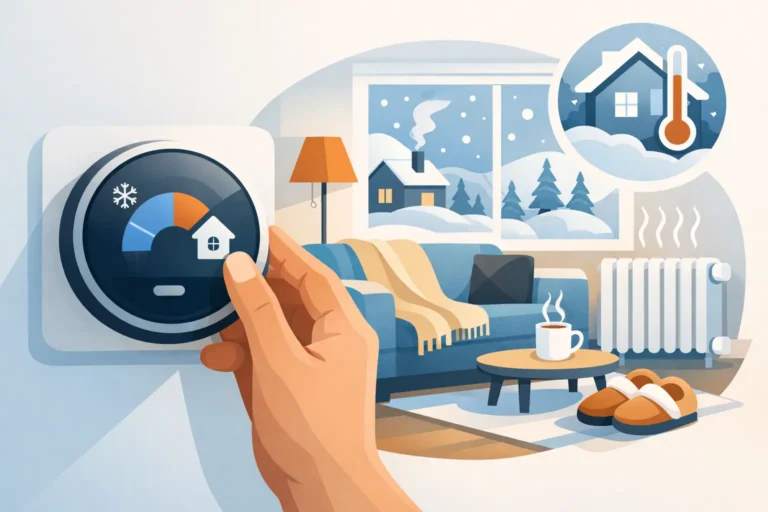

A thermostat set too low can turn a January morning into a miserable scramble for blankets. Set too high, it can leave your furnace running longer than necessary and push up utility costs. The best thermostat settings for winter strike a practical balance: warm enough for your household, conservative enough to reduce waste, and safe enough to protect your home during a Chicagoland cold snap.
For many households, that balance starts around 68°F when people are awake and home. But the right number is not identical for every home. Your insulation, system type, humidity level, health needs, daily schedule, and personal comfort all matter.
Best Thermostat Settings for Winter: Start Here
For a typical home with a furnace, a reliable winter schedule is 68°F while you are home and awake, 60°F to 65°F while sleeping, and 55°F to 60°F while the house is empty for several hours or more. These are starting points, not hard rules.
A daytime setting of 68°F works well because it gives most families comfortable living areas without maintaining a higher temperature around the clock. If someone in the home is elderly, very young, recovering from an illness, or especially sensitive to cold, a slightly warmer setting may be appropriate. Comfort and safety come before chasing a specific number.
At night, many people sleep comfortably at 60°F to 65°F with proper bedding. Lowering the temperature while everyone is under blankets can reduce heating demand, but do not force a setting that disrupts sleep or makes bedrooms uncomfortably cold.
When leaving for work, school, or a weekend trip, avoid turning the heat off. In Illinois winters, indoor temperatures can fall quickly when outdoor temperatures plunge. A setting of at least 55°F helps protect plumbing in exterior walls, crawl spaces, garages, and other vulnerable areas. Homes with known cold spots, older insulation, or a history of frozen pipes may need a higher away setting.
A Simple Winter Schedule That Fits Real Life
The goal is not to adjust your thermostat constantly. A schedule should fit the way your household actually moves through the day.
Weekday mornings and evenings
Set the thermostat to your preferred occupied temperature, often 68°F, for the times your family is getting ready, returning home, cooking, and relaxing. If the kitchen gets warm from cooking or the afternoon sun heats one side of the house, resist the urge to keep changing the setpoint. Give the system time to respond first.
Overnight hours
Program a modest setback before bedtime, usually 3°F to 8°F below your daytime setting. For example, a home kept at 68°F during the day could be set to 62°F or 64°F overnight. Program the temperature to rise before the first person wakes up rather than waiting until everyone is already cold.
Workdays, errands, and travel
For a house that is empty most of the day, lowering the thermostat to 58°F to 62°F can make sense. For a brief trip to the grocery store or a few hours out with the family, a setback may not be worthwhile. Your furnace will need to bring the home back to temperature afterward, and a frequent series of manual changes can be more frustrating than useful.
If you will be away for several days, use 55°F to 60°F as a baseline and ask a trusted person to check the house during severe weather. Keep cabinet doors open under sinks on exterior walls if pipes are at risk, and make sure your heating system is operating properly before leaving.
Should You Set It Lower to Save More?
Lowering the temperature generally reduces heat loss through walls, windows, ceilings, and air leaks. That is why a reasonable setback can reduce energy use. But the best savings strategy is not necessarily the lowest thermostat setting you can tolerate.
A home that feels chilly may lead family members to use space heaters, which can create safety concerns and offset the savings. Large temperature swings can also be less comfortable in drafty homes or rooms with uneven heating. The better approach is to choose a setting your family can live with consistently, then address the reasons the home feels cold.
Start with simple improvements: replace a dirty furnace filter, keep supply vents open and unobstructed, use window coverings at night, and seal obvious drafts around doors. If certain rooms remain much colder than others, the issue may involve ductwork, airflow, insulation, thermostat placement, or furnace performance.
Your Heating System Can Change the Strategy
Not every heating system responds to thermostat setbacks in the same way.
Furnaces
Gas and electric forced-air furnaces usually work well with a scheduled setback. A programmable or smart thermostat can lower the temperature overnight or during work hours, then warm the home before you need it.
If your furnace runs almost continuously but rooms still feel cold, do not automatically turn the thermostat higher. The thermostat tells the system when to stop, not how quickly it can heat. A clogged filter, airflow restriction, failing component, undersized equipment, or heat loss issue may be the real problem.
Heat pumps
Heat pumps are often most efficient when they maintain a steadier indoor temperature. A large setback can trigger auxiliary heat during recovery, especially on very cold days, which may cost more to operate. If you have a heat pump, try a smaller setback of 2°F to 4°F and watch how the system performs.
Boilers and radiant floors
Boilers and radiant heating systems warm spaces more gradually. Turning the thermostat down dramatically overnight may mean the home takes much of the morning to recover. These systems usually benefit from a modest, consistent setting rather than aggressive daily changes.
Humidity Affects How Warm Your Home Feels
A dry winter house often feels colder than the thermostat reading suggests. When indoor air becomes too dry, you may notice static shocks, dry skin, irritated sinuses, shrinking woodwork, and a stronger urge to raise the heat.
For many homes, winter indoor humidity in the 30% to 40% range feels more comfortable. The right level depends on outdoor temperatures and window quality. During extreme cold, humidity that is too high can cause condensation or frost on windows, which is a sign to lower the humidifier setting.
A properly maintained whole-home humidifier can help you feel comfortable at a moderate thermostat setting. It is not a substitute for heat, and it needs seasonal maintenance to prevent mineral buildup and water issues. If you use a portable humidifier, clean it regularly and follow the manufacturer’s guidance.
Thermostat Location Matters More Than Many Homeowners Realize
A thermostat cannot make good decisions if it is reading the wrong conditions. It should be located on an interior wall, away from direct sunlight, exterior doors, supply vents, fireplaces, ovens, and drafty windows.
A thermostat placed near a warm kitchen or sunny window may shut the heat off while bedrooms are still cold. One located in a chilly hallway can cause overheating elsewhere. If your home has a smart thermostat with remote sensors, placing a sensor in a frequently used bedroom or living area can give the system a better picture of household comfort.
Before replacing a thermostat, confirm that the existing one is level, clean, and correctly programmed. A thermostat upgrade can be helpful, but it will not fix a furnace that is short cycling, a duct system with poor airflow, or an uninsulated room over a garage.
When a Temperature Problem Is Really an HVAC Problem
Call for professional service if your thermostat is set normally but your home will not maintain the temperature, your furnace blows cool air, or the system repeatedly turns on and off. Unusual noises, burning smells, a yellow furnace flame, rising utility bills, and carbon monoxide alarms also deserve immediate attention.
Annual heating maintenance helps catch many issues before the coldest nights of the season. A technician can inspect safety controls, clean critical components, check airflow, test system operation, and identify wear that could lead to an unexpected breakdown. For local homeowners, Brian & Sons provides dependable heating service when comfort problems need more than a thermostat adjustment.
A winter thermostat setting should make your home feel dependable, not like a daily negotiation with the weather. Choose a schedule that protects your home, supports the people in it, and gives your heating system a fair chance to do its job. If it still cannot keep up, having the system checked early is far easier than waiting for the next deep freeze.