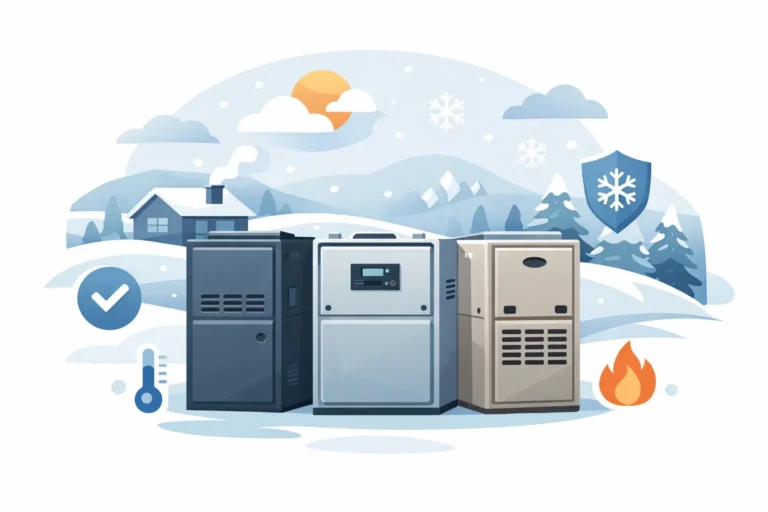
A furnace can look great on paper and still be the wrong fit for your home. During an Illinois cold snap, dependable heat comes down to more than a recognizable name on the cabinet. When homeowners ask about the best furnace brands for winter, the honest answer is that the right choice depends on your home’s size, insulation, ductwork, budget, and the quality of the installation.
A well-built furnace installed and maintained correctly can provide years of safe, efficient comfort. A premium model that is oversized, poorly vented, or connected to leaky ducts may leave you with uneven temperatures and higher utility bills. The goal is not to buy the most expensive furnace. It is to choose a reliable system that keeps your family comfortable without creating unnecessary repair or operating costs.
What Makes a Furnace Brand Worth Considering?
The best furnace brands earn their reputation through consistent manufacturing quality, practical efficiency options, dependable parts availability, and strong warranty support. But comparing brand names alone can be misleading because each manufacturer offers entry-level, mid-range, and premium equipment.
A basic single-stage furnace operates at full output whenever it runs. It can be a sensible, affordable option for smaller homes or homeowners replacing an aging system on a limited budget. Two-stage furnaces have a lower setting for milder winter days and a higher setting when temperatures fall. They usually provide steadier comfort and quieter operation.
Variable-speed and modulating furnaces offer the most precise control. Rather than frequently cycling on and off, they can make smaller adjustments to maintain a more even indoor temperature. Those features often come with a higher initial price, so they make the most sense for homeowners who plan to stay in the home, prioritize comfort, or have rooms that tend to feel too warm or too cold.
Efficiency also matters. Furnace efficiency is measured by AFUE, or Annual Fuel Utilization Efficiency. A 96% AFUE furnace converts about 96 cents of every fuel dollar into heat under standardized testing conditions. Higher efficiency can reduce fuel use, but the real savings depend on your current furnace, local gas costs, thermostat habits, duct condition, and the weather.
Best Furnace Brands for Winter in Chicagoland Homes
Several furnace manufacturers have strong options for homes in Oswego and surrounding western Chicago suburbs. Here is what homeowners should know about the brands most often considered for cold-weather reliability.
Bryant
Bryant furnaces are known for offering a practical range of efficiency levels and comfort features. The lineup includes dependable single-stage models as well as high-efficiency, variable-speed systems designed for quieter operation and more consistent temperatures.
Bryant is often a strong fit for homeowners who want proven equipment with accessible local service and a range of price points. As a Bryant Factory Authorized Dealer, Brian & Sons can help homeowners compare Bryant models based on actual heating needs instead of pushing features that do not serve the home or budget.
Carrier
Carrier offers a broad selection of gas furnaces, from straightforward replacement models to advanced variable-capacity equipment. Many homeowners recognize Carrier for its long history in home comfort, and its higher-end systems can pair well with compatible thermostats and indoor air quality equipment.
Carrier can be a good choice for homeowners looking for advanced comfort controls or a premium matched HVAC system. The trade-off is that top-tier models typically cost more upfront. A mid-range Carrier furnace may offer a better value than the most advanced option if your home has basic comfort needs and well-functioning ductwork.
Lennox
Lennox is frequently considered by homeowners seeking very high AFUE ratings and premium furnace technology. Its high-efficiency models can be attractive for larger homes, homes with high heating bills, or households that want precise temperature control.
That said, the best choice is not always the model with the highest efficiency number. Some Lennox systems use proprietary components and controls, which can affect repair considerations depending on local parts availability and technician familiarity. Before choosing any premium system, ask how service, replacement parts, and warranty coverage will be handled after installation.
Trane and American Standard
Trane and American Standard furnaces are often praised for durable construction and reliable performance. These brands share many design similarities and offer equipment across several efficiency and comfort tiers.
They are worth considering when long-term build quality is a top priority. As with any furnace, model selection matters more than the logo alone. Compare the specific furnace’s blower motor, heat exchanger warranty, staging, sound level, and compatibility with your existing air conditioner or heat pump.
Rheem and Ruud
Rheem and Ruud provide a wide range of residential furnaces that can appeal to homeowners looking for solid performance at a competitive price. Their product lines include efficient two-stage and variable-speed options along with more budget-conscious replacement systems.
These brands can be a sensible match when you want to improve efficiency and comfort without moving into the highest-priced tier. A professional load calculation is still essential. Even a value-focused furnace needs to be correctly sized to heat your home effectively through winter.
Goodman and Amana
Goodman and Amana are commonly compared because they can offer competitive initial pricing and strong warranty terms on select models. They are popular options for homeowners replacing an older furnace, landlords managing rental properties, and anyone focused on keeping installation costs manageable.
The key is to compare the full installed value, not just equipment price. Proper setup, airflow adjustment, drainage, venting, and follow-up maintenance have a major effect on how a furnace performs. A lower-cost model installed carefully may be a better investment than a more expensive system installed without attention to those details.
Brand Is Only One Part of a Reliable Installation
A furnace needs to be matched to the house. Before recommending equipment, a qualified HVAC professional should consider square footage, ceiling height, insulation levels, window quality, duct design, and how your current system performs. This process is often called a load calculation.
Oversizing is one of the most common mistakes in furnace replacement. A furnace that is too large heats the home quickly, then shuts off. That short cycling can create temperature swings, increase wear, and prevent the system from running long enough to distribute heat evenly. An undersized furnace may struggle during extreme cold and run continuously without reaching the thermostat setting.
Ductwork deserves the same attention. Cold bedrooms, noisy vents, and rooms that never seem comfortable are not always furnace-brand problems. Restricted returns, undersized supply ducts, disconnected runs, and air leaks can all limit the performance of a new system.
Questions to Ask Before You Choose
Ask for the AFUE rating and the expected operating difference between the options you are considering. Then ask whether the furnace is single-stage, two-stage, or modulating, and what type of blower motor it uses. Those features directly affect comfort, sound, and price.
It is also wise to ask about the manufacturer warranty, labor warranty, local parts availability, maintenance requirements, and compatibility with your thermostat and cooling equipment. Warranty terms vary by model and often require timely product registration, so get the details in writing before making a decision.
Finally, compare proposals carefully. A complete furnace replacement should account for removal of the old equipment, installation, venting or chimney considerations, condensate drainage for high-efficiency equipment, permits when required, startup testing, and a clear explanation of how to operate the new system.
Protect Your Furnace After Installation
Even the best furnace needs regular care before winter arrives. Replace or clean filters on schedule, keep supply and return vents open and unobstructed, and schedule professional maintenance each year. A technician can inspect the heat exchanger, verify safe combustion, test electrical components, check airflow, and catch small issues before they become an after-hours heating emergency.
If your furnace is more than 15 years old, needs frequent repairs, produces uneven heat, or has caused a sharp increase in gas bills, it may be time to discuss replacement options. You do not have to decide based on a brand name alone. A clear, no-pressure evaluation of your home and comfort goals can point you toward a furnace that will be ready when winter is not forgiving.